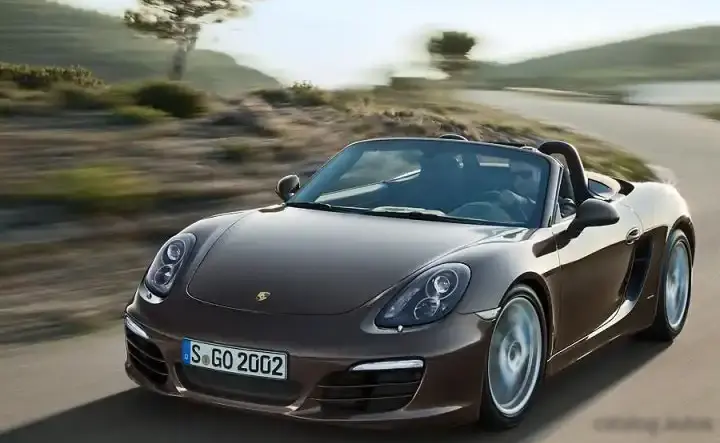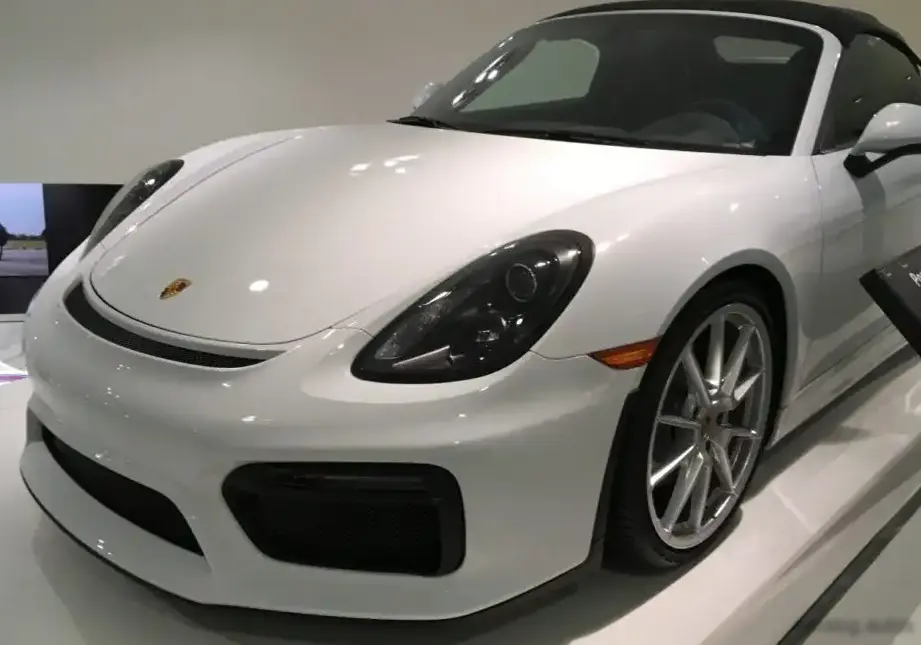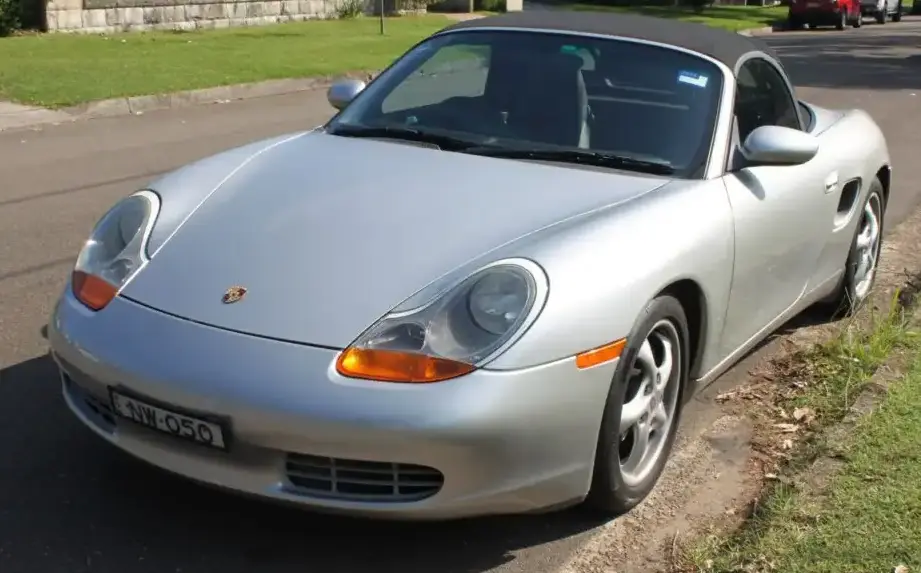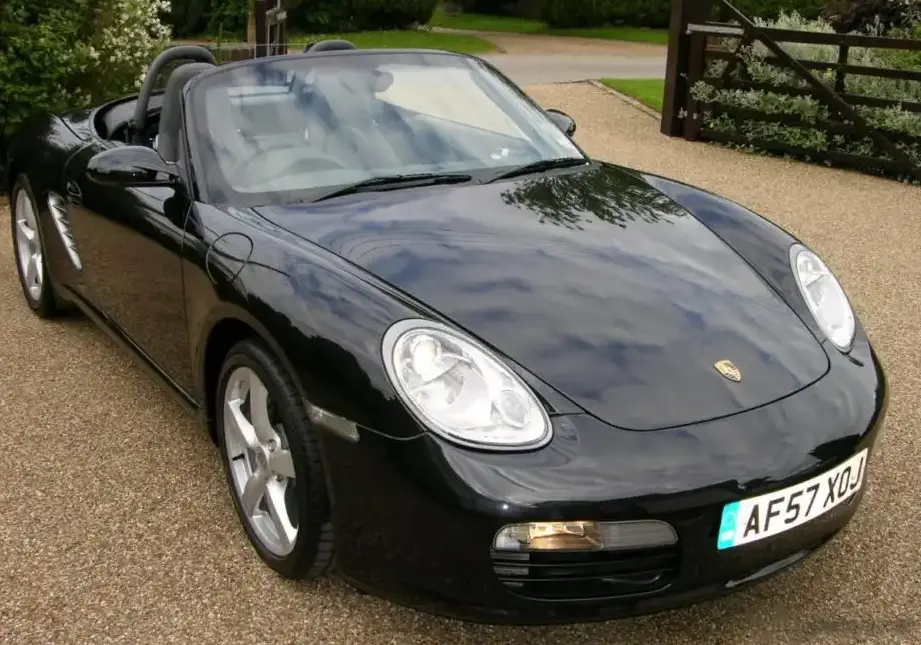
The Porsche Boxster (987) 2.7, introduced in October 2004 and continuing through August 2006, represented a significant evolution in Porsche’s mid-engine roadster lineup. Positioned as the base model within the 987 generation, it offered a more accessible entry point into the Porsche experience compared to the higher-performance 987 S. The 2.7-liter variant aimed to balance the classic Porsche driving experience with improved everyday usability and a slightly lower price tag. It was built on the 987 platform, sharing its core structure with the contemporary Porsche 911 (997) but distinguished by its open-top roadster configuration and mid-engine layout.
Technical Specifications
| Brand | Porsche |
| Model | Boxster |
| Generation | Boxster (987) |
| Type (Engine) | 2.7 (240 Hp) |
| Start of production | October, 2004 |
| End of production | August, 2006 |
| Powertrain Architecture | Internal Combustion engine |
| Body type | Roadster |
| Seats | 2 |
| Doors | 2 |
| Fuel consumption (economy) – urban | 13.9 l/100 km (16.9 US mpg, 20.3 UK mpg, 7.2 km/l) |
| Fuel consumption (economy) – extra urban | 6.9 l/100 km (34.1 US mpg, 40.9 UK mpg, 14.5 km/l) |
| Fuel consumption (economy) – combined | 9.6 l/100 km (24.5 US mpg, 29.4 UK mpg, 10.4 km/l) |
| CO2 emissions | 229 g/km |
| Fuel Type | Petrol (Gasoline) |
| Acceleration 0 – 100 km/h | 6.2 sec |
| Acceleration 0 – 62 mph | 6.2 sec |
| Acceleration 0 – 60 mph | 5.9 sec |
| Acceleration 0 – 200 km/h | 24 sec |
| Maximum speed | 256 km/h (159.07 mph) |
| Weight-to-power ratio | 5.4 kg/Hp, 185.3 Hp/tonne |
| Weight-to-torque ratio | 4.8 kg/Nm, 208.5 Nm/tonne |
| Power | 240 Hp @ 6400 rpm |
| Power per litre | 89.3 Hp/l |
| Torque | 270 Nm @ 4700-6000 rpm (199.14 lb.-ft. @ 4700-6000 rpm) |
| Maximum engine speed | 7200 rpm |
| Engine layout | Middle, Longitudinal |
| Engine Model/Code | M96.25 |
| Engine displacement | 2687 cm3 (163.97 cu. in.) |
| Number of cylinders | 6 |
| Engine configuration | Boxer |
| Cylinder Bore | 93 mm (3.66 in.) |
| Piston Stroke | 78 mm (3.07 in.) |
| Compression ratio | 11:1 |
| Number of valves per cylinder | 4 |
| Fuel injection system | Multi-port manifold injection |
| Engine aspiration | Naturally aspirated engine |
| Valvetrain | DOHC |
| Engine oil capacity | 7.8 l (8.24 US qt | 6.86 UK qt) |
| Coolant | 22 l (23.25 US qt | 19.36 UK qt) |
| Kerb Weight | 1295 kg (2854.99 lbs.) |
| Max. weight | 1610 kg (3549.44 lbs.) |
| Max load | 315 kg (694.46 lbs.) |
| Trunk (boot) space – minimum | 130 l (4.59 cu. ft.) |
| Fuel tank capacity | 64 l (16.91 US gal | 14.08 UK gal) |
| Length | 4329 mm (170.43 in.) |
| Width | 1801 mm (70.91 in.) |
| Width including mirrors | 1978 mm (77.87 in.) |
| Height | 1295 mm (50.98 in.) |
| Wheelbase | 2415 mm (95.08 in.) |
| Ride height (ground clearance) | 101-121 mm (3.98 – 4.76 in.) |
| Drag coefficient (Cd) | 0.29 |
| Minimum turning circle (turning diameter) | 11.1 m (36.42 ft.) |
| Drivetrain Architecture | The Internal combustion engine (ICE) drives the rear wheels of the vehicle. |
| Drive wheel | Rear wheel drive |
| Number of gears and type of gearbox | 5 gears, manual transmission |
| Front suspension | Independent type McPherson |
| Rear suspension | McPherson |
| Front brakes | Ventilated discs, 298×24 mm |
| Rear brakes | Ventilated discs, 299×20 mm |
| Assisting systems | ABS (Anti-lock braking system) |
| Steering type | Steering rack and pinion |
| Power steering | Hydraulic Steering |
| Tires size | Front wheel tires: 205/55 ZR 17Rear wheel tires: 235/50 ZR 17 |
| Wheel rims size | Front wheel rims: 6.5 J x 17Rear wheel rims: 8 J x 17 |
Powertrain & Engine Architecture
The heart of the 987 Boxster 2.7 is the M96.25 engine, a 2.7-liter naturally aspirated flat-six (boxer) engine. This engine utilizes a dual overhead camshaft (DOHC) valvetrain with four valves per cylinder, contributing to its relatively high specific output. Fuel delivery is managed by a multi-port fuel injection system. The engine’s boxer configuration, with horizontally opposed cylinders, contributes to a low center of gravity, enhancing handling characteristics. The 987 Boxster 2.7 was exclusively offered with a 5-speed manual transmission. This transmission was chosen for its direct feel and engagement, aligning with Porsche’s focus on driver involvement. The gearbox featured relatively short ratios, optimized for acceleration and responsiveness.
Driving Characteristics
The 2.7-liter Boxster offered a distinct driving experience compared to the more powerful ‘S’ variant. While not as brutally quick, the 2.7 provided a smooth and accessible power delivery. Peak torque of 199 lb-ft arrived at 4700-6000 rpm, making it reasonably flexible in everyday driving situations. The 5-speed manual transmission, while not offering the close ratios of some competitors, provided a satisfying mechanical feel. The car’s mid-engine layout and well-tuned suspension resulted in excellent balance and handling. Steering was precise and communicative, providing ample feedback to the driver. The 2.7 was often praised for its composure and predictability, making it a confidence-inspiring car to drive on both winding roads and open highways.
Equipment & Trim Levels
The base 987 Boxster 2.7 came reasonably well-equipped, though Porsche offered a substantial options list for personalization. Standard features included air conditioning, power windows and locks, a basic audio system, and partial leather upholstery. Optional extras were plentiful, ranging from upgraded audio systems (including Bose and Porsche Communication Management), to sport seats, heated seats, and various cosmetic enhancements. Interior trim options included different leather colors and materials. The dashboard layout was functional and driver-focused, with clear instrumentation and logically placed controls.
Chassis & Braking
The 987 Boxster featured an independent suspension system at all four wheels, utilizing McPherson struts. This setup provided a good balance between ride comfort and handling precision. The chassis was constructed from a combination of steel and aluminum, contributing to a relatively lightweight structure. Braking duties were handled by ventilated disc brakes at all four corners, providing ample stopping power. Anti-lock braking system (ABS) was standard. The base model typically featured smaller diameter rear rotors compared to the ‘S’ variant.
Market Reception & Comparison
The 987 Boxster 2.7 was generally well-received by automotive critics. It was praised for its handling, steering feel, and overall driving experience. Some reviewers noted that the 2.7-liter engine, while capable, lacked the outright punch of the 3.2-liter engine found in the ‘S’ model. However, the 2.7 was considered a more practical and affordable option for those seeking a Porsche roadster. Fuel economy was respectable for a sports car, averaging around 24.5 mpg in combined driving. Compared to the 987 Boxster S, the 2.7 offered a lower price of entry, but sacrificed some performance. Compared to other roadsters in its class, such as the BMW Z4 and Mercedes-Benz SLK, the Boxster 2.7 was often lauded for its superior handling and mid-engine balance.
Legacy
The M96.25 engine, while generally reliable, has been known to exhibit some issues over time, particularly related to intermediate shaft (IMS) bearing failure. Preventative IMS bearing upgrades are commonly performed on these engines to mitigate this risk. Overall, the 987 Boxster 2.7 has proven to be a durable and enjoyable sports car. On the used car market, well-maintained examples command reasonable prices, making them an attractive option for enthusiasts seeking an accessible Porsche experience. The 987 generation, including the 2.7 variant, is considered a significant step forward in Porsche’s roadster lineage, offering a compelling blend of performance, handling, and everyday usability.