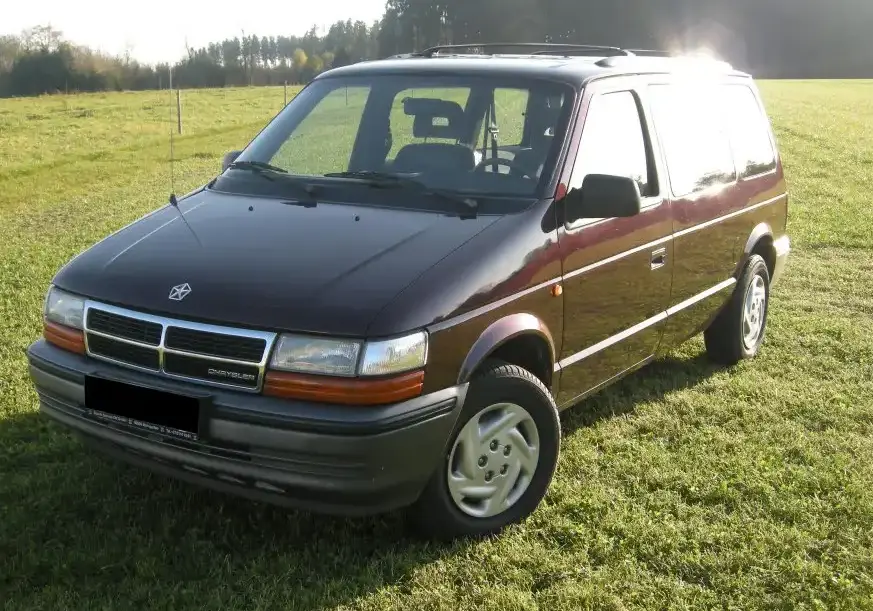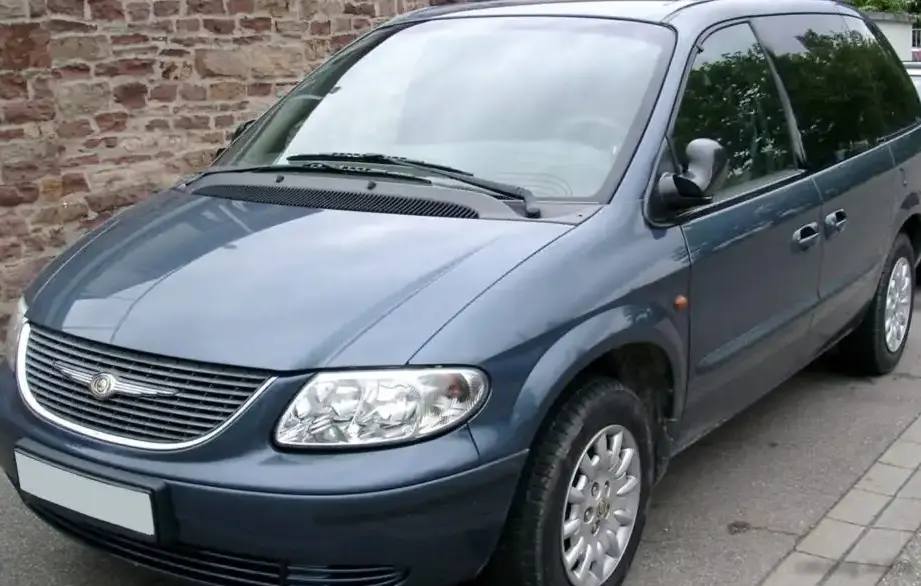
The Chrysler Voyager IV 2.4 i 16V Automatic, produced between 2001 and 2008, represented a significant iteration of Chrysler’s popular minivan offering in the European market. Positioned as a mid-range trim within the fourth-generation Voyager (often sold as the Chrysler Grand Voyager in some regions), this variant aimed to balance affordability with a reasonable level of equipment and performance. It was part of the NS platform, sharing many components with the Dodge Caravan and Plymouth Voyager sold in North America. The 2.4-liter engine and automatic transmission combination was designed to appeal to families prioritizing convenience and ease of driving over outright performance, making it a common sight on European roads.
Technical Specifications
| Brand | Chrysler |
| Model | Voyager |
| Generation | Voyager IV |
| Type (Engine) | 2.4 i 16V (152 Hp) Automatic |
| Start of production | 2001 |
| End of production | 2008 |
| Powertrain Architecture | Internal Combustion engine |
| Body type | Minivan |
| Seats | 7 |
| Doors | 5 |
| Fuel consumption (urban) | 11.8 l/100 km (19.9 US mpg) |
| Fuel consumption (extra urban) | 9.8 l/100 km (24 US mpg) |
| Fuel Type | Petrol (Gasoline) |
| Maximum speed | 180 km/h (111.85 mph) |
| Weight-to-power ratio | 11.5 kg/Hp |
| Weight-to-torque ratio | 7.7 kg/Nm |
| Power | 152 Hp @ 5200 rpm |
| Power per litre | 62.6 Hp/l |
| Torque | 226 Nm @ 4000 rpm (166.69 lb.-ft. @ 4000 rpm) |
| Engine layout | Front, Transverse |
| Engine Model/Code | EDZ |
| Engine displacement | 2429 cm3 (148.23 cu. in.) |
| Number of cylinders | 4 |
| Engine configuration | Inline |
| Cylinder Bore | 87.5 mm (3.44 in.) |
| Piston Stroke | 101 mm (3.98 in.) |
| Compression ratio | 9.4:1 |
| Number of valves per cylinder | 4 |
| Fuel injection system | Multi-port manifold injection |
| Engine aspiration | Naturally aspirated engine |
| Valvetrain | DOHC |
| Engine oil capacity | 4.7 l (4.97 US qt | 4.14 UK qt) |
| Coolant | 10.7 l (11.31 US qt | 9.41 UK qt) |
| Kerb Weight | 1750 kg (3858.09 lbs.) |
| Max. weight | 2450 kg (5401.33 lbs.) |
| Max load | 700 kg (1543.24 lbs.) |
| Trunk (boot) space – minimum | 445 l (15.72 cu. ft.) |
| Trunk (boot) space – maximum | 4080 l (144.08 cu. ft.) |
| Fuel tank capacity | 75 l (19.81 US gal | 16.5 UK gal) |
| Length | 4805 mm (189.17 in.) |
| Width | 1995 mm (78.54 in.) |
| Height | 1750 mm (68.9 in.) |
| Wheelbase | 2880 mm (113.39 in.) |
| Front track | 1600 mm (62.99 in.) |
| Rear (Back) track | 1625 mm (63.98 in.) |
| Drivetrain Architecture | The Internal combustion engine (ICE) drives the front wheels of the vehicle. |
| Drive wheel | Front wheel drive |
| Number of gears and type of gearbox | 4 gears, automatic transmission |
| Front suspension | Spring Strut |
| Rear suspension | Leaf spring |
| Front brakes | Ventilated discs |
| Rear brakes | Drum |
| Assisting systems | ABS (Anti-lock braking system) |
| Steering type | Steering rack and pinion |
| Power steering | Hydraulic Steering |
| Tires size | 215/65 R16 |
| Wheel rims size | 16 |
Powertrain & Engine Architecture
The heart of the Voyager IV 2.4 i was the EDZ engine, a 2.4-liter inline-four cylinder powerplant. This engine utilized a multi-port fuel injection system and a double overhead camshaft (DOHC) valvetrain, contributing to its relatively smooth operation and respectable power output for its displacement. The 16 valves (four per cylinder) aided in efficient cylinder filling and exhaust scavenging. The engine’s 9.4:1 compression ratio was a compromise between performance and the ability to run on readily available fuel grades in Europe. Paired with this engine was a four-speed automatic transmission, designed for smooth shifts and ease of use. This transmission wasn’t known for its sportiness, prioritizing comfort and fuel efficiency over rapid acceleration. The automatic transmission was a key selling point for families, simplifying driving in urban environments.
Driving Characteristics
The 2.4-liter engine, producing 152 horsepower, provided adequate, but not exhilarating, performance in the Voyager IV. Acceleration was modest, with a 0-60 mph time estimated around 11-12 seconds. The four-speed automatic transmission, while smooth, had relatively wide gear ratios, meaning the engine often felt strained during quick overtaking maneuvers. Compared to the higher-output 2.8-liter V6 versions, the 2.4L felt noticeably slower. However, it offered a more economical driving experience. The automatic transmission’s shift points were calibrated for fuel economy, resulting in a relaxed driving style. The front-wheel-drive configuration provided predictable handling, but the Voyager IV wasn’t designed for spirited cornering.
Equipment & Trim Levels
The 2.4 i Automatic trim typically included features such as air conditioning, power windows and locks, and an AM/FM radio with a CD player. Higher trim levels added features like alloy wheels, upgraded interior upholstery, and a more sophisticated audio system. Optional extras included a sunroof, rear entertainment system, and leather seats. The interior generally featured durable, family-friendly materials. The Voyager IV prioritized practicality over luxury, but offered a comfortable and functional cabin for passengers.
Chassis & Braking
The Voyager IV utilized a front-wheel-drive layout with a relatively simple suspension setup. The front suspension employed MacPherson struts, while the rear suspension utilized a leaf spring design. This configuration prioritized ride comfort and load-carrying capacity over handling precision. Braking duties were handled by ventilated discs at the front and drum brakes at the rear. Anti-lock Braking System (ABS) was standard, enhancing safety during emergency braking situations. The suspension was tuned for a comfortable ride, absorbing bumps and imperfections in the road effectively, but it wasn’t particularly sporty.
Market Reception & Comparison
The Voyager IV 2.4 i Automatic was generally well-received as a practical and affordable family vehicle. Critics praised its spacious interior, comfortable ride, and ease of driving. However, the engine’s performance was often criticized as being underwhelming, particularly when fully loaded with passengers and luggage. Compared to the V6 models, the 2.4L offered better fuel economy – around 19.9 mpg in the city and 24 mpg on the highway – but at the cost of performance. The 2.4L version was often seen as a good value proposition for families who didn’t require the extra power of the V6.
Legacy
The Chrysler Voyager IV 2.4 i Automatic has proven to be a relatively reliable vehicle, with many examples still on the road today. The EDZ engine, while not particularly sophisticated, is generally durable and relatively easy to maintain. Common issues include oil leaks and occasional sensor failures. The automatic transmission, if properly maintained, can provide years of service. In the used car market, these Voyagers are often sought after by budget-conscious buyers looking for a spacious and practical family vehicle. While not a performance icon, the Voyager IV 2.4 i Automatic remains a testament to Chrysler’s ability to produce functional and affordable minivans.