
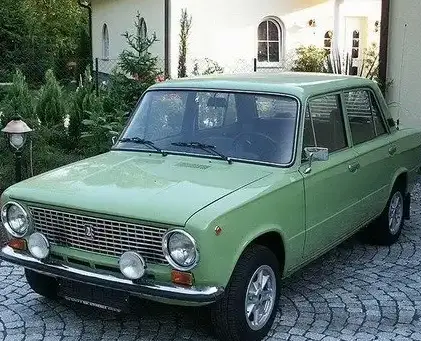
The Lada 21011 1.3, a variant of the iconic Lada 2101, was produced from 1974 to 1983. This model represented a continuation of the original 2101, which itself was heavily based on the Fiat 124, licensed and adapted for Soviet production. The 21011 specifically denotes the 1.3-liter engine variant, offering a more economical option within the 2101 range. It served as a popular, affordable family car in the Soviet Union and its export markets, representing a significant step in making personal transportation accessible to a wider population. Positioned as an entry-level trim, it provided basic transportation with a focus on durability and ease of maintenance.
Technical Specifications
| Brand | Lada |
| Model | 2101 |
| Generation | 21011 |
| Type (Engine) | 1.3 (70 Hp) |
| Start of production | 1974 |
| End of production | 1983 |
| Powertrain Architecture | Internal Combustion engine |
| Body type | Sedan |
| Seats | 5 |
| Doors | 4 |
| Fuel consumption (urban) | 11 l/100 km (21.4 US mpg, 25.7 UK mpg, 9.1 km/l) |
| Fuel consumption (extra urban) | 8 l/100 km (29.4 US mpg, 35.3 UK mpg, 12.5 km/l) |
| Fuel Type | Petrol (Gasoline) |
| Acceleration 0 – 100 km/h | 18 sec |
| Acceleration 0 – 62 mph | 18 sec |
| Acceleration 0 – 60 mph | 17.1 sec |
| Maximum speed | 145 km/h (90.1 mph) |
| Weight-to-power ratio | 13.6 kg/Hp, 73.3 Hp/tonne |
| Weight-to-torque ratio | 9.9 kg/Nm, 100.5 Nm/tonne |
| Power | 70 Hp @ 5600 rpm |
| Power per litre | 54.1 Hp/l |
| Torque | 96 Nm @ 3400 rpm (70.81 lb.-ft. @ 3400 rpm) |
| Engine layout | Front, Longitudinal |
| Engine displacement | 1294 cm3 (78.96 cu. in.) |
| Number of cylinders | 4 |
| Engine configuration | Inline |
| Cylinder Bore | 79 mm (3.11 in.) |
| Piston Stroke | 66 mm (2.6 in.) |
| Compression ratio | 8.5:1 |
| Number of valves per cylinder | 2 |
| Fuel injection system | Carburettor |
| Engine aspiration | Naturally aspirated engine |
| Valvetrain | OHC |
| Kerb Weight | 955 kg (2105.41 lbs.) |
| Trunk (boot) space – minimum | 325 l (11.48 cu. ft.) |
| Fuel tank capacity | 39 l (10.3 US gal | 8.58 UK gal) |
| Length | 4043 mm (159.17 in.) |
| Width | 1611 mm (63.43 in.) |
| Height | 1440 mm (56.69 in.) |
| Wheelbase | 2424 mm (95.43 in.) |
| Front track | 1349 mm (53.11 in.) |
| Rear (Back) track | 1305 mm (51.38 in.) |
| Drivetrain Architecture | The Internal combustion engine (ICE) drives the rear wheels of the vehicle. |
| Drive wheel | Rear wheel drive |
| Number of gears and type of gearbox | 4 gears, manual transmission |
| Front suspension | Double wishbone |
| Rear suspension | Coil spring |
| Front brakes | Disc |
| Rear brakes | Drum |
| Steering type | Worm-reduction unit |
| Tires size | 165/70 SR13 |
Powertrain & Engine Architecture
The Lada 21011 1.3 was powered by a 1.3-liter inline-four cylinder engine, designated as a variation of the VAZ-2101 engine family. While sharing the basic architecture with the original 1.2-liter unit, the 1.3-liter version featured a slightly increased bore. The engine utilized a single overhead camshaft (OHC) design with two valves per cylinder. Fuel delivery was managed by a carburetor, a common feature for vehicles of this era, providing a relatively simple and cost-effective fuel system. The engine produced 70 horsepower at 5600 rpm and 96 Nm (70.81 lb-ft) of torque at 3400 rpm. The engine was mounted longitudinally in the front of the vehicle, driving the rear wheels. The 21011 was exclusively offered with a four-speed manual transmission, chosen for its simplicity and durability. This transmission featured synchromesh on the upper three gears, making shifting smoother at higher speeds.
Driving Characteristics
The 1.3-liter engine in the 21011 provided adequate, though not particularly spirited, performance. Acceleration from 0 to 100 km/h (0-62 mph) took approximately 18 seconds, and the top speed was around 145 km/h (90 mph). Compared to the later 1.5-liter versions of the 2101, the 1.3 offered less power and torque, resulting in slower acceleration and a lower top speed. However, the 1.3-liter engine was more fuel-efficient, making it a practical choice for everyday driving. The four-speed manual transmission had relatively widely spaced gear ratios, requiring frequent shifting to maintain optimal engine speed. The rear-wheel-drive layout provided predictable handling, but the car’s relatively soft suspension and narrow tires limited cornering grip. The overall driving experience was characterized by simplicity and robustness, rather than performance or refinement.
Equipment & Trim Levels
The Lada 21011 1.3 was a fairly basic vehicle, reflecting its position as an entry-level model. Standard equipment typically included cloth upholstery, a simple dashboard with basic instrumentation (speedometer, fuel gauge, temperature gauge), and manually operated windows and door locks. Heating was standard, but air conditioning was not available. Optional extras were limited, but could include a radio, upgraded seat covers, and sometimes, a more sophisticated instrument cluster. The interior was functional and durable, designed to withstand the rigors of daily use. Exterior trim was minimal, with basic chrome bumpers and simple steel wheels with hubcaps.
Chassis & Braking
The Lada 21011 utilized a body-on-frame construction, providing a robust and durable chassis. The front suspension featured a double wishbone design, while the rear suspension employed a coil spring setup. This suspension configuration provided a comfortable ride, but was not particularly sporty. The braking system consisted of disc brakes on the front wheels and drum brakes on the rear wheels. The steering was a worm-reduction type, which was known for its simplicity but lacked precision. The tires were typically 165/70 SR13, providing adequate grip for normal driving conditions. The car’s relatively light weight (955 kg / 2105 lbs) helped to offset the limitations of the braking and suspension systems.
Market Reception & Comparison
The Lada 21011 1.3 was generally well-received in its target market, particularly in the Soviet Union and Eastern European countries. It was praised for its affordability, durability, and ease of maintenance. Critics noted its relatively low power output and basic features, but these were considered acceptable trade-offs for its low price. Compared to the 1.5-liter versions of the 2101, the 1.3 offered better fuel economy but less performance. It was also more economical to purchase. In Western markets, the Lada 21011 was often viewed as a basic and somewhat outdated vehicle, but its low price made it an attractive option for budget-conscious buyers.
Legacy
The Lada 21011 1.3, and the 2101 series as a whole, holds a significant place in automotive history. It represented a major step in providing affordable transportation to the masses in the Soviet Union and beyond. The 1.3-liter engine proved to be remarkably durable and reliable, and many examples are still on the road today. In the used car market, the 21011 is often sought after by enthusiasts and collectors, particularly those interested in classic Soviet-era vehicles. Its simplicity and ease of maintenance make it a relatively easy car to restore and keep running. While not a performance icon, the Lada 21011 1.3 remains a testament to the enduring appeal of a simple, robust, and affordable automobile.
