
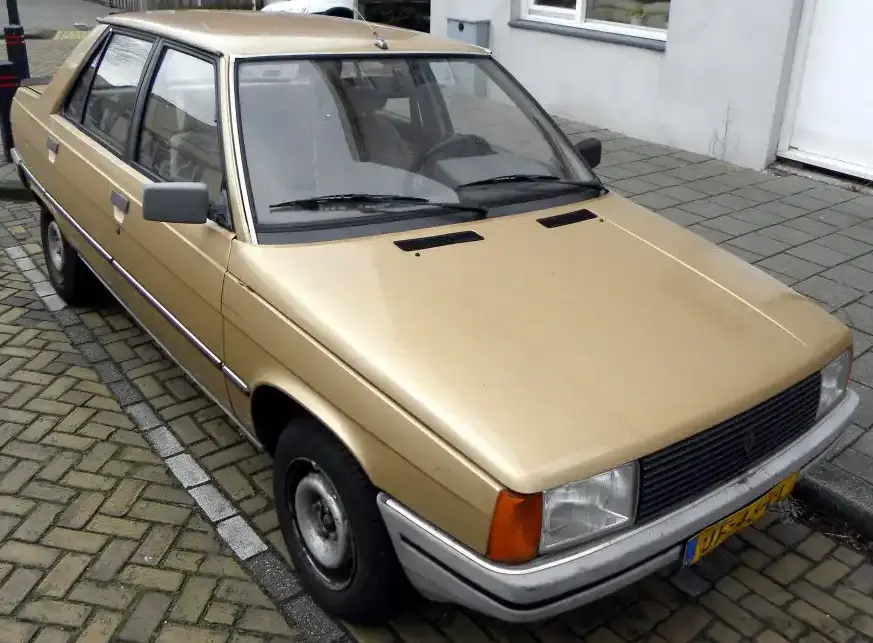
The Renault 9, produced between 1981 and 1988, represented a significant step forward for the French automaker, offering a modern, comfortable, and relatively affordable family sedan. Within the L42 series, the 1.4-liter engine variant, designated L422 and L42C, with an output of 60 horsepower, served as the entry-level model, primarily aimed at budget-conscious buyers and those prioritizing fuel economy. This variant played a crucial role in establishing the Renault 9’s presence in the European market, competing with vehicles like the Peugeot 205 and Citroën BX. It was positioned as a practical and reliable choice for everyday transportation.
Technical Specifications
| Brand | Renault |
| Model | 9 |
| Generation | 9 (L42) |
| Type (Engine) | 1.4 (L422, L42C) (60 Hp) |
| Start of Production | 1981 |
| End of Production | 1988 |
| Powertrain Architecture | Internal Combustion Engine |
| Body Type | Sedan |
| Seats | 5 |
| Doors | 4 |
| Fuel Type | Petrol (Gasoline) |
| Power | 60 Hp |
| Engine Model/Code | C1J 715, C1J 792, C1J 796, C2J 730 |
| Engine Aspiration | Naturally Aspirated |
| Engine Oil Capacity | 3.25 l (3.43 US qt | 2.86 UK qt) |
| Coolant Capacity | 6 l (6.34 US qt | 5.28 UK qt) |
| Fuel Tank Capacity | 47 l (12.42 US gal | 10.34 UK gal) |
Powertrain & Engine Architecture
The heart of the Renault 9 1.4 was the C1J engine family, specifically the C1J 715, C1J 792, C1J 796, and C2J 730 variants. This was a relatively simple, inline-four cylinder engine displacing 1397cc. It featured a cast iron block and an aluminum cylinder head, a common configuration for engines of this era. The engine utilized a single overhead camshaft (SOHC) valvetrain, operating two valves per cylinder. Fuel delivery was managed by a single, down-draft carburetor – a design choice reflecting the period and contributing to the engine’s simplicity and lower cost. The carburetor was typically a Solex or Weber unit. The engine’s modest 60 horsepower output at 5,300 rpm and 86 lb-ft of torque at 3,000 rpm were sufficient for comfortable city driving and highway cruising, though acceleration was not a strong point. The transmission paired with this engine was typically a four-speed manual, but a three-speed automatic transmission was also available, albeit less common. The automatic transmission was a Jatco unit, known for its reliability but also for its relatively slow shift times and tendency to reduce fuel economy.
Driving Characteristics
The Renault 9 1.4, particularly in automatic guise, offered a relaxed and comfortable driving experience. The automatic transmission, while not sporty, provided smooth, if somewhat leisurely, gear changes. Acceleration from a standstill was modest, and overtaking required careful planning. The gear ratios were optimized for fuel efficiency rather than performance. The manual transmission version offered a more engaging driving experience, allowing the driver to better utilize the engine’s limited power. However, even with the manual, the 1.4-liter engine felt strained when pushed hard. The suspension, consisting of MacPherson struts at the front and a torsion beam axle at the rear, provided a comfortable ride, absorbing bumps and imperfections in the road reasonably well. Steering was light and easy, making it well-suited for urban environments.
Equipment & Trim Levels
The 1.4-liter Renault 9 typically represented the base trim level. Standard equipment included cloth upholstery, a basic dashboard with analog gauges, and manual windows and door locks. A simple two-speaker AM/FM radio was often included. Optional extras included a sunroof, upgraded upholstery, and a more sophisticated radio with cassette player. The interior was functional and durable, prioritizing practicality over luxury. The dashboard layout was straightforward and easy to use, with clearly labeled controls. The seats offered adequate support for shorter journeys, but could become uncomfortable on longer trips. The overall interior ambiance was typical of economy cars of the 1980s – functional, but not particularly refined.
Chassis & Braking
The Renault 9’s chassis was a conventional monocoque construction. The front suspension utilized MacPherson struts, providing a good balance of ride comfort and handling. The rear suspension employed a torsion beam axle, a cost-effective and space-saving design. Braking was typically accomplished with disc brakes at the front and drum brakes at the rear. The braking system was adequate for the car’s weight and performance, but lacked the stopping power of more modern vehicles. Power steering was not standard on the base 1.4 model, requiring more effort at low speeds. The tires were typically 175/70 R14, providing a reasonable compromise between grip and rolling resistance.
Market Reception & Comparison
The Renault 9 1.4 was generally well-received as an affordable and reliable family car. Critics praised its comfortable ride and fuel efficiency, but noted its lack of performance. Compared to the higher-specification Renault 9 models, such as the 1.7 and 2.0-liter versions, the 1.4 felt significantly underpowered. The 1.7-liter engine offered a noticeable improvement in performance, while the 2.0-liter version provided a more refined and enjoyable driving experience. However, these higher-specification models came at a higher price. The 1.4’s fuel economy was a key selling point, particularly in a period of rising fuel prices. It typically achieved around 35-40 mpg in mixed driving conditions. Compared to competitors like the Peugeot 205 and Citroën BX, the Renault 9 1.4 offered a good value proposition, providing a comfortable and practical car at a competitive price.
Legacy
The Renault 9 1.4, while not a performance icon, remains a fondly remembered car for many owners. The C1J engine, despite its simplicity, proved to be remarkably durable and reliable, with many examples still running today. The availability of spare parts is generally good, making it relatively easy to maintain. However, age-related issues such as corrosion and wear and tear on rubber components are common. In the used car market, the Renault 9 1.4 is typically valued as an affordable and practical classic car, appealing to enthusiasts and those seeking a simple and reliable mode of transportation. Its legacy lies in its role as a practical and accessible family car that helped to modernize the Renault brand and establish its presence in the European market.
