Technical Specifications
| Brand | Porsche |
| Model | Boxster |
| Generation | Boxster (987) |
| Type (Engine) | 2.7 (240 Hp) Tiptronic |
| Start of production | October, 2004 |
| End of production | August, 2006 |
| Powertrain Architecture | Internal Combustion engine |
| Body type | Roadster |
| Seats | 2 |
| Doors | 2 |
| Fuel consumption (economy) – urban | 15.2 l/100 km (15.5 US mpg, 18.6 UK mpg, 6.6 km/l) |
| Fuel consumption (economy) – extra urban | 7.8 l/100 km (30.2 US mpg, 36.2 UK mpg, 12.8 km/l) |
| Fuel consumption (economy) – combined | 10.5 l/100 km (22.4 US mpg, 26.9 UK mpg, 9.5 km/l) |
| CO2 emissions | 250 g/km |
| Fuel Type | Petrol (Gasoline) |
| Acceleration 0 – 100 km/h | 7.1 sec |
| Acceleration 0 – 62 mph | 7.1 sec |
| Acceleration 0 – 60 mph | 6.8 sec |
| Maximum speed | 250 km/h (155.34 mph) |
| Emission standard | Euro 4 |
| Weight-to-power ratio | 5.6 kg/Hp, 177.1 Hp/tonne |
| Weight-to-torque ratio | 5 kg/Nm, 199.3 Nm/tonne |
| Power | 240 Hp @ 6400 rpm |
| Power per litre | 89.3 Hp/l |
| Torque | 270 Nm @ 4700-6000 rpm (199.14 lb.-ft. @ 4700-6000 rpm) |
| Engine layout | Middle, Longitudinal |
| Engine Model/Code | M96.25 |
| Engine displacement | 2687 cm3 (163.97 cu. in.) |
| Number of cylinders | 6 |
| Engine configuration | Boxer |
| Cylinder Bore | 85.5 mm (3.37 in.) |
| Piston Stroke | 78 mm (3.07 in.) |
| Compression ratio | 11:1 |
| Number of valves per cylinder | 4 |
| Fuel injection system | Multi-port manifold injection |
| Engine aspiration | Naturally aspirated engine |
| Valvetrain | DOHC |
| Engine oil capacity | 7.8 l (8.24 US qt | 6.86 UK qt) |
| Coolant | 22 l (23.25 US qt | 19.36 UK qt) |
| Kerb Weight | 1355 kg (2987.26 lbs.) |
| Max. weight | 1655 kg (3648.65 lbs.) |
| Max load | 300 kg (661.39 lbs.) |
| Trunk (boot) space – minimum | 130 l (4.59 cu. ft.) |
| Fuel tank capacity | 64 l (16.91 US gal | 14.08 UK gal) |
| Length | 4329 mm (170.43 in.) |
| Width | 1801 mm (70.91 in.) |
| Width including mirrors | 1978 mm (77.87 in.) |
| Height | 1295 mm (50.98 in.) |
| Wheelbase | 2415 mm (95.08 in.) |
| Ride height (ground clearance) | 101-121 mm (3.98 – 4.76 in.) |
| Drag coefficient (Cd) | 0.29 |
| Minimum turning circle (turning diameter) | 11.1 m (36.42 ft.) |
| Drivetrain Architecture | The Internal combustion engine (ICE) drives the rear wheels of the vehicle. |
| Drive wheel | Rear wheel drive |
| Number of gears and type of gearbox | 5 gears, automatic transmission |
| Front suspension | Independent type McPherson |
| Rear suspension | McPherson |
| Front brakes | Ventilated discs, 298×24 mm |
| Rear brakes | Ventilated discs, 299×20 mm |
| Assisting systems | ABS (Anti-lock braking system) |
| Steering type | Steering rack and pinion |
| Power steering | Hydraulic Steering |
| Tires size | Front wheel tires: 205/55 ZR 17 Rear wheel tires: 235/50 ZR 17 |
| Wheel rims size | Front wheel rims: 6.5 J x 17 Rear wheel rims: 8 J x 17 |
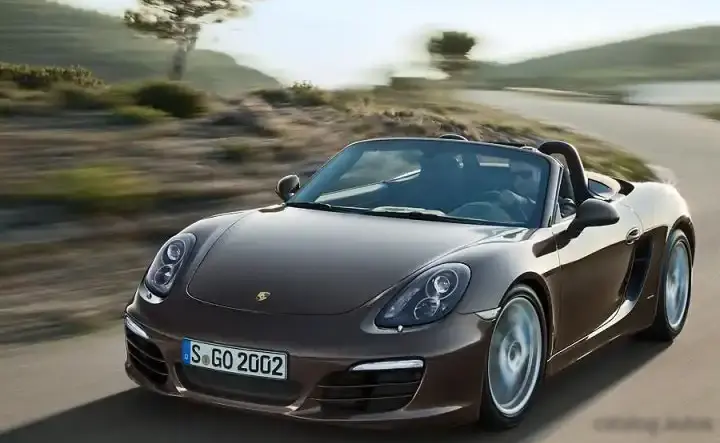
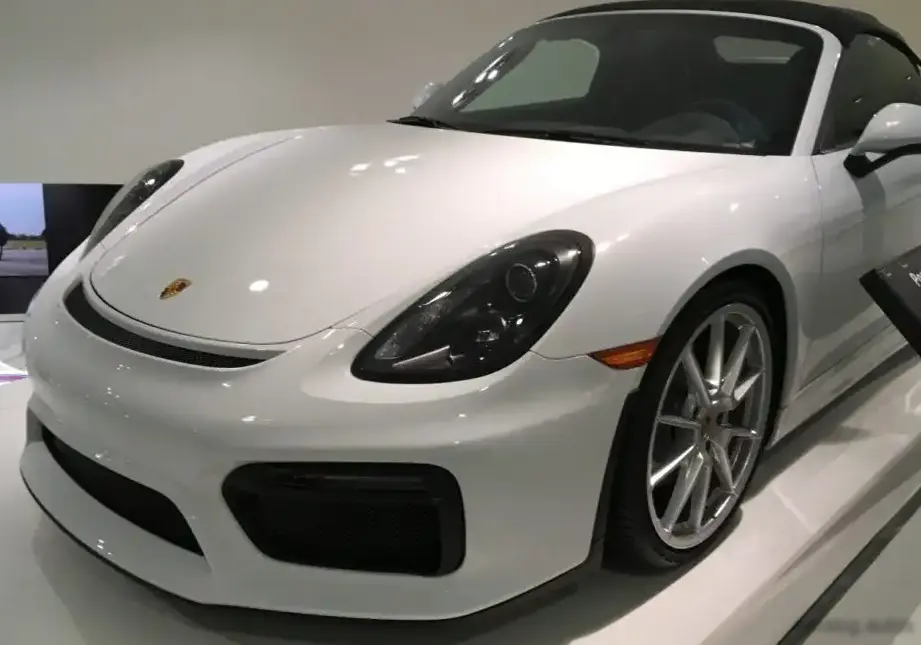
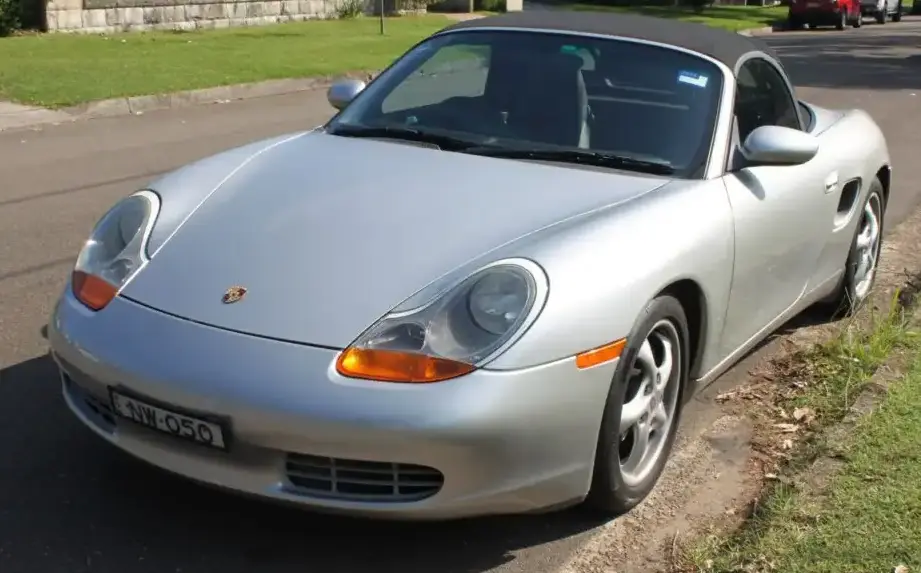
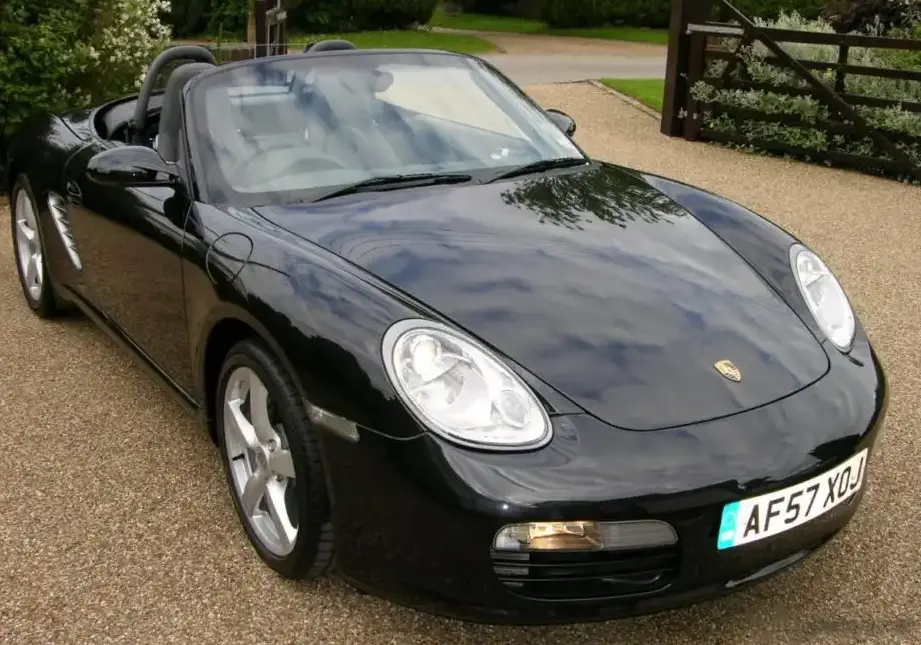
The Porsche Boxster (987) 2.7 Tiptronic, produced from October 2004 to August 2006, marked a significant evolution in Porsche’s mid-engine roadster lineage. Falling within the first generation of the 987 series (internally designated 987.1), this variant occupied a middle ground in the Boxster lineup, offering a balance between performance and accessibility. It served as a step up from the base 2.5-liter model, while remaining more attainable than the higher-performance 3.2-liter S variant. The 2.7 Tiptronic aimed to broaden the Boxster’s appeal by providing the convenience of an automatic transmission alongside a respectable power output.
Powertrain & Engine Architecture
The 2.7 Tiptronic is powered by the M96.25 engine, a naturally aspirated 2.7-liter flat-six (boxer) engine. This engine benefited from an increased displacement compared to the 2.5-liter unit, resulting in a noticeable power boost. The M96.25 featured multi-port fuel injection and a double overhead camshaft (DOHC) valvetrain, contributing to its smooth power delivery. The engine produced 240 horsepower at 6400 rpm and 270 Nm (199 lb-ft) of torque between 4700 and 6000 rpm. The Tiptronic transmission, a five-speed automatic, allowed for both fully automatic operation and manual gear selection via steering wheel-mounted paddles or the gear selector. This transmission utilized a torque converter and offered a smoother, more relaxed driving experience compared to the standard six-speed manual. The transmission’s programming prioritized smooth shifts and comfortable cruising, rather than aggressive downshifts.
Driving Characteristics
The 2.7 Tiptronic offered a distinct driving experience compared to its manual counterpart and the higher-output S model. While not as engaging as the manual, the Tiptronic provided a level of convenience that appealed to a broader audience. Acceleration from 0 to 60 mph took approximately 6.8 seconds, and the car could reach a top speed of 155 mph. The automatic transmission’s gear ratios were tuned for a balance of fuel efficiency and responsiveness. Compared to the manual, the Tiptronic felt slightly less immediate in its responses, but the smooth shifts and ease of use made it a compelling option for daily driving. The 2.7-liter engine provided ample power for spirited driving, but lacked the outright punch of the 3.2-liter S. The Tiptronic’s shift points were optimized for fuel economy, sometimes requiring a manual downshift for quicker acceleration when overtaking.
Equipment & Trim Levels
The 2.7 Tiptronic came standard with a respectable array of features. Interior appointments included partial leather upholstery, air conditioning, a CD stereo system, and power windows and locks. Optional extras were plentiful, allowing buyers to customize their Boxster to their preferences. Popular options included full leather interiors, navigation systems, sport seats, and upgraded audio systems. Porsche offered a wide range of personalization options, allowing customers to tailor the car to their individual tastes. The standard wheels were 17-inch alloys, but larger diameter wheels were available as an option.
Chassis & Braking
The 987 Boxster benefited from a significantly stiffer chassis compared to the 986 generation, enhancing handling and overall rigidity. The suspension consisted of independent McPherson struts at all four corners. The 2.7 Tiptronic utilized ventilated disc brakes on all wheels, providing ample stopping power. ABS (Anti-lock Braking System) was standard. The suspension tuning was geared towards a balance of comfort and handling, making the car enjoyable to drive on both winding roads and long highway stretches. The weight distribution, characteristic of mid-engine designs, contributed to neutral handling characteristics. The standard brakes were more than adequate for most driving situations, but larger brake rotors were available as an option for track use.
Market Reception & Comparison
The Porsche Boxster (987) 2.7 Tiptronic was generally well-received by automotive critics. It was praised for its improved refinement, comfortable ride, and accessible performance. However, some reviewers noted that the Tiptronic transmission lacked the engagement of the manual gearbox. Compared to the base 2.5-liter model, the 2.7 offered a noticeable performance upgrade. Fuel economy was reasonable for a sports car, averaging around 22.4 mpg in combined driving. Reliability was generally good, although the M96 engine family is known for potential intermediate shaft bearing issues, requiring preventative maintenance in some cases. The 2.7 Tiptronic appealed to buyers who prioritized comfort and convenience over outright performance, making it a popular choice for those seeking a more relaxed driving experience.
Legacy
The Porsche Boxster (987) 2.7 Tiptronic remains a popular choice in the used car market. Its combination of Porsche performance, relative affordability, and the convenience of an automatic transmission continues to appeal to enthusiasts. While the M96 engine requires diligent maintenance, well-maintained examples can provide years of reliable enjoyment. The 987 generation Boxster is widely regarded as a significant improvement over the original 986, solidifying the Boxster’s position as a desirable and capable sports car. The 2.7 Tiptronic represents a sweet spot in the 987 lineup, offering a compelling blend of performance, comfort, and value.