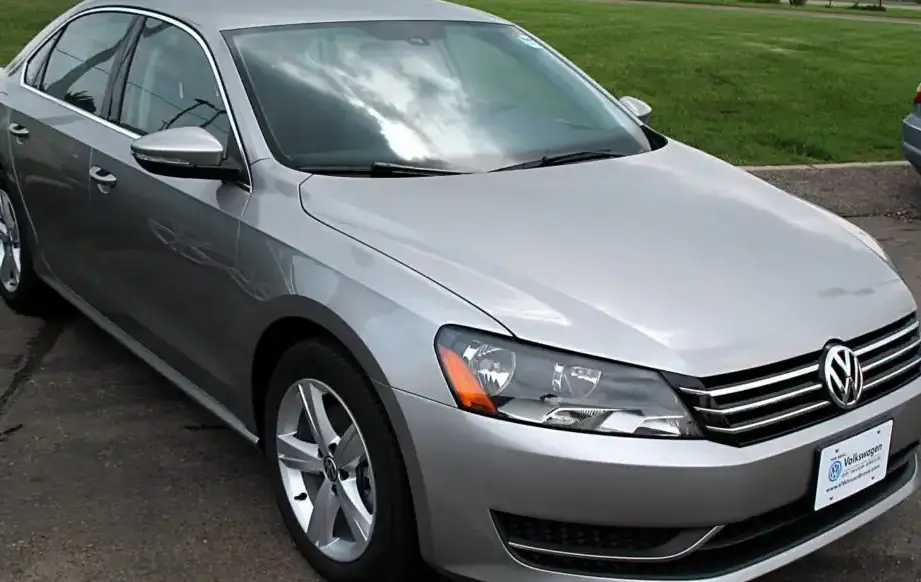
The Volkswagen Passat (North America, A32) 3.6 V6 FSI with the Direct-Shift Gearbox (DSG) was a premium trim level offered for the North American market Passat, produced between 2011 and 2015. Representing the top-tier engine option for this generation (B7), it aimed to provide a blend of performance and refinement in a mid-size sedan package. This variant occupied the highest performance bracket of the North American Passat lineup, positioned above the 2.5-liter inline-four and the 1.8-liter turbocharged four-cylinder models. It was a key offering for Volkswagen in a segment dominated by Japanese and American manufacturers, attempting to establish the Passat as a more European-flavored alternative.
Technical Specifications
| Brand | Volkswagen |
| Model | Passat |
| Generation | Passat (North America, A32) |
| Type (Engine) | 3.6 V6 FSI (280 Hp) DSG |
| Start of production | 2011 |
| End of production | 2015 |
| Powertrain Architecture | Internal Combustion engine |
| Body type | Sedan |
| Seats | 5 |
| Doors | 4 |
| Fuel consumption (urban) | 11.8 l/100 km (19.9 US mpg) |
| Fuel consumption (extra urban) | 8.4 l/100 km (28 US mpg) |
| Fuel Type | Petrol (Gasoline) |
| Weight-to-power ratio | 5.6 kg/Hp |
| Weight-to-torque ratio | 4.5 kg/Nm |
| Power | 280 Hp @ 6200 rpm |
| Power per litre | 77.8 Hp/l |
| Torque | 350 Nm @ 2500 rpm (258.15 lb.-ft. @ 2500 rpm) |
| Engine layout | Front, Transverse |
| Engine Model/Code | EA390 / CDVB |
| Engine displacement | 3597 cm3 (219.5 cu. in.) |
| Number of cylinders | 6 |
| Engine configuration | VR-engine |
| Cylinder Bore | 89 mm (3.5 in.) |
| Piston Stroke | 96.4 mm (3.8 in.) |
| Compression ratio | 11.4:1 |
| Number of valves per cylinder | 4 |
| Fuel injection system | Direct injection |
| Engine aspiration | Naturally aspirated engine |
| Valvetrain | DOHC |
| Engine oil capacity | 5.5 l (5.81 US qt | 4.84 UK qt) |
| Coolant | 10.1 l (10.67 US qt | 8.89 UK qt) |
| Kerb Weight | 1563 kg (3445.83 lbs.) |
| Max. weight | 2100 kg (4629.71 lbs.) |
| Max load | 537 kg (1183.88 lbs.) |
| Trunk (boot) space – minimum | 450 l (15.89 cu. ft.) |
| Fuel tank capacity | 70 l (18.49 US gal | 15.4 UK gal) |
| Permitted trailer load without brakes | 450 kg (992.08 lbs.) |
| Permitted towbar download | 75 kg (165.35 lbs.) |
| Length | 4868 mm (191.65 in.) |
| Width | 1835 mm (72.24 in.) |
| Height | 1487 mm (58.54 in.) |
| Wheelbase | 2803 mm (110.35 in.) |
| Front track | 1577 mm (62.09 in.) |
| Rear (Back) track | 1550 mm (61.02 in.) |
| Ride height (ground clearance) | 138 mm (5.43 in.) |
| Drag coefficient (Cd) | 0.31 |
| Minimum turning circle (turning diameter) | 11.7 m (38.39 ft.) |
| Drivetrain Architecture | The Internal combustion engine (ICE) drives the front wheels of the vehicle. |
| Drive wheel | Front wheel drive |
| Number of gears and type of gearbox | 6 gears, automatic transmission DSG |
| Front suspension | Independent, type McPherson with coil spring and anti-roll bar |
| Rear suspension | Independent multi-link spring suspension with stabilizer |
| Front brakes | Ventilated discs, 312×25 mm |
| Rear brakes | Disc, 272×10 mm |
| Assisting systems | ABS (Anti-lock braking system) |
| Steering type | Steering rack and pinion |
| Power steering | Electric Steering |
| Tires size | 235/45 R18 |
| Wheel rims size | 8J x 18 |
INTRODUCTION
The 3.6 V6 FSI-equipped Passat, produced from 2011 to 2015, represented the pinnacle of performance for the North American A32 generation. Built on the Volkswagen Group’s B7 platform (shared with the Audi A4 and Škoda Superb), this variant aimed to deliver a more engaging driving experience than the base engine options. It was marketed towards buyers seeking a sophisticated, European-engineered sedan with ample power for highway cruising and confident acceleration. The North American Passat differed significantly from its European counterpart, being larger in dimensions and tailored to American preferences for comfort and space.
Powertrain & Engine Architecture
At the heart of this Passat variant lies the EA390 engine family, specifically the CDVB code 3.6-liter VR6 engine. This engine is a 60-degree V6, utilizing a narrow-angle configuration that allows it to be packaged more compactly than a traditional V6. It features direct fuel injection (FSI – Fuel Stratified Injection) which improves efficiency and power output. The engine produces 280 horsepower at 6200 rpm and 258 lb-ft of torque at 2500 rpm. The valvetrain is a dual overhead camshaft (DOHC) design with four valves per cylinder. The engine’s intake manifold is tuned for broad torque delivery, making it responsive in everyday driving situations. Paired with the engine is Volkswagen’s renowned 6-speed DSG (Direct-Shift Gearbox), a dual-clutch transmission known for its quick and smooth shifts. The DSG allows for both fully automatic operation and manual gear selection via steering wheel-mounted paddles or the gear selector.
Driving Characteristics
The 3.6 V6 FSI Passat offered a noticeably more spirited driving experience compared to the 2.5L and 1.8T models. The DSG transmission played a crucial role in maximizing the engine’s output, providing rapid gear changes and keeping the engine within its optimal power band. While not a sports sedan, the V6 Passat delivered confident acceleration for merging onto highways and overtaking maneuvers. The steering was precise, though somewhat lacking in feedback. The suspension, tuned for comfort, provided a smooth ride, but could feel slightly soft during aggressive cornering. The DSG’s programming prioritized smooth shifts in ‘D’ mode, while ‘S’ mode offered more aggressive shift points and engine braking. Compared to the manual transmission options available on the lower trims, the DSG offered convenience and comparable performance, though some enthusiasts preferred the greater control of a manual gearbox.
Equipment & Trim Levels
The 3.6 V6 FSI typically came equipped as the SEL Premium trim level, representing the highest level of luxury and features. Standard equipment included leather upholstery, heated front seats, a premium audio system, a sunroof, and automatic climate control. Optional extras included navigation, rear-view camera, and adaptive cruise control. Interior trim was generally executed with high-quality materials, aiming for a premium feel. The dashboard layout was functional and straightforward, with a focus on ergonomics. Exterior features often included unique alloy wheel designs and chrome accents to differentiate it from lower trims.
Chassis & Braking
The Passat’s chassis featured an independent McPherson strut front suspension and an independent multi-link rear suspension. The V6 model typically received slightly stiffer springs and dampers compared to the base models to manage the increased weight and power. Braking duties were handled by ventilated discs at the front and solid discs at the rear. Anti-lock brakes (ABS) were standard, along with electronic stability control. The steering system utilized an electric power steering system, providing light and precise steering feel.
Market Reception & Comparison
Critics generally praised the 3.6 V6 FSI Passat for its refined engine, comfortable ride, and spacious interior. However, some reviewers noted that the handling wasn’t as sharp as some of its competitors, such as the Honda Accord or Mazda6. Fuel economy was also a point of concern, as the V6 engine consumed significantly more fuel than the four-cylinder options. Compared to the 2.5L Passat, the V6 offered a substantial performance upgrade, but at a higher price point. Against the 1.8T, the V6 provided more power and a smoother driving experience, but again, came with a higher cost and reduced fuel efficiency. Reliability was generally good, though some owners reported issues with the DSG transmission, particularly early production models.
Legacy
The 3.6 V6 FSI Passat remains a desirable option in the used car market for buyers seeking a comfortable and well-equipped mid-size sedan with a powerful engine. The VR6 engine is known for its durability and relatively straightforward maintenance. While the DSG transmission requires periodic servicing, it is generally reliable when properly maintained. The A32 generation Passat, particularly the V6 variant, has established a reputation as a solid and dependable vehicle, offering a blend of European engineering and American practicality. However, potential buyers should be aware of the potential for DSG transmission issues and ensure that the vehicle has been properly maintained.