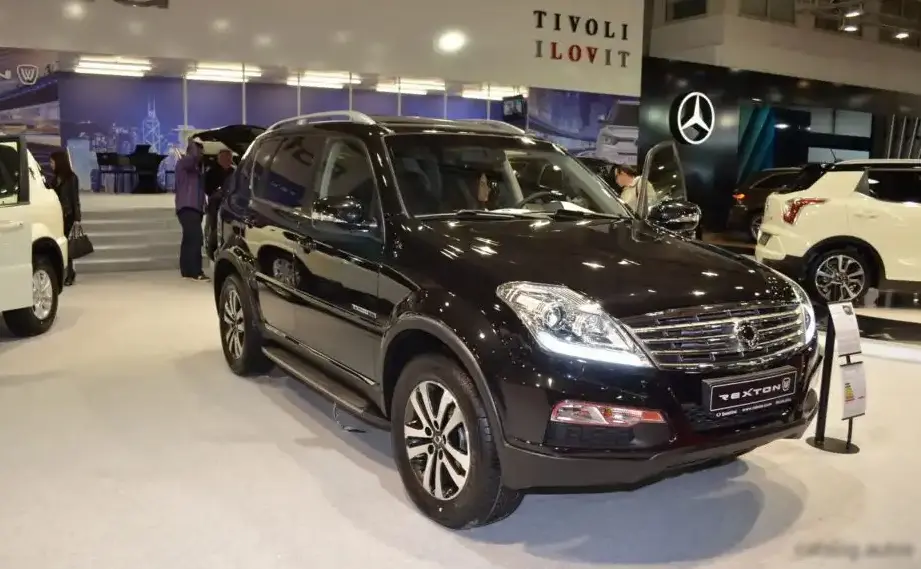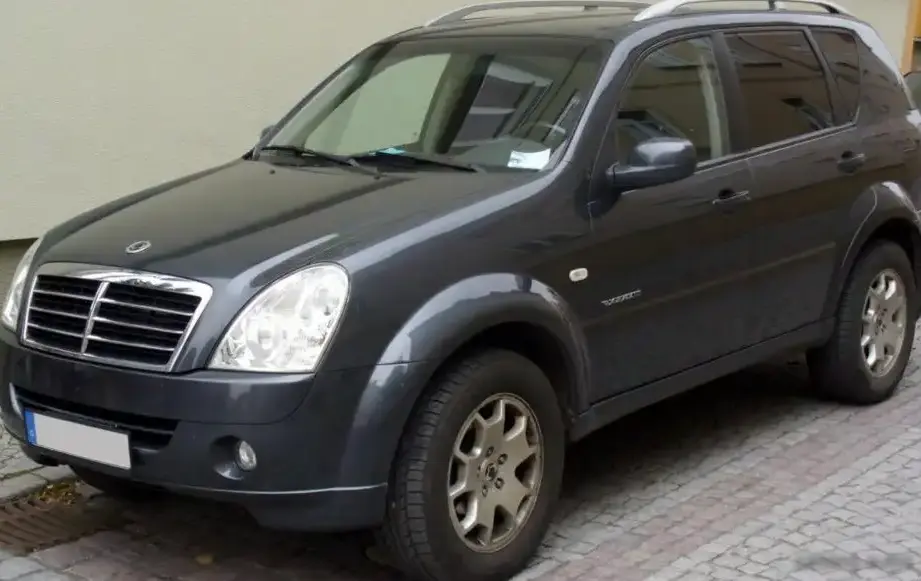
The SsangYong Rexton I (facelifted in 2006) RX 270 XVT, equipped with a 2.7-liter diesel engine producing 186 horsepower and paired with a five-speed automatic transmission, represents a significant iteration of SsangYong’s first foray into the mid-size SUV market. Produced from 2006 to 2012, this variant aimed to offer a blend of off-road capability, space, and relative comfort, targeting buyers seeking a robust and practical vehicle. The facelift brought styling updates and refinements to the original Rexton, launched in 2001, enhancing its appeal in a competitive segment. This particular RX 270 XVT trim sat in the mid-range of the Rexton lineup, offering a step up in performance and features compared to the base models, but remaining below the more luxurious and fully-equipped versions.
Technical Specifications
| Brand | SsangYong |
| Model | Rexton |
| Generation | Rexton I (facelift 2006) |
| Type (Engine) | RX 270 XVT (186 Hp) AWD Automatic |
| Start of production | 2006 |
| End of production | 2012 |
| Powertrain Architecture | Internal Combustion engine |
| Body type | SUV |
| Seats | 5-7 |
| Doors | 5 |
| Fuel consumption (economy) – urban (NEDC) | 11.2 l/100 km (21 US mpg, 25.2 UK mpg, 8.9 km/l) |
| Fuel consumption (economy) – extra urban (NEDC) | 8 l/100 km (29.4 US mpg, 35.3 UK mpg, 12.5 km/l) |
| Fuel consumption (economy) – combined (NEDC) | 9.2 l/100 km (25.6 US mpg, 30.7 UK mpg, 10.9 km/l) |
| CO2 emissions (NEDC) | 233 g/km |
| Fuel Type | Diesel |
| Acceleration 0 – 100 km/h | 11.6 sec |
| Acceleration 0 – 62 mph | 11.6 sec |
| Acceleration 0 – 60 mph | 11 sec |
| Maximum speed | 181 km/h (112.47 mph) |
| Emission standard | Euro 4 |
| Weight-to-power ratio | 10.8 kg/Hp, 92.3 Hp/tonne |
| Weight-to-torque ratio | 5 kg/Nm, 199.5 Nm/tonne |
| Power | 186 Hp @ 4000 rpm |
| Power per litre | 69 Hp/l |
| Torque | 402 Nm @ 1600-3000 rpm (296.5 lb.-ft. @ 1600-3000 rpm) |
| Engine layout | Front, Longitudinal |
| Engine Model/Code | D27DTP |
| Engine displacement | 2696 cm3 (164.52 cu. in.) |
| Number of cylinders | 5 |
| Engine configuration | Inline |
| Cylinder Bore | 86.2 mm (3.39 in.) |
| Piston Stroke | 92.4 mm (3.64 in.) |
| Compression ratio | 17.5:1 |
| Number of valves per cylinder | 4 |
| Fuel injection system | Diesel Commonrail |
| Engine aspiration | Turbocharger, Intercooler |
| Valvetrain | DOHC |
| Engine oil capacity | 8.5 l (8.98 US qt | 7.48 UK qt) |
| Coolant | 11 l (11.62 US qt | 9.68 UK qt) |
| Kerb Weight | 2015-2099 kg (4442.31 – 4627.5 lbs.) |
| Max. weight | 2710-2805 kg (5974.53 – 6183.97 lbs.) |
| Max load | 695-706 kg (1532.21 – 1556.46 lbs.) |
| Trunk (boot) space – minimum | 935 l (33.02 cu. ft.) |
| Trunk (boot) space – maximum | 1524 l (53.82 cu. ft.) |
| Fuel tank capacity | 78 l (20.61 US gal | 17.16 UK gal) |
| Max. roof load | 45 kg (99.21 lbs.) |
| Permitted trailer load with brakes (12%) | 3500 kg (7716.18 lbs.) |
| Permitted trailer load without brakes | 750 kg (1653.47 lbs.) |
| Permitted towbar download | 140 kg (308.65 lbs.) |
| Length | 4720 mm (185.83 in.) |
| Width | 1870 mm (73.62 in.) |
| Height | 1830 mm (72.05 in.) |
| Wheelbase | 2820 mm (111.02 in.) |
| Front track | 1550 mm (61.02 in.) |
| Rear (Back) track | 1540 mm (60.63 in.) |
| Front overhang | 860 mm (33.86 in.) |
| Rear overhang | 1040 mm (40.94 in.) |
| Ride height (ground clearance) | 200 mm (7.87 in.) |
| Minimum turning circle (turning diameter) | 11.2 m (36.75 ft.) |
| Approach angle | 28° |
| Departure angle | 25.5° |
| Ramp-over (brakeover) angle | 22.5° |
| Drivetrain Architecture | The Internal combustion engine (ICE) drives permanently the four wheels of the vehicle. |
| Drive wheel | All wheel drive (4×4) |
| Number of gears and type of gearbox | 5 gears, automatic transmission |
| Front suspension | Coil spring, Double wishbone |
| Rear suspension | Independent multi-link spring suspension with stabilizer |
| Front brakes | Ventilated discs |
| Rear brakes | Ventilated discs |
| Assisting systems | ABS (Anti-lock braking system) |
| Steering type | Steering rack and pinion |
| Power steering | Hydraulic Steering |
| Tires size | 255/60 R18 |
| Wheel rims size | 7.5J x 18 |
Powertrain & Engine Architecture
The heart of the RX 270 XVT is the SsangYong D27DTP, a 2.7-liter inline five-cylinder diesel engine. This engine utilizes a common rail direct injection system, delivering fuel at extremely high pressure for improved combustion efficiency and reduced emissions. A turbocharger with an intercooler further enhances performance by forcing more air into the cylinders. The DOHC (Double Overhead Camshaft) valvetrain ensures precise valve control, contributing to the engine’s power output and responsiveness. The engine produces 186 horsepower at 4000 rpm and a substantial 402 Nm (296.5 lb-ft) of torque between 1600 and 3000 rpm. This torque band is particularly useful for towing and off-road driving. The engine is longitudinally mounted, directing power to all four wheels through a five-speed automatic transmission. This transmission, while providing convenience, isn’t known for its particularly quick shifts or advanced features compared to more modern automatics.
Driving Characteristics
The RX 270 XVT offers a comfortable, if not particularly sporty, driving experience. The automatic transmission prioritizes smooth shifts over rapid acceleration. While the 186 hp engine provides adequate power for everyday driving, it doesn’t offer the brisk acceleration of some of its competitors. The torque, however, is readily available, making it capable of handling moderate inclines and towing loads. The all-wheel-drive system provides enhanced traction in slippery conditions, making it a capable vehicle for inclement weather or light off-road use. Compared to the manual transmission versions of the Rexton, the automatic sacrifices some responsiveness, but gains in ease of use, especially in urban environments. The higher-output versions, such as those with the Mercedes-Benz-sourced engines in later models, offered significantly more performance.
Equipment & Trim Levels
The RX 270 XVT trim level included a reasonable level of standard equipment. Typically, this included air conditioning, power windows and locks, a basic audio system, and alloy wheels. Interior upholstery was usually cloth, though leather options were available. Safety features included ABS brakes and, depending on the year, airbags. Optional extras could include a sunroof, upgraded audio system, and parking sensors. The XVT trim aimed to strike a balance between affordability and features, appealing to buyers who wanted a well-equipped SUV without the premium price tag of the top-of-the-line models.
Chassis & Braking
The Rexton I utilized a body-on-frame construction, providing a robust and durable chassis. The front suspension featured coil springs and a double wishbone setup, while the rear employed an independent multi-link spring suspension with a stabilizer bar. This suspension configuration aimed to provide a comfortable ride and good handling characteristics. Braking duties were handled by ventilated discs on all four wheels, providing adequate stopping power for the vehicle’s weight. The hydraulic power steering offered a reasonable level of assistance, making it easy to maneuver in tight spaces.
Market Reception & Comparison
The SsangYong Rexton, including the RX 270 XVT variant, received mixed reviews. Critics generally praised its spacious interior, off-road capability, and competitive price point. However, the engine was often criticized for being somewhat noisy and lacking the refinement of some of its competitors. Fuel economy, while acceptable for a vehicle of its size and type, wasn’t class-leading. Compared to other trims in the Rexton lineup, the RX 270 XVT offered a good balance of performance and value. The manual transmission versions were favored by drivers seeking more engagement, while the higher-output engines appealed to those prioritizing performance.
Legacy
The SsangYong Rexton I, particularly the RX 270 XVT, has developed a reputation for being a relatively reliable and durable vehicle, especially when properly maintained. The D27DTP engine, while not without its quirks, is generally considered to be a robust unit. Common issues include wear and tear on suspension components and potential problems with the automatic transmission. In the used car market, the Rexton I represents an affordable option for buyers seeking a spacious and capable SUV. However, potential buyers should be aware of the vehicle’s age and potential maintenance requirements. The Rexton I laid the foundation for SsangYong’s continued presence in the SUV market, and its successor models have built upon its strengths.