
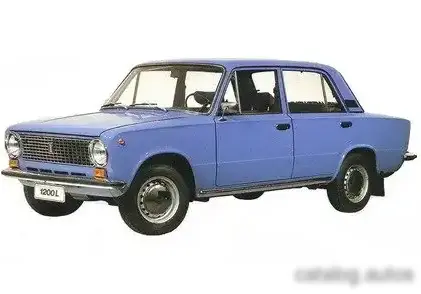
The Lada 21013 1.2, producing 64 horsepower, represents a significant iteration within the classic Lada 2101 series. Introduced in 1977 and continuing through 1988, the 21013 was a mainstay of the Soviet automotive landscape and a key export for AvtoVAZ. This variant, equipped with a 1.2-liter engine and a four-speed manual transmission, occupied the entry-level position within the 2101 lineup, offering affordable transportation to a broad segment of the population. It was based on the Fiat 124, a design licensed from the Italian manufacturer in the late 1960s, and became a symbol of Soviet motoring for over two decades.
Technical Specifications
| Brand | Lada |
| Model | 2101 |
| Generation | 21013 |
| Type (Engine) | 1.2 (64 Hp) |
| Start of production | 1977 |
| End of production | 1988 |
| Powertrain Architecture | Internal Combustion engine |
| Body type | Sedan |
| Seats | 5 |
| Doors | 4 |
| Fuel consumption (urban) | 9.4 l/100 km (25 US mpg, 30.1 UK mpg, 10.6 km/l) |
| Fuel consumption (extra urban) | 6.9 l/100 km (34.1 US mpg, 40.9 UK mpg, 14.5 km/l) |
| Fuel consumption (combined) | 9.2 l/100 km (25.6 US mpg, 30.7 UK mpg, 10.9 km/l) |
| Fuel Type | Petrol (Gasoline) |
| Acceleration 0 – 100 km/h | 20 sec |
| Acceleration 0 – 62 mph | 20 sec |
| Acceleration 0 – 60 mph | 19 sec |
| Maximum speed | 142 km/h (88.23 mph) |
| Weight-to-power ratio | 14.9 kg/Hp |
| Weight-to-torque ratio | 10.7 kg/Nm |
| Power | 64 Hp @ 5600 rpm |
| Power per litre | 53.4 Hp/l |
| Torque | 89 Nm @ 3400 rpm (65.64 lb.-ft. @ 3400 rpm) |
| Engine layout | Front, Longitudinal |
| Engine displacement | 1198 cm3 (73.11 cu. in.) |
| Number of cylinders | 4 |
| Engine configuration | Inline |
| Cylinder Bore | 76 mm (2.99 in.) |
| Piston Stroke | 66 mm (2.6 in.) |
| Compression ratio | 8.5:1 |
| Number of valves per cylinder | 2 |
| Fuel injection system | Carburettor |
| Engine aspiration | Naturally aspirated engine |
| Valvetrain | OHC |
| Kerb Weight | 955 kg (2105.41 lbs.) |
| Max. weight | 1355 kg (2987.26 lbs.) |
| Max load | 400 kg (881.85 lbs.) |
| Trunk (boot) space – minimum | 325 l (11.48 cu. ft.) |
| Fuel tank capacity | 39 l (10.3 US gal | 8.58 UK gal) |
| Length | 4043 mm (159.17 in.) |
| Width | 1611 mm (63.43 in.) |
| Height | 1440 mm (56.69 in.) |
| Wheelbase | 2424 mm (95.43 in.) |
| Front track | 1349 mm (53.11 in.) |
| Rear (Back) track | 1305 mm (51.38 in.) |
| Drivetrain Architecture | The Internal combustion engine (ICE) drives the rear wheels of the vehicle. |
| Drive wheel | Rear wheel drive |
| Number of gears and type of gearbox | 4 gears, manual transmission |
| Front suspension | Double wishbone |
| Rear suspension | Coil spring |
| Front brakes | Disc |
| Rear brakes | Drum |
| Steering type | Worm-reduction unit |
| Tires size | 155/80 SR13 |
Powertrain & Engine Architecture
The heart of the 21013 1.2 was the 1.2-liter (1198 cc) inline-four cylinder engine. Designated internally with various codes depending on the production year, this engine was a relatively simple design, featuring a single overhead camshaft (OHC) and two valves per cylinder. Fuel delivery was handled by a carburetor, a common feature for vehicles of this era, rather than fuel injection. The engine produced 64 horsepower at 5600 rpm and 89 Nm (65.64 lb-ft) of torque at 3400 rpm. The engine was mounted longitudinally in the front of the vehicle, driving the rear wheels. The four-speed manual transmission was a standard component, providing relatively long gearing aimed at fuel efficiency rather than outright performance.
Driving Characteristics
The 21013 1.2 offered modest performance. Acceleration from 0 to 100 km/h (0-62 mph) took approximately 20 seconds, and the top speed was around 142 km/h (88 mph). Compared to later, more powerful versions of the 2101, such as those equipped with 1.5 or 1.6-liter engines, the 1.2-liter variant felt noticeably underpowered, particularly when fully loaded or climbing hills. The long gearing of the four-speed transmission helped to improve fuel economy, but also contributed to the sluggish acceleration. The steering, utilizing a worm-reduction unit, was known for being somewhat vague and requiring a good amount of effort, especially at lower speeds. However, the suspension provided a reasonably comfortable ride, absorbing bumps and imperfections in the road surface effectively.
Equipment & Trim Levels
The 21013 1.2 was typically equipped with basic amenities. Standard features included cloth upholstery, a simple dashboard layout with analog gauges, and manually operated windows and door locks. Heating was standard, but air conditioning was not typically offered on this base model. Optional extras were limited, but could include a radio, upgraded seat covers, and sometimes, a more sophisticated instrument cluster. The interior was functional and durable, designed to withstand the rigors of daily use. The exterior trim was minimal, with basic chrome bumpers and relatively simple steel wheels.
Chassis & Braking
The 21013 featured a body-on-frame construction, a common practice for vehicles of its time. The front suspension utilized a double wishbone design, while the rear suspension employed a coil spring setup. Braking was accomplished via disc brakes on the front wheels and drum brakes on the rear. The braking system was adequate for normal driving conditions, but lacked the stopping power of more modern vehicles. The steering system, as mentioned previously, was a worm-reduction unit, providing a somewhat indirect steering feel.
Market Reception & Comparison
The Lada 21013 1.2 was primarily targeted at budget-conscious buyers seeking reliable and affordable transportation. Critics generally acknowledged its simplicity and durability, but also noted its lack of refinement and modest performance. Compared to other trims in the 2101 lineup, such as the 1.5-liter versions, the 1.2 offered lower running costs due to its smaller engine and improved fuel economy (9.2 l/100 km combined). However, it sacrificed performance and overall driving experience. In the Soviet market, it was a popular choice for families and individuals who prioritized practicality over luxury.
Legacy
The Lada 21013 1.2, and the 2101 series as a whole, holds a significant place in automotive history, particularly within the Eastern European context. While not known for groundbreaking innovation, the 2101 provided millions of people with their first taste of personal mobility. The 1.2-liter engine, while relatively simple, proved to be remarkably durable and reliable, even under harsh operating conditions. Today, the 21013 is a popular choice among classic car enthusiasts and collectors, appreciated for its retro charm and affordability. Parts availability can be a challenge, but a dedicated community of owners and restorers continues to keep these vehicles on the road. The 21013 remains a testament to a bygone era of automotive engineering, representing a unique chapter in the history of the automobile.
