
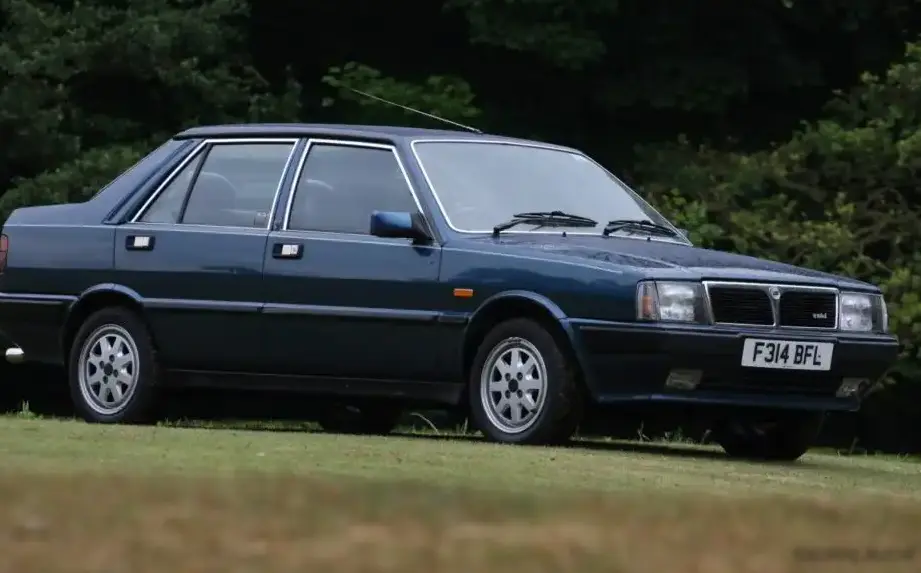
The Lancia Prisma 1.5 (80 hp) represents a significant, though often overlooked, iteration of the Prisma model, produced between 1986 and 1992. Falling within the 831 AB series, the Prisma was essentially a rebadged Fiat Regata, itself a development of the Fiat Ritmo. The Prisma aimed to offer a more upscale and refined experience compared to its Fiat sibling, targeting a buyer seeking Italian style and comfort in a practical, family-sized sedan. This 1.5-liter variant occupied the entry-level position in the Prisma lineup, providing a balance between affordability and acceptable performance for everyday driving. It was a key model for Lancia during a period of transition and restructuring under Fiat ownership.
Technical Specifications
| Brand | Lancia |
| Model | Prisma |
| Generation | Prisma (831 AB) |
| Type (Engine) | 1.5 (80 Hp) |
| Start of production | 1986 |
| End of production | 1992 |
| Powertrain Architecture | Internal Combustion engine |
| Body type | Sedan |
| Fuel Type | Petrol (Gasoline) |
| Power | 80 Hp |
| Engine Model/Code | 831 B1.000 |
| Engine aspiration | Naturally aspirated engine |
| Engine oil capacity | 4.3 l (4.54 US qt | 3.78 UK qt) |
| Coolant capacity | 6 l (6.34 US qt | 5.28 UK qt) |
Powertrain & Engine Architecture
The heart of the Prisma 1.5 was the 831 B1.000 engine, a 1498 cc inline-four cylinder gasoline engine. This engine was a relatively simple design, featuring a single overhead camshaft (SOHC) operating two valves per cylinder. Fuel delivery was managed by a Bosch mechanical fuel injection system, a common setup for European cars of this era. While not as sophisticated as later electronic fuel injection systems, it provided reliable and reasonably efficient operation. The engine’s bore and stroke measured 80mm x 82mm, contributing to its relatively long-stroke character. The compression ratio was typically around 9.2:1. The 831 engine family was known for its durability, though it wasn’t particularly powerful. The Prisma 1.5 was typically paired with a three-speed automatic transmission, although a five-speed manual was also available. The automatic transmission, while offering convenience, was known to slightly diminish the car’s already modest acceleration.
Driving Characteristics
The Prisma 1.5 Automatic offered a comfortable, if uninspiring, driving experience. With 80 horsepower on tap, acceleration was adequate for typical urban and highway driving, but overtaking maneuvers required careful planning. The three-speed automatic transmission featured relatively widely spaced gear ratios. First gear provided reasonable initial acceleration, but the shifts to second and third were noticeable, and the engine could feel strained at higher speeds. The car’s suspension, while tuned for comfort, provided a stable and predictable ride. The steering was light and easy, making it maneuverable in city traffic. Compared to the manual transmission version, the automatic suffered a slight performance penalty, but offered a smoother and more relaxed driving experience. Compared to the more powerful 1.6 and 2.0-liter versions of the Prisma, the 1.5 felt noticeably slower, but it also offered better fuel economy.
Equipment & Trim Levels
The Prisma 1.5, as the entry-level model, came equipped with a reasonable level of standard features. Interior upholstery was typically cloth, available in a range of colors, often featuring a patterned design. The dashboard was constructed from durable plastics and featured a straightforward layout with analog gauges for speed, fuel level, coolant temperature, and a clock. Power steering was often included as standard equipment, a welcome feature for ease of maneuvering. Other standard features included central locking, electric front windows, and a basic stereo system. Optional extras included a sunroof, upgraded upholstery, and alloy wheels. The trim level was generally denoted by badging on the rear of the car, with the base model often lacking any specific designation beyond “Prisma 1.5”.
Chassis & Braking
The Prisma 1.5 utilized a relatively conventional chassis design. It featured a front-engine, front-wheel-drive layout with an independent suspension at the front using MacPherson struts and a semi-independent torsion beam suspension at the rear. Braking was typically accomplished with disc brakes on the front wheels and drum brakes on the rear. The braking system was hydraulically assisted, providing adequate stopping power for the car’s weight and performance. Stabilizer bars were fitted to both the front and rear axles to reduce body roll during cornering. The suspension setup prioritized ride comfort over sporty handling, resulting in a smooth and compliant ride quality. The relatively light weight of the 1.5-liter engine contributed to a balanced chassis feel.
Market Reception & Comparison
The Lancia Prisma 1.5 Automatic received mixed reviews from automotive critics. While praised for its comfortable ride and Italian styling, it was often criticized for its lack of performance and the somewhat dated technology of its engine and transmission. Compared to rivals like the Ford Escort or Opel Kadett, the Prisma 1.5 offered a more refined interior and a more distinctive design, but it lacked the outright performance and fuel efficiency of some competitors. Fuel economy was reasonable for the time, averaging around 30-35 mpg in mixed driving conditions. Reliability was generally good, although the Bosch fuel injection system could occasionally require maintenance. The Prisma 1.5 was primarily targeted at buyers who prioritized comfort and style over performance, and it found a niche market among those seeking a more upscale alternative to mainstream family sedans.
Legacy
The Lancia Prisma 1.5, while not a particularly groundbreaking vehicle, holds a place in automotive history as a representative of Italian design and engineering during the 1980s. The 831 engine family proved to be durable and long-lasting, and many examples of the Prisma 1.5 are still on the road today. In the used car market, the Prisma 1.5 is often sought after by enthusiasts who appreciate its classic Italian styling and relatively simple mechanicals. Parts availability can be a challenge, as the car is now quite old, but many components are still available through specialist suppliers. The Prisma 1.5 represents a unique blend of Italian flair and practical functionality, and it remains a charming and distinctive classic car.
