
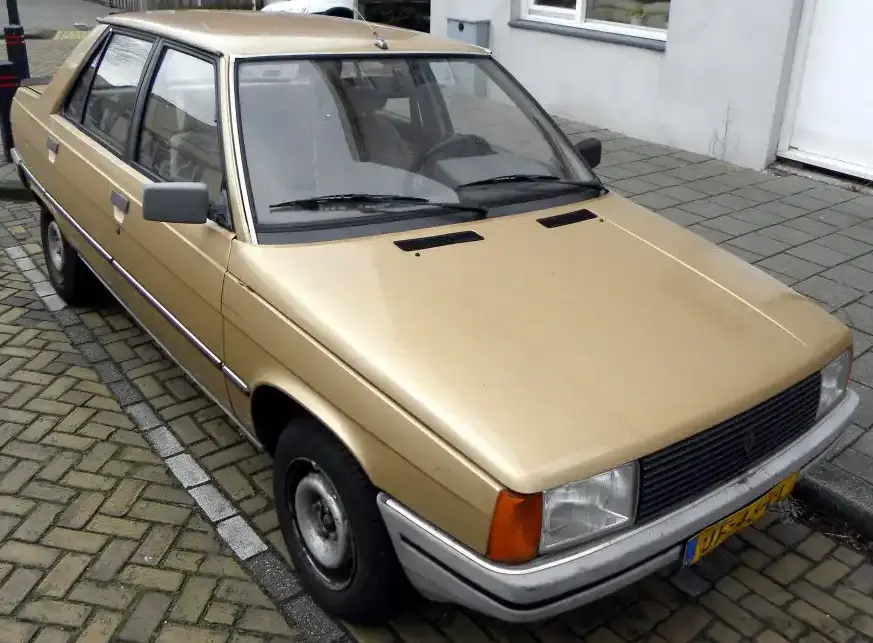
The Renault 9 (L42) 1.4 Turbo, produced between 1986 and 1989, represented a significant step forward for Renault’s compact sedan offerings. Positioned as a more performance-oriented variant within the L42 series, it aimed to attract buyers seeking a blend of practicality and spirited driving. This model occupied a niche above the base 1.1 and 1.4-liter naturally aspirated engines, but below the more luxurious and expensive trims. The 9 (L42) was a key model for Renault, designed to compete in the increasingly competitive European small family car segment, and the 1.4 Turbo was a flagship engine option for the range.
Technical Specifications
| Brand | Renault |
| Model | 9 |
| Generation | 9 (L42) |
| Type (Engine) | 1.4 Turbo (116 Hp) |
| Start of production | 1986 |
| End of production | 1989 |
| Powertrain Architecture | Internal Combustion engine |
| Body type | Sedan |
| Seats | 5 |
| Doors | 4 |
| Fuel Type | Petrol (Gasoline) |
| Power | 116 Hp |
| Engine Model/Code | C1J 760, C1J 764 |
| Engine aspiration | Turbocharger |
| Engine oil capacity | 3.5 l (3.7 US qt | 3.08 UK qt) |
| Coolant capacity | 5.8 l (6.13 US qt | 5.1 UK qt) |
| Fuel tank capacity | 47 l (12.42 US gal | 10.34 UK gal) |
Powertrain & Engine Architecture
The heart of the Renault 9 1.4 Turbo was the C1J engine, specifically the 760 or 764 variant. This was a 1397cc inline-four cylinder engine featuring a single overhead camshaft (SOHC) and a turbocharger. The turbocharger, a Garrett T2 unit, significantly boosted power output compared to the naturally aspirated versions. Fuel delivery was managed by Bosch mechanical fuel injection, a system common for the era, providing a balance between performance and reliability. The engine utilized a cast iron block and an aluminum cylinder head. The valvetrain employed eight valves (two per cylinder), and the compression ratio was approximately 8.8:1. While not a particularly sophisticated engine by modern standards, the C1J Turbo was known for its responsiveness and willingness to rev. The engine was typically paired with a four-speed manual transmission, though a three-speed automatic transmission was also offered, albeit less commonly.
Driving Characteristics
The 1.4 Turbo Renault 9 offered a noticeable performance upgrade over its naturally aspirated siblings. With 116 horsepower, it provided brisk acceleration for its class, capable of reaching 60 mph in around 9.5 seconds. The turbocharger did introduce a degree of turbo lag, meaning there was a slight delay between pressing the accelerator and feeling the full power delivery. However, once the turbo spooled up, the engine provided a strong surge of torque. The four-speed manual transmission was well-matched to the engine’s characteristics, allowing drivers to keep the engine in its power band. The automatic transmission, while offering convenience, did diminish performance somewhat, increasing the 0-60 mph time to around 11 seconds. Handling was generally considered competent, though not particularly sporty. The suspension was tuned for comfort, providing a relatively smooth ride, but body roll was noticeable during cornering.
Equipment & Trim Levels
The Renault 9 1.4 Turbo was generally positioned as a mid-range trim level. Standard equipment typically included cloth upholstery, a basic stereo system, and manual windows and door locks. Power steering was often an optional extra. Higher trim levels, such as the “Pack Électrique,” added features like electric windows, central locking, and upgraded interior trim. The dashboard layout was functional and straightforward, with clearly marked gauges. Air conditioning was also available as an option, but was not standard equipment. The interior space was adequate for a compact sedan, offering comfortable seating for five passengers, though rear legroom could be limited for taller occupants.
Chassis & Braking
The Renault 9 (L42) utilized a relatively simple chassis design. It featured a MacPherson strut front suspension and a torsion beam rear suspension. The front suspension incorporated coil springs and a stabilizer bar, while the rear suspension relied on leaf springs. Braking was typically accomplished with disc brakes on the front wheels and drum brakes on the rear wheels. The braking system was hydraulically assisted, providing adequate stopping power for normal driving conditions. The steering was a rack-and-pinion system, offering reasonable precision and feedback. The chassis was designed to prioritize comfort and affordability, rather than outright handling performance.
Market Reception & Comparison
The Renault 9 1.4 Turbo was generally well-received by automotive critics. It was praised for its lively performance and relatively affordable price. However, some critics noted the presence of turbo lag and the somewhat basic interior appointments. Compared to its rivals, such as the Peugeot 205 and the Citroën AX, the Renault 9 offered a good balance of performance, practicality, and value. The 1.4 Turbo variant was often seen as a more appealing alternative to the base models, offering a significant performance boost without the higher cost of the more luxurious trims. Fuel economy was reasonable for the time, averaging around 35-40 mpg in mixed driving conditions. Reliability was generally good, though the turbocharger did require more maintenance than a naturally aspirated engine.
Legacy
The Renault 9 1.4 Turbo holds a modest but respected place in automotive history. It represented a significant step forward for Renault in terms of performance and technology. While not a groundbreaking model, it offered a compelling package for buyers seeking a practical and enjoyable compact sedan. Today, the Renault 9 1.4 Turbo is becoming increasingly sought after by classic car enthusiasts. The C1J Turbo engine, while requiring careful maintenance, is known for its durability and potential for modification. Finding well-maintained examples can be challenging, as many have succumbed to rust or neglect. However, those that remain offer a nostalgic glimpse into the 1980s and a surprisingly engaging driving experience. The engine’s relative simplicity makes it a favorite among DIY mechanics, and parts availability, while diminishing, is still reasonable.
