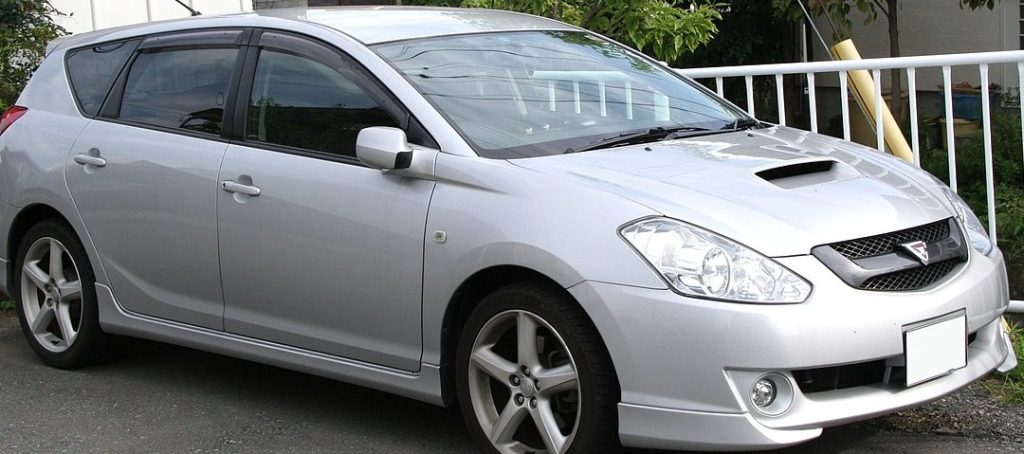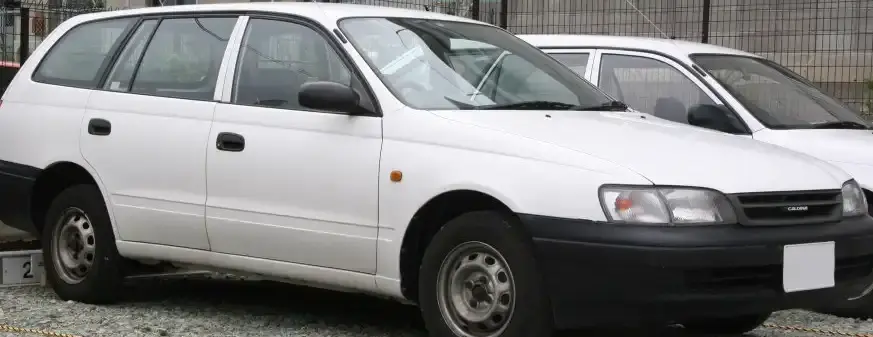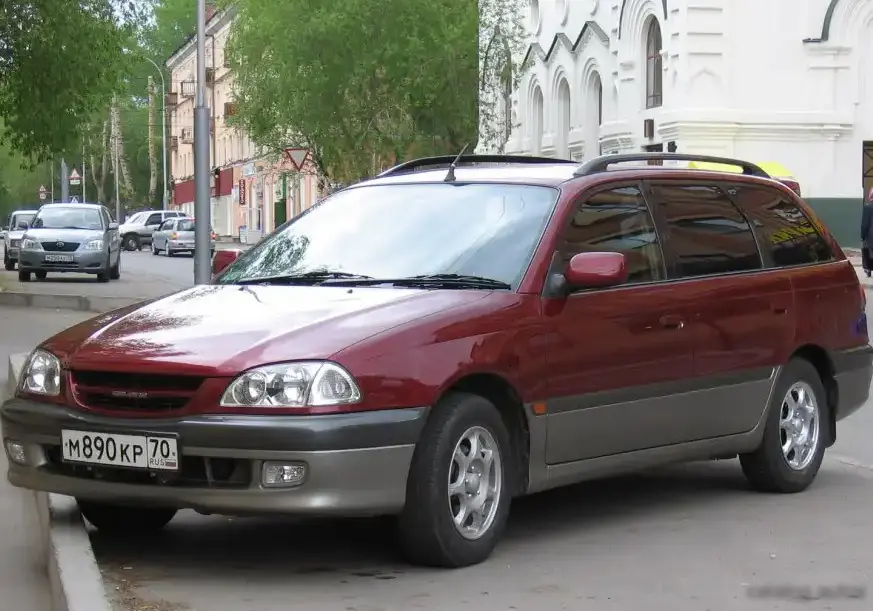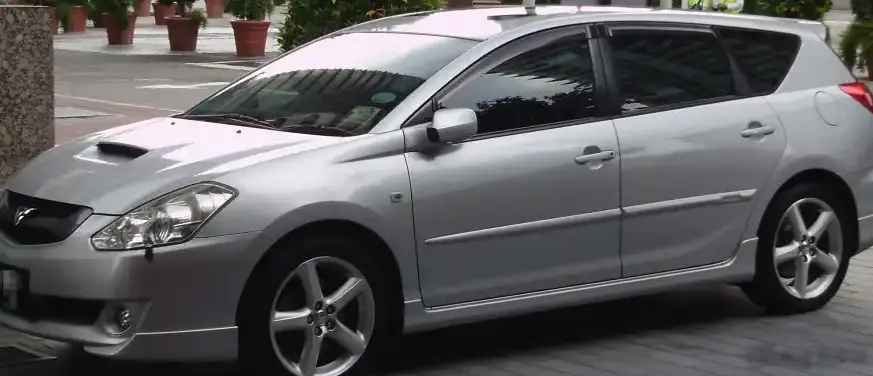
The Toyota Caldina, specifically the T24 generation produced between 2002 and 2007, was a station wagon primarily aimed at the Japanese domestic market (JDM). Positioned as a practical and versatile vehicle, the Caldina offered a blend of passenger comfort and cargo capacity, often appealing to families and those with active lifestyles. The 2.0i variant, equipped with the 1AZ-FSE engine producing 152 horsepower and an automatic transmission, represented a mid-range offering within the Caldina lineup, balancing performance with fuel efficiency and ease of use. It sat below the more powerful turbocharged models and above the base 1.8L engine option.
Technical Specifications
| Brand | Toyota |
| Model | Caldina |
| Generation | Caldina (T24) |
| Type | 2.0i (152 Hp) AWD |
| Start of production | 2002 |
| End of production | 2007 |
| Powertrain Architecture | Internal Combustion engine |
| Body type | Station wagon (estate) |
| Seats | 5 |
| Doors | 5 |
| Fuel Type | Petrol (Gasoline) |
| Weight-to-power ratio | 8.2 kg/Hp, 122.6 Hp/tonne |
| Weight-to-torque ratio | 6.2 kg/Nm, 161.3 Nm/tonne |
| Power | 152 Hp @ 6000 rpm |
| Power per litre | 76.1 Hp/l |
| Torque | 200 Nm @ 4000 rpm (147.51 lb.-ft. @ 4000 rpm) |
| Engine layout | Front, Transverse |
| Engine Model/Code | 1AZ-FSE |
| Engine displacement | 1998 cm3 (121.93 cu. in.) |
| Number of cylinders | 4 |
| Engine configuration | Inline |
| Cylinder Bore | 86 mm (3.39 in.) |
| Piston Stroke | 86 mm (3.39 in.) |
| Compression ratio | 9.8:1 |
| Number of valves per cylinder | 4 |
| Fuel injection system | Direct injection |
| Engine aspiration | Naturally aspirated engine |
| Valvetrain | DOHC |
| Engine oil capacity | 4.2 l (4.44 US qt | 3.7 UK qt) |
| Coolant | 6.7 l (7.08 US qt | 5.9 UK qt) |
| Kerb Weight | 1240 kg (2733.73 lbs) |
| Fuel tank capacity | 60 l (15.85 US gal | 13.2 UK gal) |
| Length | 4510 mm (177.56 in) |
| Width | 1740 mm (68.5 in) |
| Height | 1445 mm (56.89 in) |
| Wheelbase | 2700 mm (106.3 in) |
| Front track | 1505 mm (59.25 in) |
| Rear track | 1500 mm (59.06 in) |
| Minimum turning circle | 10.8 m (35.43 ft) |
| Drive wheel | All wheel drive (4×4) |
| Number of gears | 4 |
| Gearbox type | automatic transmission |
| Front brakes | Ventilated discs |
| Rear brakes | Disc |
| Assisting systems | ABS (Anti-lock braking system) |
| Tires size | 195/65 R15 |
Powertrain & Engine Architecture
The heart of the Caldina 2.0i was the 1AZ-FSE engine, a 1.998-liter inline-four cylinder powerplant. This engine utilized Toyota’s D-4 direct injection technology, which injected fuel directly into the combustion chamber, improving fuel efficiency and reducing emissions. The 1AZ-FSE featured a double overhead camshaft (DOHC) valvetrain with four valves per cylinder, contributing to its respectable power output. The engine’s 9.8:1 compression ratio was a compromise between performance and the ability to run on readily available fuel grades. Paired with this engine was a four-speed automatic transmission, designed for smooth and convenient operation. This transmission wasn’t known for being particularly sporty, prioritizing comfort and fuel economy over rapid shifts.
Driving Characteristics
The 2.0i AWD Caldina offered a comfortable and predictable driving experience. With 152 horsepower and 200 Nm (147.51 lb-ft) of torque, acceleration was adequate for everyday driving, but not particularly brisk. The automatic transmission, while smooth, lacked the responsiveness of a manual gearbox, and the gear ratios were tuned for fuel efficiency rather than outright performance. The all-wheel-drive system provided enhanced traction, particularly in inclement weather conditions, making it a capable vehicle for year-round use. Compared to the turbocharged Caldina variants, the 2.0i felt noticeably less powerful, but it offered a more relaxed and refined driving experience. The weight distribution, combined with the AWD system, contributed to stable handling, though it wasn’t a particularly engaging vehicle for enthusiastic drivers.
Equipment & Trim Levels
The 2.0i trim level typically included standard features such as air conditioning, power windows, power locks, and a basic audio system. Interior upholstery was generally cloth, with options for upgraded materials available. Dashboard configuration was functional and straightforward, prioritizing usability over aesthetic flair. Optional extras could include alloy wheels, a sunroof, and a more advanced audio system with a CD changer. The Caldina wasn’t a luxury vehicle, but it offered a reasonable level of comfort and convenience for its price point.
Chassis & Braking
The Caldina T24 utilized a MacPherson strut suspension in the front and a double-wishbone suspension in the rear. This setup provided a comfortable ride quality, absorbing bumps and irregularities in the road surface effectively. The 2.0i models typically featured ventilated disc brakes in the front and solid disc brakes in the rear. Anti-lock braking system (ABS) was standard, enhancing braking performance and safety. Stabilizer bars were fitted to both the front and rear axles to reduce body roll during cornering. The suspension tuning was geared towards comfort and stability, rather than sporty handling.
Market Reception & Comparison
The Toyota Caldina 2.0i AWD was generally well-received in the Japanese market as a practical and reliable station wagon. Critics praised its spacious interior, comfortable ride, and the added security of all-wheel drive. However, some reviewers noted that the 2.0-liter engine felt underpowered compared to the turbocharged options. Fuel economy was considered reasonable for a vehicle of its size and class. Compared to other station wagons available in Japan at the time, the Caldina offered a compelling combination of features and value. The automatic transmission was seen as a convenience feature, but some drivers preferred the more engaging experience of a manual gearbox.
Legacy
The Toyota Caldina T24, including the 2.0i AWD variant, has developed a following among enthusiasts for its reliability and practicality. The 1AZ-FSE engine is known to be a durable and long-lasting unit, provided it receives regular maintenance. While not a particularly collectible vehicle, well-maintained Caldinas continue to be used as daily drivers and family vehicles. In the used car market, the 2.0i models are often more affordable than the turbocharged versions, making them an attractive option for budget-conscious buyers. The Caldina’s reputation for dependability and its spacious interior have ensured its continued relevance in the years since its production ended.