
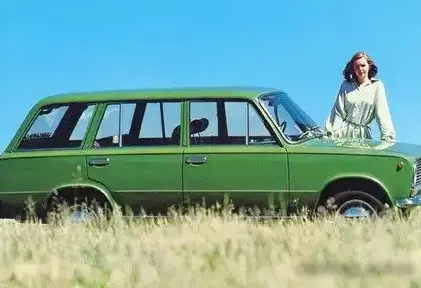
The Lada 21021 1.3, a variant of the popular Lada 2102 station wagon, was produced from 1971 to 1985. Representing a practical and affordable option within the Soviet automotive landscape, the 21021 was a key model for Lada, offering increased cargo capacity compared to the saloon versions. This particular 1.3-liter, 70 horsepower configuration served as an entry-level offering, prioritizing fuel economy and durability over outright performance. It was a mainstay for families and commercial users alike, particularly in Eastern Europe and the Soviet Union, and later found its way into other markets as a budget-friendly vehicle.
Technical Specifications
| Brand | Lada |
| Model | 2102 |
| Generation | 21021 |
| Type (Engine) | 1.3 (70 Hp) |
| Start of production | 1971 |
| End of production | 1985 |
| Powertrain Architecture | Internal Combustion engine |
| Body type | Station wagon (estate) |
| Seats | 5 |
| Doors | 5 |
| Fuel consumption (urban) | 10.9 l/100 km (21.6 US mpg) |
| Fuel consumption (extra urban) | 8.2 l/100 km (28.7 US mpg) |
| Fuel Type | Petrol (Gasoline) |
| Acceleration 0 – 100 km/h | 20 sec |
| Acceleration 0 – 62 mph | 20 sec |
| Acceleration 0 – 60 mph | 19 sec |
| Maximum speed | 145 km/h (90.1 mph) |
| Weight-to-power ratio | 14.6 kg/Hp |
| Weight-to-torque ratio | 10.6 kg/Nm |
| Power | 70 Hp @ 5600 rpm |
| Power per litre | 53.8 Hp/l |
| Torque | 96 Nm @ 3400 rpm (70.81 lb.-ft. @ 3400 rpm) |
| Engine layout | Front, Longitudinal |
| Engine displacement | 1300 cm3 (79.33 cu. in.) |
| Number of cylinders | 4 |
| Engine configuration | Inline |
| Cylinder Bore | 79 mm (3.11 in.) |
| Piston Stroke | 66.2 mm (2.61 in.) |
| Compression ratio | 8.5:1 |
| Number of valves per cylinder | 2 |
| Fuel injection system | Carburettor |
| Engine aspiration | Naturally aspirated engine |
| Valvetrain | OHC |
| Kerb Weight | 1020 kg (2248.72 lbs.) |
| Max. weight | 1420 kg (3130.56 lbs.) |
| Max load | 400 kg (881.85 lbs.) |
| Trunk (boot) space – minimum | 345 l (12.18 cu. ft.) |
| Trunk (boot) space – maximum | 1035 l (36.55 cu. ft.) |
| Fuel tank capacity | 45 l (11.89 US gal | 9.9 UK gal) |
| Length | 4059 mm (159.8 in.) |
| Width | 1611 mm (63.43 in.) |
| Height | 1458 mm (57.4 in.) |
| Wheelbase | 2424 mm (95.43 in.) |
| Front track | 1365 mm (53.74 in.) |
| Rear (Back) track | 1321 mm (52.01 in.) |
| Drivetrain Architecture | The Internal combustion engine (ICE) drives the rear wheels of the vehicle. |
| Drive wheel | Rear wheel drive |
| Number of gears and type of gearbox | 4 gears, manual transmission |
| Front suspension | Double wishbone |
| Rear suspension | Coil spring |
| Front brakes | Disc |
| Rear brakes | Drum |
| Steering type | Worm-reduction unit |
| Tires size | 155/80 SR13 |
Powertrain & Engine Architecture
The heart of the Lada 21021 1.3 was the VAZ-2101 engine, a 1.3-liter inline-four cylinder unit. This engine was heavily based on the Fiat 124 engine, a result of licensing agreements between Fiat and the Soviet Union in the 1960s. The 2101 engine featured a single overhead camshaft (OHC) valvetrain with two valves per cylinder. Fuel delivery was managed by a carburetor, a common feature for vehicles of this era, providing a relatively simple and cost-effective fuel system. The engine produced 70 horsepower at 5600 rpm and 96 Nm (70.81 lb-ft) of torque at 3400 rpm. The engine was mounted longitudinally in the front of the vehicle, driving the rear wheels. The 21021 was exclusively offered with a four-speed manual transmission, designed for durability and ease of maintenance rather than sporty performance.
Driving Characteristics
The 1.3-liter engine in the 21021 provided adequate, but not exhilarating, performance. Acceleration from 0 to 60 mph took around 19 seconds, and the top speed was approximately 90 mph. The four-speed manual transmission had relatively widely spaced gear ratios, prioritizing fuel economy and low-end torque over rapid acceleration. The car felt somewhat sluggish compared to later, more powerful Lada variants, or even contemporary Western European cars. However, the engine was known for its reliability and willingness to pull from low speeds, making it suitable for everyday driving and carrying loads. The rear-wheel-drive configuration provided predictable handling, but the suspension was relatively basic, resulting in a somewhat bumpy ride on uneven surfaces.
Equipment & Trim Levels
The Lada 21021 1.3 was a fairly basic vehicle, reflecting its position as an entry-level model. Standard equipment typically included cloth upholstery, basic instrumentation (speedometer, fuel gauge, temperature gauge), and a heater. Options were limited, but could include a radio, upgraded interior trim, and occasionally, a sunroof. The exterior trim was minimal, with simple chrome bumpers and basic hubcaps. The focus was on providing a functional and affordable vehicle, rather than luxury or advanced features.
Chassis & Braking
The 21021 utilized a body-on-frame construction, common for vehicles of its time. The front suspension consisted of independent double wishbones, while the rear suspension employed a coil spring setup. Braking was provided by disc brakes on the front wheels and drum brakes on the rear. The steering system was a worm-reduction unit, which provided relatively heavy but direct steering feel. The tires were typically 155/80 SR13, chosen for their durability and affordability.
Market Reception & Comparison
The Lada 21021 1.3 was well-received in its primary markets, particularly in the Soviet Union and Eastern Europe, due to its affordability, practicality, and reliability. It was often compared to other budget-oriented station wagons of the time, such as the Škoda 120L Estate. Compared to the more powerful Lada 2102 variants (equipped with 1.5 or 1.6-liter engines), the 1.3-liter version offered better fuel economy but significantly less performance. The 1.3 was also less refined than Western European competitors, but its lower price point made it an attractive option for many buyers. Fuel economy was a strong point, averaging around 21.6 US mpg in the city and 28.7 US mpg on the highway.
Legacy
The Lada 21021 1.3, and the 2102 series as a whole, played a significant role in motorizing Eastern Europe. The powertrain, while simple, proved to be remarkably durable and relatively easy to maintain, even in harsh conditions. Today, the 21021 is a popular choice among classic car enthusiasts and collectors, particularly those interested in Soviet-era automotive history. Parts availability can be challenging, but a dedicated community of owners and restorers keeps these vehicles on the road. While not known for its speed or sophistication, the Lada 21021 1.3 remains a testament to the practicality and resilience of Soviet automotive engineering.
