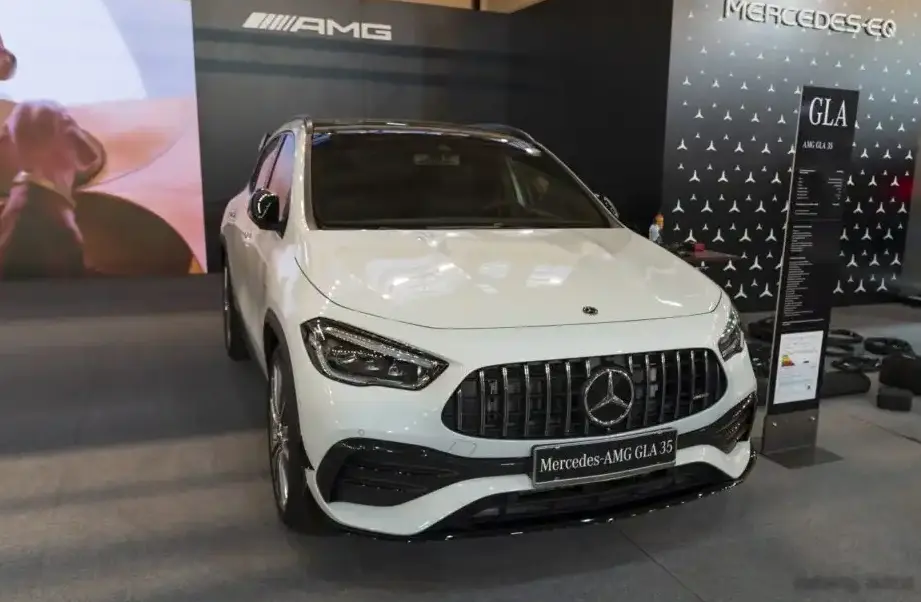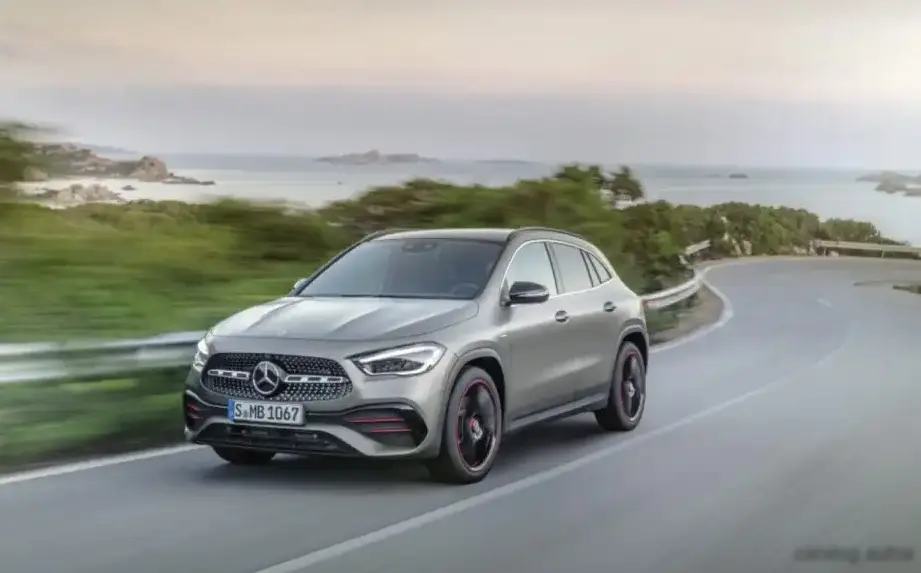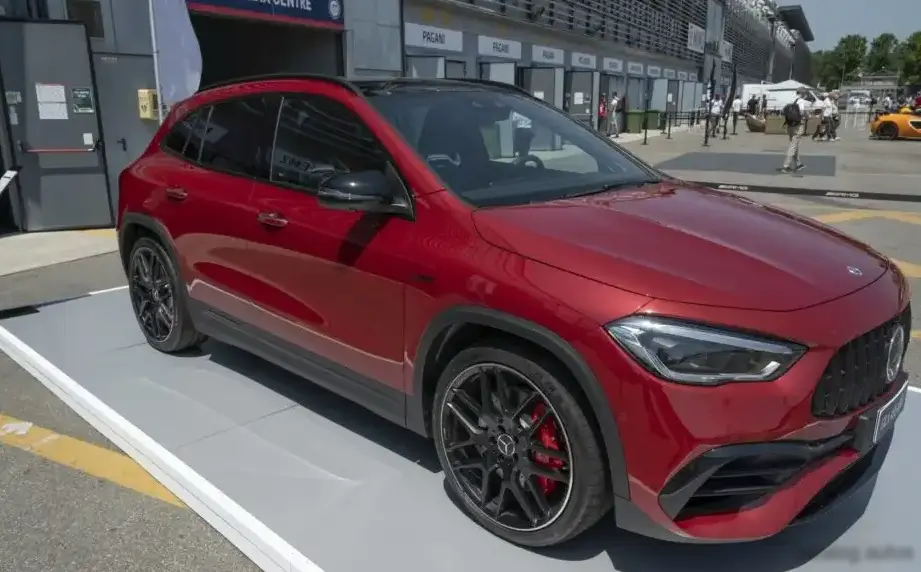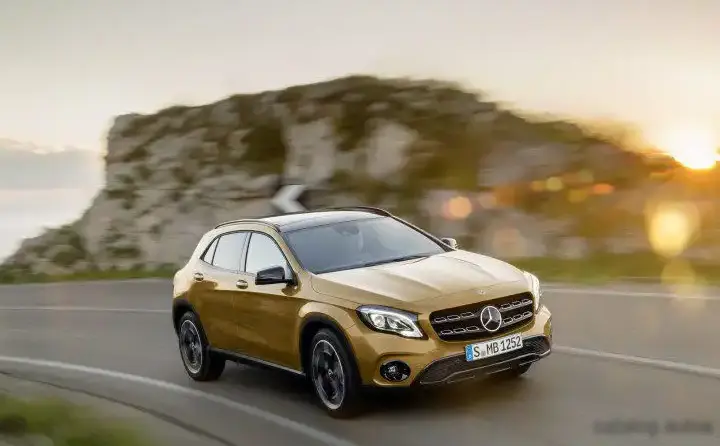
The Mercedes-Benz GLA 200 (184 hp) DCT, produced from January 2017 to October 2019, represents a key entry point into the X156 GLA facelift range. Positioned as a mainstream offering within the compact luxury SUV segment, this variant aimed to balance fuel efficiency, practicality, and the Mercedes-Benz brand experience. It was part of the first generation GLA, built on the MFA (Modular Front-wheel drive Architecture) platform shared with other compact Mercedes-Benz models like the A-Class and CLA. The GLA 200 with the dual-clutch transmission (DCT) offered a more accessible price point compared to higher-performance GLA variants like the GLA 250 or the AMG GLA 45.
Technical Specifications
| Brand | Mercedes-Benz |
| Model | GLA |
| Generation | GLA (X156, facelift 2017) |
| Type (Engine) | GLA 200 (184 Hp) DCT |
| Start of production | January, 2017 |
| End of production | October, 2019 |
| Powertrain Architecture | Internal Combustion engine |
| Body type | SUV |
| Seats | 5 |
| Doors | 5 |
| Fuel Type | Petrol (Gasoline) |
| Acceleration 0 – 100 km/h | 7.6 sec |
| Acceleration 0 – 62 mph | 7.6 sec |
| Acceleration 0 – 60 mph | 7.2 sec |
| Maximum speed | 225 km/h (139.81 mph) |
| Emission standard | Euro 6 |
| Weight-to-power ratio | 7.9 kg/Hp, 126.9 Hp/tonne |
| Weight-to-torque ratio | 4.8 kg/Nm, 206.9 Nm/tonne |
| Power | 184 Hp @ 5500 rpm |
| Power per litre | 92.4 Hp/l |
| Torque | 300 Nm @ 1200-1400 rpm (221.27 lb.-ft. @ 1200-1400 rpm) |
| Engine layout | Front, Longitudinal |
| Engine Model/Code | M 270.910 |
| Engine displacement | 1991 cm3 (121.5 cu. in.) |
| Number of cylinders | 4 |
| Engine configuration | Inline |
| Number of valves per cylinder | 4 |
| Fuel injection system | Direct injection |
| Engine aspiration | Turbocharger, Intercooler |
| Engine oil capacity | 5.6 l (5.92 US qt | 4.93 UK qt) |
| Kerb Weight | 1450 kg (3196.7 lbs) |
| Max. weight | 1940 kg (4276.97 lbs) |
| Max load | 490 kg (1080.27 lbs) |
| Trunk (boot) space – minimum | 421 l (14.87 cu. ft.) |
| Trunk (boot) space – maximum | 1235 l (43.61 cu. ft.) |
| Length | 4424 mm (174.17 in.) |
| Width | 1804 mm (71.02 in.) |
| Width including mirrors | 2022 mm (79.61 in.) |
| Height | 1494 mm (58.82 in.) |
| Wheelbase | 2699 mm (106.26 in.) |
| Front overhang | 913 mm (35.94 in.) |
| Rear overhang | 812 mm (31.97 in.) |
| Minimum turning circle | 11.84 m (38.85 ft) |
| Drivetrain Architecture | The Internal combustion engine (ICE) drives the front wheels of the vehicle. |
| Drive wheel | Front wheel drive |
| Number of gears and type of gearbox | 7 gears, automatic transmission G-DCT |
| Front brakes | Ventilated discs |
| Rear brakes | Disc |
| Assisting systems | ABS (Anti-lock braking system) |
| Steering type | Steering rack and pinion |
| Power steering | Electric Steering |
| Tires size | 235/50 R18 |
| Wheel rims size | 18 |
Powertrain & Engine Architecture
The GLA 200 utilizes the M 270.910 1.6-liter inline-four cylinder engine, a member of Mercedes-Benz’s modular engine family. This engine features direct fuel injection and is turbocharged, allowing it to produce 184 horsepower at 5500 rpm and 300 Nm (221 lb-ft) of torque between 1200 and 1400 rpm. The turbocharger provides a relatively flat torque curve, enhancing drivability. The engine employs a timing chain for durability. The engine is longitudinally mounted, a configuration common in front-wheel-drive Mercedes-Benz vehicles to facilitate the use of a rear-wheel-drive-based platform. The 7G-DCT (7-speed dual-clutch transmission) is a crucial component of this variant. This transmission offers quick and smooth gear changes, contributing to both performance and fuel efficiency. It operates with two separate clutches, one for odd and one for even gears, allowing for pre-selection of the next gear.
Driving Characteristics
The GLA 200 DCT delivers adequate performance for everyday driving. While not a sports-oriented vehicle, the 184 hp engine and 7-speed DCT provide sufficient power for merging onto highways and overtaking. The DCT transmission contributes to brisk acceleration, with a 0-60 mph time of around 7.2 seconds. Compared to the more powerful GLA 250, the GLA 200 feels less urgent in its acceleration. The DCT transmission’s gear ratios are tuned for a balance between fuel economy and responsiveness. In typical driving scenarios, the transmission shifts smoothly and efficiently. The front-wheel-drive configuration provides predictable handling, although it lacks the all-wheel-drive stability of other GLA models.
Equipment & Trim Levels
The GLA 200 typically came standard with features such as automatic climate control, a multimedia system with a central display screen, Bluetooth connectivity, and a suite of safety features including ABS, ESP (Electronic Stability Program), and multiple airbags. Interior upholstery was generally cloth, with options for leather upgrades. Standard dashboard trim was typically in aluminum or wood finishes. Common optional extras included a panoramic sunroof, navigation system, upgraded audio system, parking assist, and various driver assistance packages. The trim level could vary slightly depending on the market, but generally, the GLA 200 represented a well-equipped entry-level luxury SUV.
Chassis & Braking
The GLA 200 utilizes a MacPherson strut front suspension and a multi-link rear suspension. This setup provides a comfortable ride quality while maintaining reasonable handling characteristics. The suspension is tuned to prioritize comfort over outright sportiness. Front brakes are ventilated discs, while rear brakes are solid discs. The braking system is assisted by ABS and ESP, enhancing safety and stability. The steering is electric power-assisted, providing light and precise steering feel. The GLA 200’s chassis is designed to balance weight and rigidity, contributing to its overall handling and stability.
Market Reception & Comparison
The GLA 200 was generally well-received by automotive critics as a practical and stylish entry-level luxury SUV. It was praised for its fuel efficiency, comfortable ride, and well-appointed interior. However, some critics noted that its performance was not as engaging as that of higher-powered GLA variants. Compared to the GLA 250, the GLA 200 offered better fuel economy but less acceleration. The GLA 200 also provided a more affordable entry point into the GLA range, making it an attractive option for buyers seeking a luxury SUV without the higher price tag of the more powerful models. Fuel economy figures typically ranged from 26-31 mpg combined.
Legacy
The M 270 engine, while generally reliable, has been known to exhibit some issues with carbon buildup on the intake valves over time, particularly in vehicles that primarily see short-trip driving. Regular maintenance, including the use of high-quality fuel and occasional intake valve cleaning, can help mitigate this issue. The 7G-DCT transmission is also generally reliable, but requires regular fluid changes to ensure smooth operation. As a used car, the GLA 200 represents a relatively affordable entry into the Mercedes-Benz brand. Its combination of practicality, fuel efficiency, and luxury features makes it a popular choice among buyers seeking a compact SUV. The GLA 200’s success helped establish the GLA as a significant player in the compact luxury SUV segment, paving the way for subsequent generations of the model.