
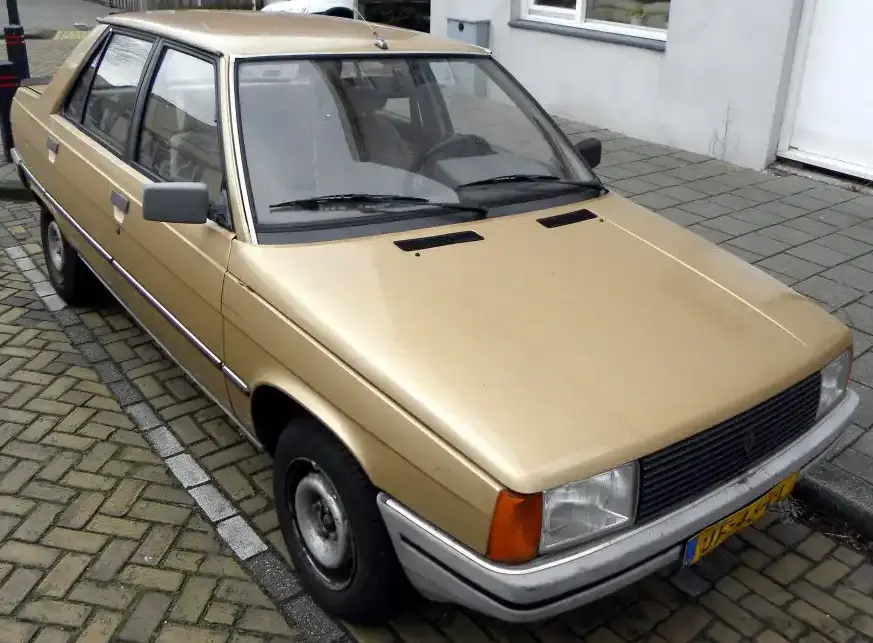
The Renault 9 (L42) 1.7 (L426), producing 80 horsepower, was a mainstay of the Renault lineup from 1984 to 1988. Positioned as a practical and affordable family sedan, it represented a significant step forward for Renault in terms of design and engineering. The L42 generation Renault 9 was a key model in Renault’s strategy to offer modern, fuel-efficient transportation to the mass market, primarily in Europe. It was a direct replacement for the Renault 11, offering improved styling, interior space, and mechanical refinement. This 1.7-liter variant served as a mid-range offering, bridging the gap between the base 1.1-liter engine and the more powerful 1.4-liter options.
Technical Specifications
| Brand | Renault |
| Model | 9 |
| Generation | 9 (L42) |
| Type (Engine) | 1.7 (L426) (80 Hp) |
| Start of Production | 1984 |
| End of Production | 1988 |
| Powertrain Architecture | Internal Combustion Engine |
| Body Type | Sedan |
| Seats | 5 |
| Doors | 4 |
| Fuel Type | Petrol (Gasoline) |
| Power | 80 Hp |
| Engine Model/Code | F2N 700, F2N 704 |
| Engine Aspiration | Naturally Aspirated |
| Engine Oil Capacity | 5.5 l (5.81 US qt | 4.84 UK qt) |
| Coolant Capacity | 6.7 l (7.08 US qt | 5.9 UK qt) |
| Fuel Tank Capacity | 47 l (12.42 US gal | 10.34 UK gal) |
Powertrain & Engine Architecture
The heart of the Renault 9 1.7 was the F2N engine series, specifically the F2N 700 or F2N 704 code. This was a 1.7-liter inline-four cylinder engine, utilizing a cast iron block and an aluminum cylinder head. The engine featured a single overhead camshaft (SOHC) valvetrain, operating two valves per cylinder. Fuel delivery was managed by a Bosch mechanical fuel injection system, a relatively common setup for the time, offering a balance between cost and efficiency. While not as sophisticated as later multi-point injection systems, it provided a noticeable improvement over carbureted engines in terms of fuel economy and emissions. The engine’s design prioritized reliability and ease of maintenance over outright performance. The 80 horsepower output was achieved at approximately 5,500 rpm, with peak torque of around 137 Nm (101 lb-ft) delivered at 3,000 rpm. The engine was typically paired with a three-speed automatic transmission, although a five-speed manual was also available. The automatic transmission, while providing convenience, was known for its relatively slow shift times and tendency to hunt for gears, especially under heavy load.
Driving Characteristics
The Renault 9 1.7 with the automatic transmission offered a comfortable, if not particularly exciting, driving experience. Acceleration was adequate for everyday driving, with a 0-60 mph time estimated around 13-14 seconds. The automatic transmission’s gear ratios were geared towards fuel efficiency rather than spirited performance. The car felt most comfortable cruising at highway speeds, where the engine settled into a relaxed rhythm. Compared to the manual transmission versions, the automatic suffered a slight performance penalty due to the transmission’s inherent inefficiencies. The manual version, with its closer gear ratios, offered quicker acceleration and a more engaging driving experience. However, the automatic appealed to drivers prioritizing ease of use, particularly in urban environments. The suspension, while comfortable, was not particularly sporty, resulting in noticeable body roll during cornering. Steering was light and easy, making the car maneuverable in tight spaces.
Equipment & Trim Levels
The Renault 9 1.7 typically came equipped with a reasonable level of standard features for its price point. These included cloth upholstery, a basic instrument cluster, and manual windows and door locks. The interior design was functional and straightforward, prioritizing practicality over luxury. Optional extras included a sunroof, upgraded stereo system, and central locking. Trim levels varied depending on the market, but generally, the 1.7-liter model occupied a mid-range position in the lineup. It offered more features than the base 1.1-liter model but lacked the more luxurious appointments found in the 1.4-liter versions. The dashboard layout was simple and easy to use, with clearly labeled controls. The seats provided adequate support for long journeys, although they lacked the bolstering found in more performance-oriented vehicles.
Chassis & Braking
The Renault 9 L42 utilized a relatively conventional chassis design, featuring a MacPherson strut front suspension and a torsion beam rear suspension. The torsion beam rear suspension was a cost-effective solution that provided a reasonable level of ride comfort. Braking was typically accomplished with disc brakes on the front wheels and drum brakes on the rear wheels. The braking system was adequate for normal driving conditions, but lacked the stopping power of more modern systems. Stabilizer bars were fitted to both the front and rear axles to reduce body roll during cornering. The car’s relatively light weight helped to compensate for the limitations of the braking system. The steering system was a rack-and-pinion setup, providing precise and responsive steering feel.
Market Reception & Comparison
The Renault 9 1.7 Automatic received generally positive reviews from automotive critics. It was praised for its fuel efficiency, comfortable ride, and affordable price. However, the automatic transmission was often criticized for its sluggish performance and tendency to hunt for gears. Compared to other vehicles in its class, such as the Peugeot 205 and the Citroën BX, the Renault 9 offered a good balance of practicality, affordability, and comfort. The 1.7-liter engine provided a noticeable performance advantage over the base 1.1-liter engine, making it a popular choice for drivers who frequently drove on highways or carried passengers. Fuel economy was a key selling point, with the 1.7-liter engine achieving around 35-40 mpg in mixed driving conditions. Reliability was generally good, although some owners reported issues with the fuel injection system and the automatic transmission.
Legacy
The Renault 9 1.7, while not a particularly groundbreaking vehicle, played an important role in Renault’s history. It helped to establish Renault as a major player in the European family car market. The F2N engine proved to be a durable and reliable powerplant, and many examples are still on the road today. In the used car market, the Renault 9 1.7 is often sought after by enthusiasts and collectors who appreciate its simplicity, affordability, and classic styling. The automatic transmission versions are generally less desirable than the manual transmission versions due to their lower performance and potential maintenance issues. However, the automatic remains a viable option for drivers who prioritize convenience and ease of use. The Renault 9’s influence can still be seen in modern Renault models, which continue to prioritize practicality, affordability, and fuel efficiency.
