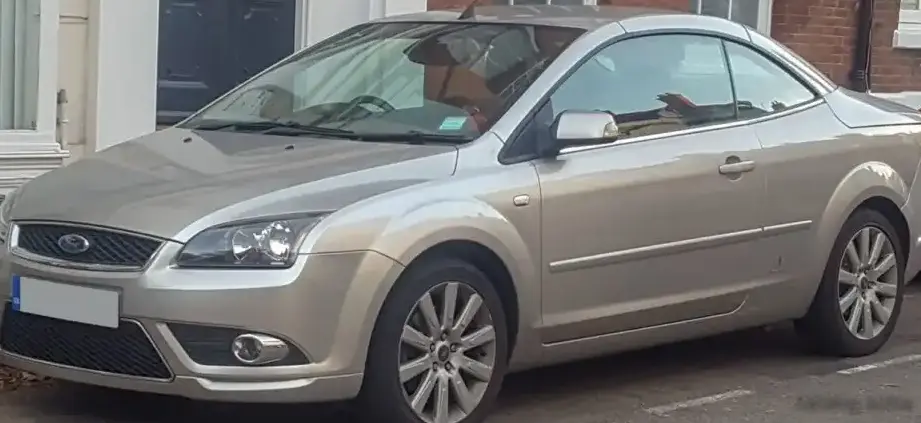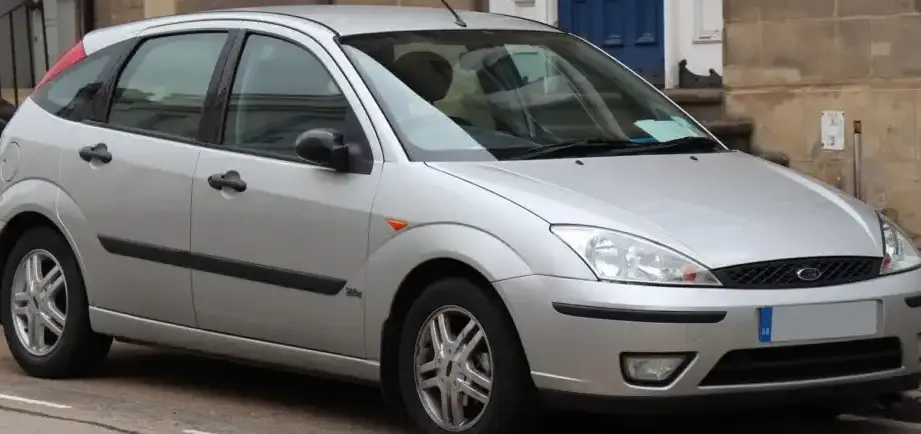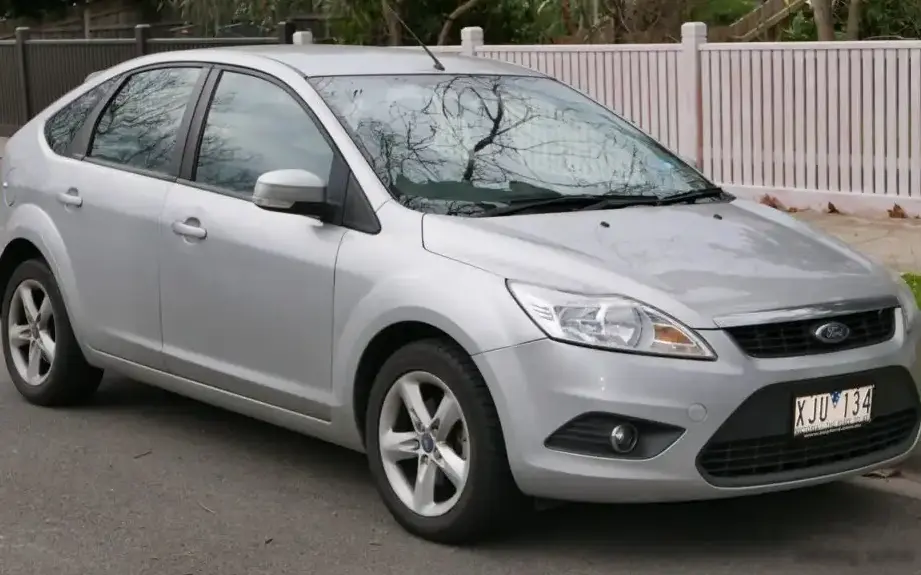
The Ford Focus II Hatchback 2.0 16V Automatic, produced between 2005 and 2010, represented a mid-range offering within the second generation Focus lineup (internally designated the 2HX platform). Positioned above the base 1.6L models and below the performance-oriented ST variants, this configuration aimed to provide a balance of practicality, comfort, and reasonable performance for the North American and European markets. The Focus II was a significant step forward for Ford in Europe, offering a more refined driving experience and improved build quality compared to its predecessor. This particular 2.0L automatic variant was designed to appeal to buyers prioritizing ease of use and a comfortable ride over outright sporty handling.
Technical Specifications
| Brand | Ford |
| Model | Focus |
| Generation | Focus II Hatchback |
| Type (Engine) | 2.0 16V (145 Hp) Automatic |
| Start of production | 2005 |
| End of production | 2010 |
| Powertrain Architecture | Internal Combustion engine |
| Body type | Hatchback |
| Seats | 5 |
| Doors | 3/5 |
| Fuel consumption (urban) | 11.2 l/100 km (21 US mpg) |
| Fuel consumption (extra urban) | 6.1 l/100 km (38.6 US mpg) |
| Fuel consumption (combined) | 8.9 l/100 km (26.4 US mpg) |
| Fuel Type | Petrol (Gasoline) |
| Acceleration 0 – 100 km/h | 10.7 sec |
| Acceleration 0 – 62 mph | 10.7 sec |
| Acceleration 0 – 60 mph | 10.2 sec |
| Maximum speed | 195 km/h (121.17 mph) |
| Emission standard | Euro 4 |
| Weight-to-power ratio | 9.1 kg/Hp |
| Weight-to-torque ratio | 7.2 kg/Nm |
| Power | 145 Hp @ 6000 rpm |
| Torque | 185 Nm @ 4500 rpm (136.45 lb.-ft. @ 4500 rpm) |
| Engine layout | Front, Transverse |
| Engine Model/Code | AODA, AODB |
| Engine displacement | 1999 cm3 (121.99 cu. in.) |
| Number of cylinders | 4 |
| Engine configuration | Inline |
| Number of valves per cylinder | 4 |
| Fuel injection system | Multi-port manifold injection |
| Engine aspiration | Naturally aspirated engine |
| Valvetrain | DOHC |
| Engine oil capacity | 4.3 l (4.54 US qt | 3.78 UK qt) |
| Coolant capacity | 6.3 l (6.66 US qt | 5.54 UK qt) |
| Kerb Weight | 1326 kg (2923.33 lbs.) |
| Max. weight | 1775 kg (3913.21 lbs.) |
| Max load | 449 kg (989.88 lbs.) |
| Trunk (boot) space – minimum | 385 l (13.6 cu. ft.) |
| Trunk (boot) space – maximum | 1247 l (44.04 cu. ft.) |
| Fuel tank capacity | 55 l (14.53 US gal | 12.1 UK gal) |
| Length | 4342 mm (170.94 in.) |
| Width | 1840 mm (72.44 in.) |
| Height | 1497 mm (58.94 in.) |
| Wheelbase | 2640 mm (103.94 in.) |
| Front track | 1535 mm (60.43 in.) |
| Rear track | 1531 mm (60.28 in.) |
| Drive wheel | Front wheel drive |
| Number of gears | 4 gears, automatic transmission |
| Front suspension | Spring Strut |
| Rear suspension | Transverse stabilizer |
| Front brakes | Ventilated discs |
| Rear brakes | Drum |
| Steering type | Steering rack and pinion |
| Tires size | 195/65 R15 |
| Wheel rims size | 6JX15 |
Powertrain & Engine Architecture
The heart of this Focus variant is the Duratec 2.0L inline-four cylinder engine, specifically the AODA or AODB engine code depending on the market. This engine utilizes a naturally aspirated configuration with a double overhead camshaft (DOHC) valvetrain operating 16 valves. Fuel delivery is managed by a multi-port fuel injection system, providing adequate atomization for efficient combustion. The engine’s 145 horsepower peak is achieved at 6000 rpm, while its 185 Nm (136 lb-ft) of torque is available at 4500 rpm. The engine is transversely mounted, a common layout for front-wheel-drive vehicles, optimizing space utilization. Paired with the engine is a four-speed automatic transmission. While not the most modern transmission by today’s standards, it provided smooth shifts and contributed to the vehicle’s ease of driving. This transmission was chosen for its cost-effectiveness and suitability for drivers who preferred a less engaging driving experience.
Driving Characteristics
The 2.0L automatic Focus offered a comfortable and predictable driving experience. Acceleration from 0-60 mph took approximately 10.2 seconds, which was adequate for everyday driving but noticeably slower than the manual transmission or higher-output versions. The automatic transmission’s gear ratios were tuned for fuel efficiency and smooth cruising rather than aggressive acceleration. The power delivery was linear, lacking the punch of a turbocharged engine. Compared to the 1.6L models, the 2.0L provided a more relaxed driving experience, particularly on highway journeys, due to its increased power and torque. However, it didn’t offer the same level of driver engagement as the six-speed manual transmission available on other Focus II models.
Equipment & Trim Levels
The 2.0L Automatic Focus typically came equipped with a reasonable level of standard features. These included air conditioning, power windows, power door locks, and an integrated audio system. Interior upholstery was generally cloth, with options for upgraded materials available. Depending on the market and optional packages, features like alloy wheels, a sunroof, and upgraded audio systems could be added. Safety features included dual front airbags, ABS brakes, and electronic brakeforce distribution (EBD). Trim levels varied by region, but generally, this 2.0L automatic configuration occupied a mid-range position, offering a step up in comfort and performance from the base models.
Chassis & Braking
The Focus II utilized a MacPherson strut front suspension and a twist-beam rear suspension. This setup provided a good balance between ride comfort and handling. The front brakes were ventilated discs, offering good stopping power, while the rear brakes were typically drum brakes, a cost-saving measure for this trim level. A transverse stabilizer bar was included on both axles to reduce body roll during cornering. The chassis was designed to be relatively lightweight, contributing to the vehicle’s overall efficiency. The steering system employed a rack and pinion setup, providing precise and responsive steering feel.
Market Reception & Comparison
The 2.0L Automatic Focus was generally well-received by critics as a practical and comfortable family car. However, some reviewers noted that the four-speed automatic transmission felt dated compared to the more modern five- or six-speed automatics available in competing vehicles. Fuel economy was considered average for its class, with combined figures around 26.4 US mpg. Compared to the 1.6L models, the 2.0L offered improved performance, but at the cost of slightly higher fuel consumption. The 2.0L was also a more affordable alternative to the higher-performance ST models, offering a good compromise between price and performance.
Legacy
The Duratec 2.0L engine, when properly maintained, proved to be a relatively reliable powertrain. The four-speed automatic transmission, while not known for its sophistication, was generally durable. Today, the Focus II 2.0L Automatic can be found on the used car market at affordable prices. Common issues include wear and tear on suspension components and potential for oil leaks as the engine ages. However, parts availability is generally good, and the vehicle remains a viable option for budget-conscious buyers seeking a practical and reliable hatchback. Its enduring appeal lies in its blend of affordability, practicality, and relatively straightforward mechanical design.