Technical Specifications
| Brand | Porsche |
| Model | Boxster |
| Generation | Boxster (987) |
| Type (Engine) | S 3.4 (295 Hp) |
| Start of production | August, 2006 |
| End of production | January, 2009 |
| Powertrain Architecture | Internal Combustion engine |
| Body type | Roadster |
| Seats | 2 |
| Doors | 2 |
| Fuel consumption (economy) – urban | 15.3 l/100 km (15.4 US mpg, 18.5 UK mpg, 6.5 km/l) |
| Fuel consumption (economy) – extra urban | 7.8 l/100 km (30.2 US mpg, 36.2 UK mpg, 12.8 km/l) |
| Fuel consumption (economy) – combined | 10.6 l/100 km (22.2 US mpg, 26.6 UK mpg, 9.4 km/l) |
| CO2 emissions | 254 g/km |
| Fuel Type | Petrol (Gasoline) |
| Acceleration 0 – 100 km/h | 5.4 sec |
| Acceleration 0 – 62 mph | 5.4 sec |
| Acceleration 0 – 60 mph | 5.1 sec |
| Acceleration 0 – 200 km/h | 18.8 sec |
| Maximum speed | 272 km/h (169.01 mph) |
| Weight-to-power ratio | 4.6 kg/Hp, 217.7 Hp/tonne |
| Weight-to-torque ratio | 4 kg/Nm, 250.9 Nm/tonne |
| Power | 295 Hp @ 6250 rpm |
| Power per litre | 87.1 Hp/l |
| Torque | 340 Nm @ 4400-6000 rpm (250.77 lb.-ft. @ 4400-6000 rpm) |
| Maximum engine speed | 7300 rpm |
| Engine layout | Middle, Longitudinal |
| Engine Model/Code | M97.21 |
| Engine displacement | 3387 cm3 (206.69 cu. in.) |
| Number of cylinders | 6 |
| Engine configuration | Boxer |
| Cylinder Bore | 96 mm (3.78 in.) |
| Piston Stroke | 78 mm (3.07 in.) |
| Compression ratio | 11.1:1 |
| Number of valves per cylinder | 4 |
| Fuel injection system | Multi-port manifold injection |
| Engine aspiration | Naturally aspirated engine |
| Valvetrain | DOHC |
| Engine oil capacity | 7.8 l (8.24 US qt | 6.86 UK qt) |
| Coolant | 22.3 l (23.56 US qt | 19.62 UK qt) |
| Kerb Weight | 1355 kg (2987.26 lbs.) |
| Max. weight | 1630 kg (3593.53 lbs.) |
| Max load | 275 kg (606.27 lbs.) |
| Trunk (boot) space – minimum | 130 l (4.59 cu. ft.) |
| Fuel tank capacity | 64 l (16.91 US gal | 14.08 UK gal) |
| Length | 4329 mm (170.43 in.) |
| Width | 1801 mm (70.91 in.) |
| Width including mirrors | 1978 mm (77.87 in.) |
| Height | 1292 mm (50.87 in.) |
| Wheelbase | 2415 mm (95.08 in.) |
| Front track | 1486 mm (58.5 in.) |
| Rear (Back) track | 1528 mm (60.16 in.) |
| Ride height (ground clearance) | 121 mm (4.76 in.) |
| Drag coefficient (Cd) | 0.30 |
| Minimum turning circle (turning diameter) | 11.1 m (36.42 ft.) |
| Drivetrain Architecture | The Internal combustion engine (ICE) drives the rear wheels of the vehicle. |
| Drive wheel | Rear wheel drive |
| Number of gears and type of gearbox | 6 gears, manual transmission |
| Front suspension | Coil spring, Independent type McPherson, Trailing arm |
| Rear suspension | McPherson, Trailing arm, Coil spring |
| Front brakes | Ventilated discs, 318×28 mm |
| Rear brakes | Ventilated discs, 299×24 mm |
| Assisting systems | ABS (Anti-lock braking system) |
| Steering type | Steering rack and pinion |
| Power steering | Hydraulic Steering |
| Tires size | Front wheel tires: 235/40 ZR 18Rear wheel tires: 265/40 ZR 18 |
| Wheel rims size | Front wheel rims: 8 J x 18Rear wheel rims: 9 J x 18 |
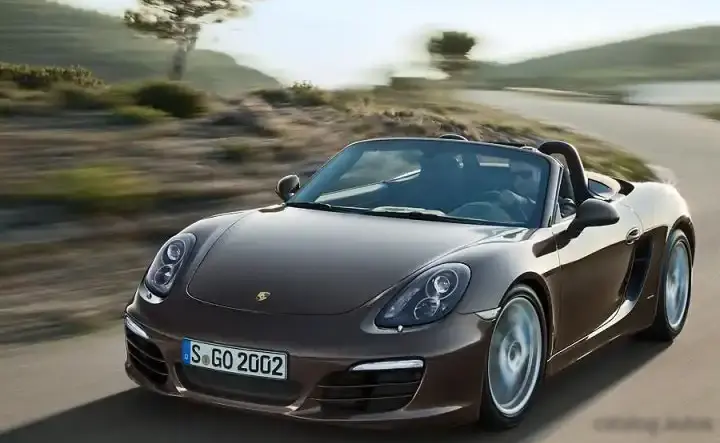
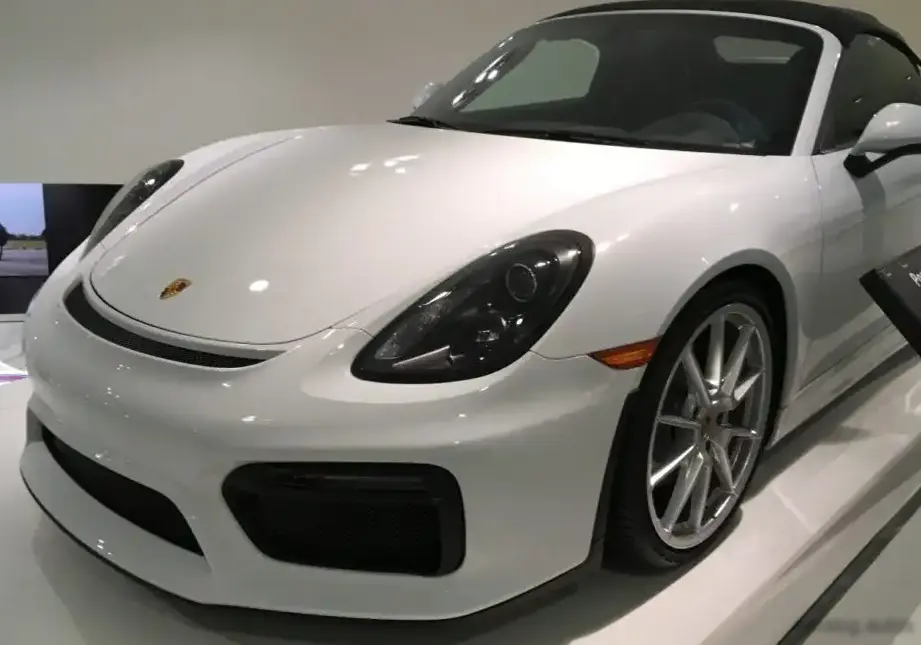
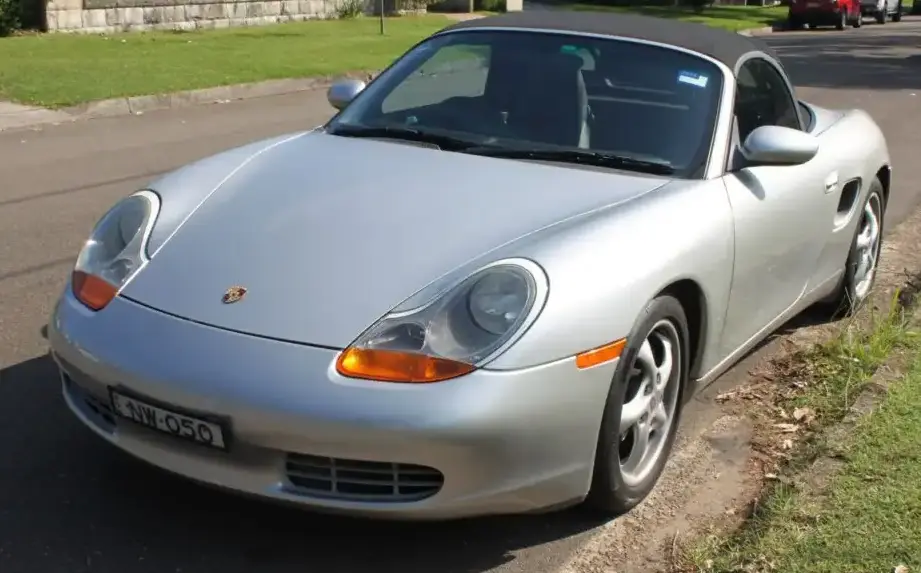
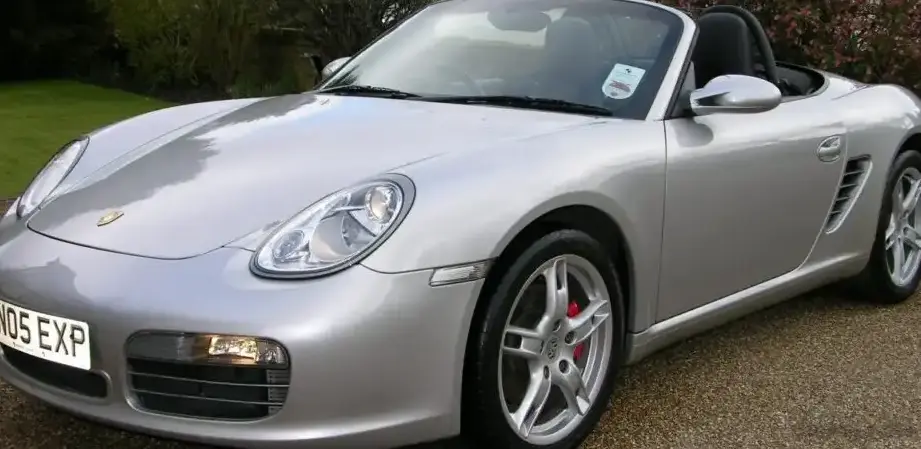
The Porsche Boxster (987) S 3.4, produced from August 2006 to January 2009, represents a significant evolution of Porsche’s mid-engine roadster. Positioned as the higher-performance variant within the 987 generation, it bridged the gap between the base Boxster and the more focused Cayman S. The ‘S’ designation denoted a substantial increase in engine displacement and power compared to the standard Boxster, offering a more engaging driving experience. This model year marked a refinement of the 987 platform, building upon the success of the initial 987 launch in 2005. It was a key offering in Porsche’s strategy to broaden its appeal and provide a more accessible entry point into the Porsche brand, while still delivering the core attributes of performance and handling expected of the marque.
Powertrain & Engine Architecture
The heart of the 987 Boxster S 3.4 is the M97.21 engine, a 3.4-liter naturally aspirated flat-six (boxer) engine. This engine represents a significant upgrade from the 3.2-liter unit found in earlier 987 S models. The increase in displacement, coupled with revised cylinder heads and intake systems, resulted in a power output of 295 horsepower at 6250 rpm and 340 Nm (250.77 lb-ft) of torque between 4400 and 6000 rpm. The engine utilizes multi-port fuel injection, a proven technology for delivering precise fuel metering. The valvetrain employs double overhead camshafts (DOHC) with four valves per cylinder, optimizing airflow for enhanced performance. The engine’s boxer configuration contributes to a low center of gravity, improving handling characteristics. The standard transmission for this variant was a 6-speed manual, though a 5-speed Tiptronic S automatic transmission was also available as an option. The automatic transmission featured manual shift capability, allowing drivers to select gears for more control.
Driving Characteristics
The 987 Boxster S 3.4 with the manual transmission delivers a distinctly sporty driving experience. Acceleration from 0 to 60 mph takes approximately 5.1 seconds, and it can reach a top speed of 169 mph. The engine’s power delivery is linear and responsive, encouraging spirited driving. The mid-engine layout provides excellent balance and agility, making the car feel nimble and predictable in corners. The automatic transmission, while offering convenience, slightly diminishes the raw engagement of the manual. Gear changes are smooth, but the automatic doesn’t quite match the precision and control offered by the manual gearbox. The suspension is tuned for a balance between comfort and performance, providing a firm but not overly harsh ride. The steering is precise and communicative, offering good feedback to the driver.
Equipment & Trim Levels
The Boxster S 3.4 came standard with a generous array of features, including leather upholstery, air conditioning, a CD stereo system, and power windows and locks. Optional extras were plentiful, allowing buyers to customize their cars to their preferences. Popular options included Porsche Communication Management (PCM) with navigation, sport seats, a limited-slip differential, and various interior trim packages. The interior design was driver-focused, with a well-laid-out dashboard and ergonomically designed controls. The standard seats provided good support, while the optional sport seats offered even greater bolstering for more aggressive driving.
Chassis & Braking
The 987 Boxster S 3.4 utilizes a McPherson strut front suspension and a McPherson strut rear suspension, both with coil springs and anti-roll bars. This setup provides a good balance of handling and ride comfort. The car is equipped with ventilated disc brakes on all four wheels, providing ample stopping power. ABS (Anti-lock Braking System) is standard. The chassis is relatively lightweight, contributing to the car’s agility. The standard tire size is 235/40 ZR 18 at the front and 265/40 ZR 18 at the rear, providing good grip and handling.
Market Reception & Comparison
The 987 Boxster S 3.4 was generally well-received by automotive critics. It was praised for its engaging driving dynamics, responsive engine, and balanced handling. Compared to the base Boxster, the S model offered a significant performance upgrade, making it a more appealing option for enthusiasts. Compared to the Cayman S, the Boxster S offered a more open-air driving experience, albeit with slightly less structural rigidity. Fuel economy was reasonable for a sports car of its caliber, averaging around 22.2 US mpg in combined driving. Reliability was generally good, although some owners have reported issues with the intermediate shaft (IMS) bearing, a common concern for early 987 models.
Legacy
The 987 Boxster S 3.4 remains a popular choice among Porsche enthusiasts today. Its combination of performance, handling, and open-air driving enjoyment makes it a compelling sports car. The M97.21 engine is generally considered to be a robust and reliable unit, although regular maintenance is essential. The IMS bearing issue is a known concern, and many owners proactively address it with an updated bearing or a bypass kit. On the used car market, the 987 Boxster S 3.4 commands a premium over the base Boxster, reflecting its higher performance and desirability. It represents a sweet spot in the Porsche lineup, offering a genuine sports car experience at a relatively accessible price point.