
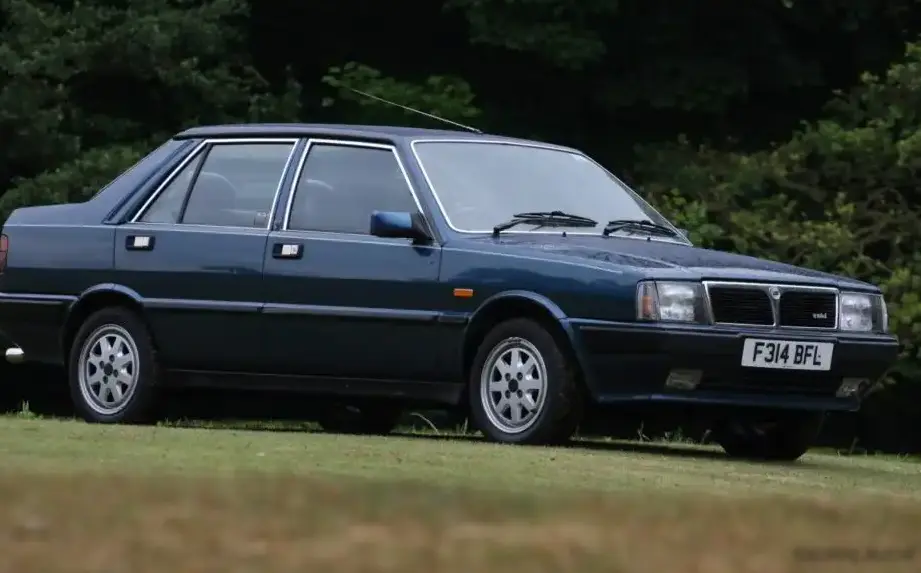
The Lancia Prisma 1.6 i.e., produced between 1986 and 1989, represented a significant evolution of the Lancia Delta’s platform, offering a more traditionally styled sedan alternative. Based on the Tipo 831 chassis, the Prisma aimed to broaden Lancia’s appeal beyond the more sporting Delta, targeting buyers seeking a comfortable and refined family car with a touch of Italian flair. The 1.6 i.e. variant, equipped with a 108 horsepower engine, occupied a mid-range position within the Prisma lineup, offering a balance between performance and economy. It served as a step up from the base 1.5 liter models, while remaining more accessible than the higher-performance 2.0 liter versions.
Technical Specifications
| Brand | Lancia |
| Model | Prisma |
| Generation | Prisma (831 AB) |
| Type (Engine) | 1.6 i.e. (108 Hp) |
| Start of production | 1986 |
| End of production | 1989 |
| Powertrain Architecture | Internal Combustion engine |
| Body type | Sedan |
| Fuel Type | Petrol (Gasoline) |
| Power | 108 Hp |
| Engine Model/Code | 831 B7.000 |
| Engine aspiration | Naturally aspirated engine |
| Engine oil capacity | 5 l (5.28 US qt | 4.4 UK qt) |
| Coolant capacity | 6.5 l (6.87 US qt | 5.72 UK qt) |
Powertrain & Engine Architecture
The heart of the Prisma 1.6 i.e. was the 831 B7.000 engine, a 1581cc inline-four cylinder unit. This engine featured Bosch Mono-Jetronic fuel injection, a system known for its relative simplicity and reliability. While not as sophisticated as multi-point injection systems becoming prevalent at the time, Mono-Jetronic provided a good balance of performance and fuel efficiency. The engine employed a single overhead camshaft (SOHC) valvetrain, operating two valves per cylinder. This configuration contributed to a relatively broad torque curve, making the engine tractable in everyday driving situations. The 1.6 i.e. engine produced 108 horsepower at 5800 rpm and approximately 107 lb-ft of torque at 3800 rpm. The engine was typically paired with a three-speed automatic transmission, although a five-speed manual gearbox was also available. The automatic transmission, while offering convenience, was not known for its particularly quick shifts or sporty feel.
Driving Characteristics
The Prisma 1.6 i.e. with the automatic transmission offered a comfortable, if not particularly exhilarating, driving experience. Acceleration from 0 to 60 mph was estimated to be around 11-12 seconds, placing it firmly in the realm of everyday transportation rather than performance driving. The automatic transmission’s gear ratios were geared towards fuel economy and smooth cruising, rather than rapid acceleration. Compared to the five-speed manual version, the automatic suffered a noticeable performance deficit. The manual transmission allowed the engine to rev more freely and provided more driver control. The 1.6 i.e. also felt less responsive than the 2.0 liter versions of the Prisma, which offered significantly more power and torque. However, the 1.6 i.e. provided adequate power for typical commuting and highway driving, and its smoother operation made it a popular choice for those prioritizing comfort.
Equipment & Trim Levels
The Prisma 1.6 i.e. typically came equipped with a reasonable level of standard features for its time. These included power steering, central locking, electric windows, and a basic stereo system. Interior upholstery was typically cloth, available in a range of colors. The dashboard layout was functional and straightforward, with clearly marked gauges and controls. Optional extras included air conditioning, a sunroof, and upgraded stereo systems. Higher trim levels, often denoted by specific badges, could add features like alloy wheels, upgraded interior trim, and more sophisticated audio equipment. The Prisma aimed for a comfortable and well-equipped interior, reflecting Lancia’s reputation for build quality and attention to detail.
Chassis & Braking
The Prisma 1.6 i.e. utilized a MacPherson strut front suspension and a torsion beam rear suspension. This setup provided a good balance of ride comfort and handling. The front suspension incorporated an anti-roll bar to reduce body roll during cornering. Braking was typically accomplished with disc brakes on the front wheels and drum brakes on the rear. This configuration was common for cars in this class during the 1980s. The braking system was adequate for normal driving conditions, but lacked the stopping power of more modern systems. The steering was unassisted, providing a direct feel but requiring more effort at low speeds.
Market Reception & Comparison
The Lancia Prisma 1.6 i.e. was generally well-received by automotive critics as a comfortable and refined family sedan. However, it was often overshadowed by the more popular and sporty Lancia Delta. Critics praised the Prisma’s build quality, comfortable ride, and relatively fuel-efficient engine. However, the automatic transmission was often criticized for its sluggish performance. Compared to the 1.5 liter Prisma models, the 1.6 i.e. offered a noticeable improvement in performance, making it a more appealing option for those who frequently drove on highways or with a full load of passengers. Fuel economy was respectable for the time, averaging around 28-32 mpg in mixed driving conditions. The 2.0 liter Prisma models offered significantly more performance but came at a higher price point and with increased fuel consumption.
Legacy
The Lancia Prisma, while not a sales blockbuster, remains a fondly remembered car among Lancia enthusiasts. The 1.6 i.e. powertrain, while not particularly groundbreaking, proved to be relatively reliable and durable. Today, well-maintained examples of the Prisma 1.6 i.e. are becoming increasingly sought after by collectors and classic car enthusiasts. Parts availability can be a challenge, as the Prisma is now a relatively rare vehicle. However, a dedicated network of Lancia specialists and online parts suppliers can help owners keep their cars on the road. The Prisma represents a unique chapter in Lancia’s history, offering a more conventional sedan alternative to the iconic Delta, and showcasing the brand’s commitment to quality and Italian design.
