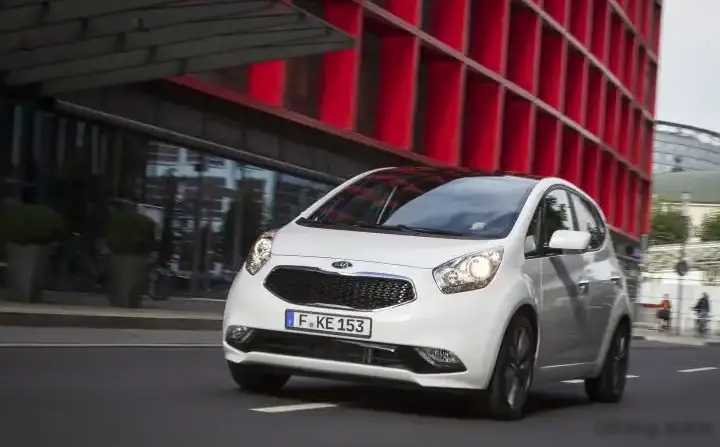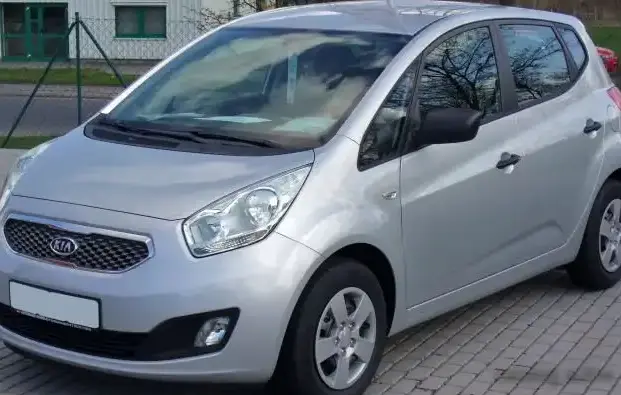
The Kia Venga (YN) 1.4 CRDI 16V, producing 77 horsepower, was a key variant in Kia’s European small MPV lineup from 2010 to 2014. Positioned as an entry-level diesel option, it aimed to provide fuel efficiency and practicality for urban commuters and small families. The Venga, Kia’s first model specifically designed for the European market, represented a significant step in the brand’s efforts to establish a stronger foothold in the region. This particular engine and transmission combination offered a balance between affordability and usability, making it a popular choice for buyers prioritizing economy over outright performance.
Technical Specifications
| Brand | Kia |
| Model | Venga |
| Generation | Venga (YN) |
| Type (Engine) | 1.4 CRDI 16V (77 Hp) |
| Start of production | 2010 |
| End of production | 2014 |
| Powertrain Architecture | Internal Combustion engine |
| Body type | Hatchback |
| Seats | 5 |
| Doors | 5 |
| Fuel consumption (urban) | 5.6 l/100 km (42 US mpg, 50.4 UK mpg, 17.9 km/l) |
| Fuel consumption (extra urban) | 4.3 l/100 km (54.7 US mpg, 65.7 UK mpg, 23.3 km/l) |
| Fuel consumption (combined) | 4.7 l/100 km (50 US mpg, 60.1 UK mpg, 21.3 km/l) |
| Fuel Type | Diesel |
| Acceleration 0 – 100 km/h | 16.1 sec |
| Acceleration 0 – 62 mph | 16.1 sec |
| Acceleration 0 – 60 mph | 15.3 sec |
| Maximum speed | 160 km/h (99.42 mph) |
| Emission standard | Euro 5 |
| Weight-to-power ratio | 17.8 kg/Hp, 56.2 Hp/tonne |
| Weight-to-torque ratio | 6.2 kg/Nm, 160.6 Nm/tonne |
| Power | 77 Hp |
| Power per litre | 55.2 Hp/l |
| Torque | 220 Nm @ 1750 rpm (162.26 lb.-ft. @ 1750 rpm) |
| Engine layout | Front, Transverse |
| Engine Model/Code | D4FC |
| Engine displacement | 1396 cm3 (85.19 cu. in.) |
| Number of cylinders | 4 |
| Engine configuration | Inline |
| Number of valves per cylinder | 4 |
| Fuel injection system | Diesel Commonrail |
| Engine aspiration | Turbocharger, Intercooler |
| Valvetrain | DOHC |
| Engine oil capacity | 5.3 l (5.6 US qt | 4.66 UK qt) |
| Coolant capacity | 6.4 l (6.76 US qt | 5.63 UK qt) |
| Kerb Weight | 1370 kg (3020.33 lbs.) |
| Max. weight | 1800 kg (3968.32 lbs.) |
| Max load | 430 kg (947.99 lbs.) |
| Trunk (boot) space – minimum | 440 l (15.54 cu. ft.) |
| Fuel tank capacity | 48 l (12.68 US gal | 10.56 UK gal) |
| Length | 4068 mm (160.16 in.) |
| Width | 1765 mm (69.49 in.) |
| Height | 1600 mm (62.99 in.) |
| Wheelbase | 2615 mm (102.95 in.) |
| Minimum turning circle | 10.4 m (34.12 ft.) |
| Drivetrain Architecture | Front wheel drive |
| Number of gears | 6 gears, manual transmission |
| Assisting systems | ABS (Anti-lock braking system) |
| Steering type | Steering rack and pinion |
| Tires size | 195/65 R15 |
| Wheel rims size | 15 |
INTRODUCTION
The Kia Venga 1.4 CRDI 16V (77 hp) was introduced in 2010 as part of the first generation (YN) Venga lineup. Designed as a compact multi-purpose vehicle (MPV), the Venga aimed to offer a practical and affordable option for European buyers. The YN platform was a front-wheel-drive configuration, and the 1.4 CRDI variant served as the entry point into the diesel range, appealing to those seeking fuel economy without the higher cost of more powerful engines. It competed with vehicles like the Renault Modus, Opel Meriva, and Ford Fusion in the small MPV segment.
Powertrain & Engine Architecture
At the heart of the Venga 1.4 CRDI was the Kia D4FC engine, a 1.4-liter inline-four cylinder diesel. This engine utilized a second-generation common-rail direct injection system, delivering fuel at extremely high pressure for improved combustion efficiency and reduced emissions. The engine featured a turbocharger with an intercooler, boosting power output and torque. The 16-valve DOHC (Double Overhead Camshaft) configuration further optimized airflow into the cylinders. The engine produced 77 horsepower and 220 Nm (162 lb-ft) of torque at 1750 rpm. This torque figure, available relatively low in the rev range, was a key characteristic of the engine, providing good pulling power for everyday driving. The engine was paired with a six-speed manual transmission, chosen for its efficiency and driver engagement. The D4FC engine was known for its relatively simple design, contributing to its overall reliability.
Driving Characteristics
The Venga 1.4 CRDI 77 hp offered a comfortable, if not particularly sporty, driving experience. Acceleration was modest, with a 0-60 mph time of around 15.3 seconds. The focus was clearly on fuel economy and usability rather than outright performance. The six-speed manual transmission allowed drivers to keep the engine in its optimal torque band, maximizing efficiency and providing adequate power for overtaking and hill climbing. The gear ratios were relatively long, contributing to the car’s relaxed cruising demeanor. Compared to the more powerful 1.6 CRDI variants, the 1.4 CRDI felt noticeably slower, especially when fully loaded. However, the lower power output also meant lower running costs and reduced wear and tear on the engine and drivetrain. The steering was light and easy, making it well-suited for urban driving, but lacked the precision of some competitors.
Equipment & Trim Levels
The Venga 1.4 CRDI typically came with a reasonable level of standard equipment, although specific features varied depending on the market and optional packages. Standard features generally included air conditioning, power steering, electric front windows, a radio/CD player, and ABS brakes. Safety features such as airbags were also standard. Higher trim levels, such as the ‘2’ or ‘3’ trims, added features like alloy wheels, rear electric windows, a trip computer, and upgraded interior trim. Interior upholstery was typically cloth, with a focus on durability and practicality. Optional extras included a panoramic sunroof, parking sensors, and a more advanced audio system.
Chassis & Braking
The Venga utilized a MacPherson strut front suspension and a torsion beam rear suspension. This setup provided a good balance between ride comfort and handling. The torsion beam rear suspension was a cost-effective solution that minimized complexity and weight. Braking was typically handled by disc brakes on the front wheels and drum brakes on the rear wheels. ABS (Anti-lock Braking System) was standard, enhancing safety during emergency braking. The Venga’s relatively lightweight construction helped to compensate for the modest braking performance. Stabilizer bars were fitted to both the front and rear axles to reduce body roll during cornering.
Market Reception & Comparison
The Kia Venga 1.4 CRDI was generally well-received by critics as a practical and affordable small MPV. It was praised for its fuel efficiency, spacious interior, and comfortable ride. However, some reviewers noted its lack of outright performance and somewhat uninspiring driving dynamics. Compared to the higher-output 1.6 CRDI variants, the 1.4 CRDI offered significantly better fuel economy but at the expense of acceleration and overall refinement. The 1.6 CRDI was favored by drivers who prioritized performance, while the 1.4 CRDI appealed to those seeking the lowest possible running costs. The Venga’s fuel economy was competitive with other small MPVs in its class, and its reliability proved to be generally good.
Legacy
The Kia Venga 1.4 CRDI 77 hp has proven to be a relatively reliable and durable vehicle in the used car market. The D4FC engine, while not known for its blistering performance, is generally considered to be robust and long-lasting, provided it has been properly maintained. Common issues are typically related to wear and tear on components such as the turbocharger and fuel injectors. The Venga’s practicality and fuel efficiency continue to make it an attractive option for budget-conscious buyers seeking a small, versatile vehicle. While it has been superseded by newer Kia models, the Venga remains a testament to Kia’s growing reputation for building affordable and reliable cars.