
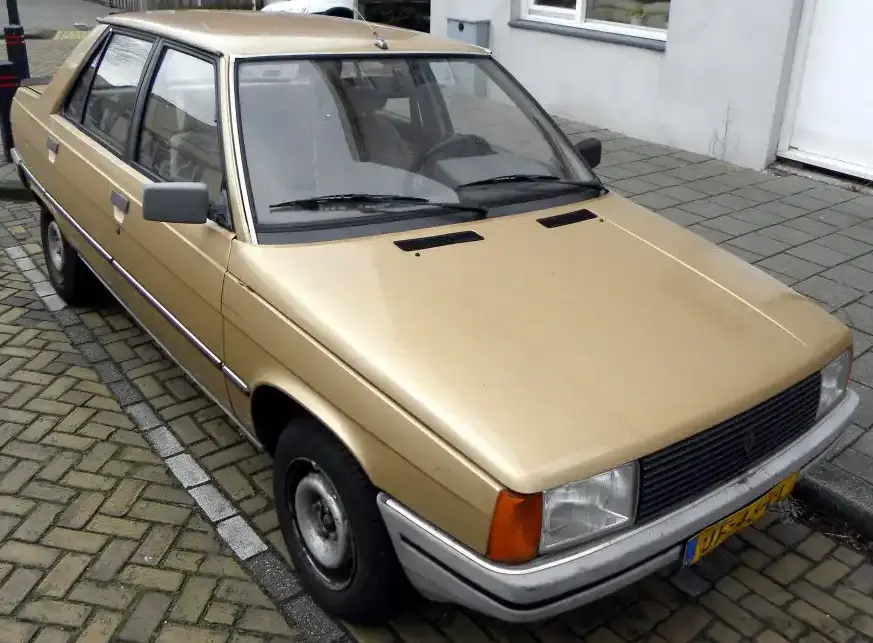
The Renault 9 (L42) 1.7 (L42E), producing 94 horsepower, was a significant variant within the L42 generation of the Renault 9, produced between 1987 and 1988. Positioned as a mid-range offering, it bridged the gap between the base 1.1 and 1.4 liter models and the more performance-oriented 1.7 and 2.0 liter options. The Renault 9, launched in 1987, was designed to replace the aging Renault 11, offering a more modern and spacious interior, improved aerodynamics, and a wider range of engine choices. It was a key model for Renault in the European small family car segment, competing with vehicles like the Peugeot 205, Citroën AX, and Volkswagen Golf.
Technical Specifications
| Brand | Renault |
| Model | 9 |
| Generation | 9 (L42) |
| Type (Engine) | 1.7 (L42E) (94 Hp) |
| Start of production | 1987 |
| End of production | 1988 |
| Powertrain Architecture | Internal Combustion engine |
| Body type | Sedan |
| Seats | 5 |
| Doors | 4 |
| Fuel Type | Petrol (Gasoline) |
| Power | 94 Hp |
| Engine Model/Code | F3N 708 |
| Engine aspiration | Naturally aspirated engine |
| Engine oil capacity | 5.5 l (5.81 US qt | 4.84 UK qt) |
| Coolant capacity | 6.5 l (6.87 US qt | 5.72 UK qt) |
| Fuel tank capacity | 47 l (12.42 US gal | 10.34 UK gal) |
Powertrain & Engine Architecture
The heart of the Renault 9 1.7 (L42E) is the F3N 708 engine, a 1.7-liter inline-four cylinder gasoline engine. This engine is a naturally aspirated unit, meaning it doesn’t utilize a turbocharger or supercharger. It features a cast iron block and an aluminum cylinder head, a common configuration for engines of this era. The F3N engine family was known for its relative simplicity and durability. Fuel delivery is managed by a Bosch Mono-Jetronic fuel injection system, a single-point injection system that was a step up from carburetors but less sophisticated than multi-point injection. The Mono-Jetronic system delivers fuel into a common manifold before the intake valves. The engine utilizes a single overhead camshaft (SOHC) valvetrain, operating two valves per cylinder (one intake, one exhaust). The 94 horsepower output is achieved at approximately 5,500 rpm, with peak torque of around 137 Nm (101 lb-ft) at 3,000 rpm. The engine was typically paired with a four-speed automatic transmission, although a five-speed manual transmission was also available. The automatic transmission, while providing convenience, was not known for its particularly quick shifts or fuel efficiency.
Driving Characteristics
The Renault 9 1.7 with the automatic transmission offered a comfortable, if not particularly sporty, driving experience. Acceleration from 0 to 60 mph was estimated to be around 12-13 seconds, making it adequate for everyday driving but noticeably slower than the manual transmission versions or the higher-powered 2.0-liter models. The automatic transmission’s gear ratios were geared towards fuel economy and smooth cruising rather than rapid acceleration. The power delivery was relatively linear, with usable torque available from low engine speeds, making it easy to drive in urban environments. However, overtaking maneuvers required careful planning. Compared to the manual transmission 1.7, the automatic version felt somewhat sluggish, as the transmission sapped some of the engine’s power. The suspension, tuned for comfort, provided a reasonably smooth ride, absorbing bumps and imperfections in the road surface effectively. Steering was light and easy, making it maneuverable in tight spaces.
Equipment & Trim Levels
The 1.7 L42E variant of the Renault 9 typically came equipped with a reasonable level of standard features for its time. These included central locking, electric front windows, and a basic stereo system. Interior upholstery was typically cloth, with a simple, functional dashboard layout. Optional extras included a sunroof, upgraded stereo systems, and metallic paint finishes. The trim level sat in the middle of the Renault 9 range, offering more comfort and convenience features than the base models but lacking the more luxurious appointments of the top-of-the-line versions. The interior plastics were durable but not particularly high-quality, reflecting the car’s price point.
Chassis & Braking
The Renault 9 L42 utilized a front-wheel-drive layout with an independent MacPherson strut suspension at the front and a torsion beam suspension at the rear. The torsion beam setup was a cost-effective solution that provided adequate handling characteristics for everyday driving. Braking was typically accomplished with disc brakes at the front and drum brakes at the rear. The braking system was adequate for normal driving conditions, but lacked the stopping power of more modern vehicles. Stabilizer bars were fitted to both the front and rear axles to reduce body roll during cornering. The chassis was relatively lightweight, contributing to the car’s overall fuel efficiency.
Market Reception & Comparison
The Renault 9 1.7 automatic was generally well-received by automotive critics as a practical and comfortable family car. However, the automatic transmission was often criticized for its sluggish performance and lack of responsiveness. Fuel economy was considered average for its class, around 30-35 mpg combined. Compared to the manual transmission 1.7, the automatic version offered less engaging driving experience but greater convenience. The 2.0-liter models provided significantly more performance but came at a higher price. Reliability was generally good, with the F3N engine proving to be a durable unit. However, the Mono-Jetronic fuel injection system could be prone to occasional issues.
Legacy
The Renault 9 1.7 (L42E) automatic, while not the most exciting variant in the lineup, remains a reasonably popular choice among classic car enthusiasts and collectors. The F3N engine is known for its robustness and relatively simple maintenance requirements. Parts availability is generally good, although some specific components may be becoming increasingly difficult to find. In the used car market, these models are typically affordable and offer a nostalgic driving experience. The Renault 9, as a whole, is remembered as a significant step forward for Renault, offering a modern and practical alternative to its competitors in the small family car segment. The 1.7 automatic, while not a performance icon, represents a comfortable and reliable option for those seeking a classic French hatchback.
