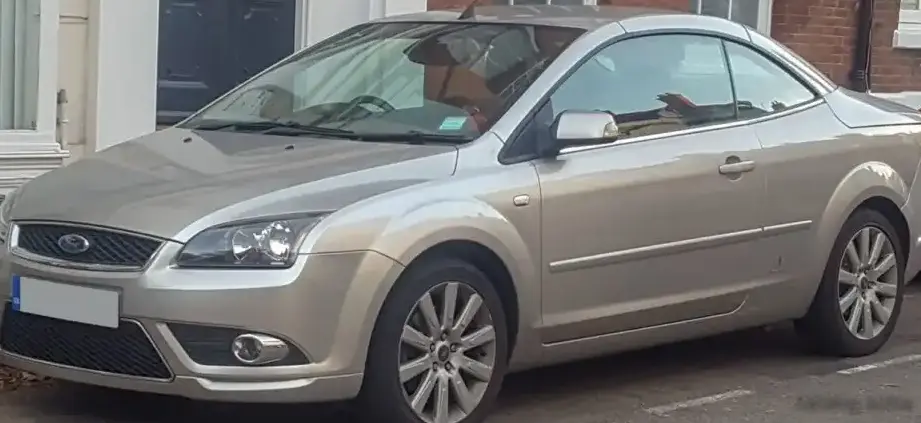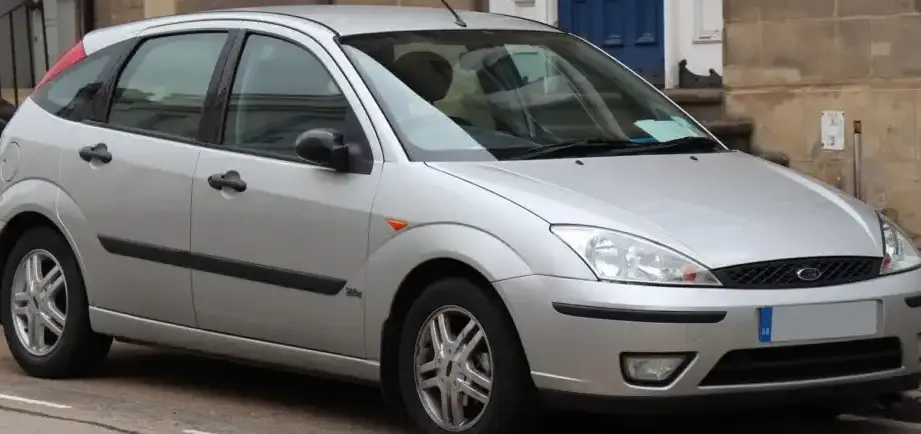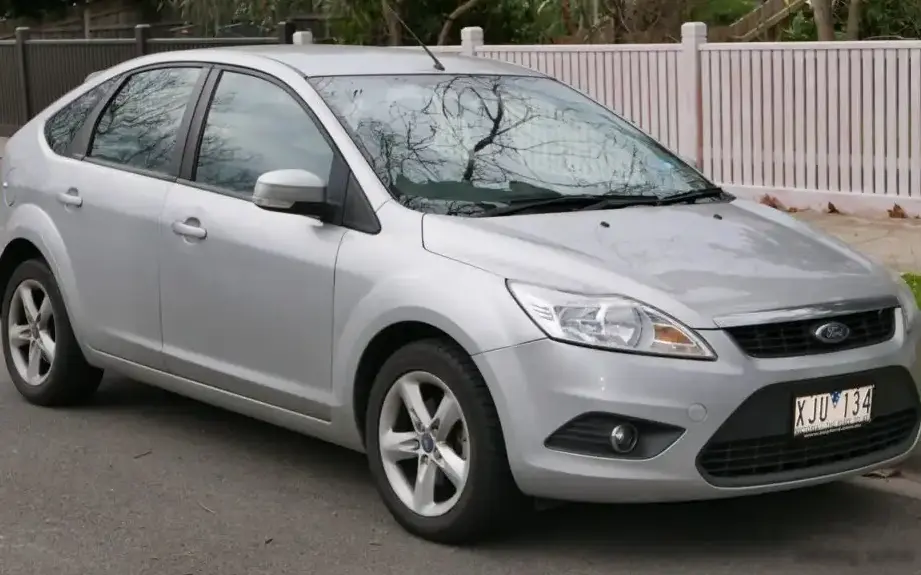
The Ford Focus II Hatchback, produced from 2005 to 2010, represented a significant step forward for Ford’s compact offering in the European market and, increasingly, in North America. The 2.0 Duratec 16V variant, generating 145 horsepower, occupied a mid-range position within the Focus II lineup, bridging the gap between the more economical base engines and the performance-oriented ST models. This version aimed to provide a balance of fuel efficiency, respectable performance, and available features, appealing to a broad spectrum of buyers seeking a practical and enjoyable driving experience. It was a key component of Ford’s strategy to offer a versatile and modern compact car.
Technical Specifications
| Brand | Ford |
| Model | Focus |
| Generation | Focus II Hatchback |
| Type (Engine) | 2.0 Duratec 16V (145 Hp) |
| Start of production | 2005 |
| End of production | 2010 |
| Powertrain Architecture | Internal Combustion engine |
| Body type | Hatchback |
| Seats | 5 |
| Doors | 3/5 |
| Fuel consumption (urban) | 9.8 l/100 km (24 US mpg, 28.8 UK mpg, 10.2 km/l) |
| Fuel consumption (extra urban) | 5.4 l/100 km (43.6 US mpg, 52.3 UK mpg, 18.5 km/l) |
| Fuel consumption (combined) | 7.1 l/100 km (33.1 US mpg, 39.8 UK mpg, 14.1 km/l) |
| Fuel Type | Petrol (Gasoline) |
| Acceleration 0 – 100 km/h | 9.2 sec |
| Acceleration 0 – 62 mph | 9.2 sec |
| Acceleration 0 – 60 mph | 8.7 sec |
| Maximum speed | 193 km/h (119.92 mph) |
| Weight-to-power ratio | 9.1 kg/Hp, 109.4 Hp/tonne |
| Weight-to-torque ratio | 7.2 kg/Nm, 139.5 Nm/tonne |
| Power | 145 Hp @ 6000 rpm |
| Power per litre | 72.5 Hp/l |
| Torque | 185 Nm @ 4500 rpm (136.45 lb.-ft. @ 4500 rpm) |
| Engine layout | Front, Transverse |
| Engine Model/Code | AODA, AODB |
| Engine displacement | 1999 cm3 (121.99 cu. in.) |
| Number of cylinders | 4 |
| Engine configuration | Inline |
| Number of valves per cylinder | 4 |
| Fuel injection system | Multi-port manifold injection |
| Engine aspiration | Naturally aspirated engine |
| Valvetrain | DOHC |
| Engine oil capacity | 4.3 l (4.54 US qt | 3.78 UK qt) |
| Coolant capacity | 6.3 l (6.66 US qt | 5.54 UK qt) |
| Kerb Weight | 1326 kg (2923.33 lbs.) |
| Max. weight | 1775 kg (3913.21 lbs.) |
| Max load | 449 kg (989.88 lbs.) |
| Trunk (boot) space – minimum | 385 l (13.6 cu. ft.) |
| Trunk (boot) space – maximum | 1247 l (44.04 cu. ft.) |
| Fuel tank capacity | 55 l (14.53 US gal | 12.1 UK gal) |
| Length | 4342 mm (170.94 in.) |
| Width | 1840 mm (72.44 in.) |
| Height | 1497 mm (58.94 in.) |
| Wheelbase | 2640 mm (103.94 in.) |
| Front track | 1535 mm (60.43 in.) |
| Rear track | 1531 mm (60.28 in.) |
| Drivetrain Architecture | Front wheel drive |
| Number of gears | 5 |
| Gearbox type | Manual transmission |
| Front suspension | Spring Strut |
| Rear suspension | Transverse stabilizer |
| Front brakes | Ventilated discs |
| Rear brakes | Disc |
| Steering type | Steering rack and pinion |
| Tires size | 195/65 R15 |
| Wheel rims size | 6JX15 |
Powertrain & Engine Architecture
The heart of the Focus II 2.0 Duratec was the AODA or AODB engine, a 1.999-liter inline-four cylinder powerplant. This engine belonged to Ford’s Duratec family, known for its relatively simple design and robust construction. It featured a double overhead camshaft (DOHC) valvetrain with four valves per cylinder, contributing to its respectable power output. Fuel delivery was handled by a multi-port fuel injection system, providing precise fuel metering for optimal combustion. The engine’s 145 horsepower at 6,000 rpm and 185 Nm (136 lb-ft) of torque at 4,500 rpm provided adequate performance for everyday driving. The engine was transversely mounted in the front of the vehicle, driving the front wheels. The five-speed manual transmission was the standard offering, providing a direct and engaging driving experience. While an automatic transmission was available, it was less common and often perceived as detracting from the engine’s potential.
Driving Characteristics
The 2.0 Duratec with the five-speed manual transmission offered a reasonably engaging driving experience. Acceleration from 0-60 mph took approximately 8.7 seconds, making it competitive with other vehicles in its class. The engine felt responsive throughout the rev range, with a noticeable surge of power in the mid-range. The five-speed gearbox was well-matched to the engine’s characteristics, allowing drivers to keep the engine in its sweet spot for optimal performance. Compared to the base 1.6-liter engine, the 2.0 Duratec provided significantly more power and torque, making it more suitable for highway driving and carrying a full load of passengers. However, it didn’t possess the outright performance of the higher-spec ST models. The automatic transmission version, while offering convenience, noticeably dulled the driving experience, with slower acceleration and less engine braking.
Equipment & Trim Levels
The 2.0 Duratec variant of the Focus II was typically offered in mid-range trim levels, such as the LX or SE, depending on the specific market. Standard equipment generally included air conditioning, power windows and locks, a CD player, and alloy wheels. Higher trim levels added features like automatic climate control, a sunroof, and upgraded upholstery. Interior materials were generally of good quality for the price point, with a focus on practicality and durability. Optional extras included a navigation system, parking sensors, and a premium sound system.
Chassis & Braking
The Focus II utilized a MacPherson strut front suspension and a multi-link rear suspension, providing a comfortable and controlled ride. The chassis was well-tuned, offering good handling and stability. The 2.0 Duratec models typically featured ventilated disc brakes on the front wheels and solid disc brakes on the rear, providing adequate stopping power. Anti-lock brakes (ABS) were standard equipment. The steering was precise and responsive, contributing to the car’s overall enjoyable driving dynamics.
Market Reception & Comparison
The Ford Focus II 2.0 Duratec was generally well-received by automotive critics. It was praised for its balanced performance, comfortable ride, and practical interior. Fuel economy was considered respectable for its class, averaging around 33.1 US mpg in combined driving. Compared to the base 1.6-liter engine, the 2.0 Duratec offered a significant improvement in performance, but at the cost of slightly higher fuel consumption. The 2.0 Duratec was also a more compelling option than the diesel variants for drivers who preferred the refinement and responsiveness of a gasoline engine.
Legacy
The 2.0 Duratec engine proved to be a reliable and durable powerplant. With proper maintenance, these engines can easily exceed 150,000 miles. The Focus II 2.0 Duratec remains a popular choice in the used car market, offering a good balance of affordability, practicality, and driving enjoyment. While not as sought-after as the performance-oriented ST models, the 2.0 Duratec variant represents a sweet spot in the Focus II lineup, providing a well-rounded and dependable compact car experience.