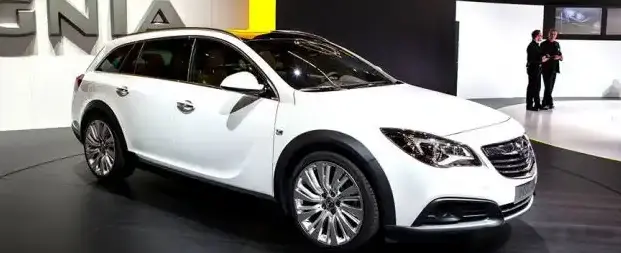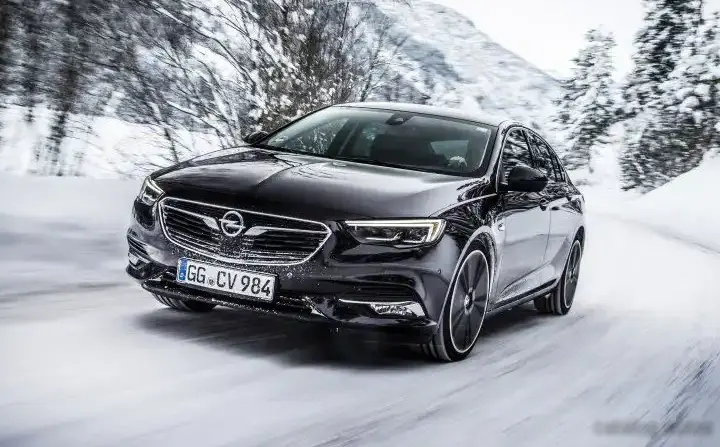
The Opel Insignia Grand Sport (B) 1.5 EcoTEC Turbo, producing 140 horsepower, was a key variant in the second generation of Opel’s flagship D-segment hatchback. Introduced in June 2017 and remaining in production until June 2018, this model occupied a central position within the Insignia B range, offering a balance between fuel efficiency, performance, and affordability. It was designed to appeal to buyers seeking a spacious, comfortable, and technologically equipped family car. The Insignia B, built on the GM E2 platform (also known as the European Opel/Vauxhall platform), represented a significant step forward in design and engineering compared to its predecessor, aiming to compete with established rivals like the Ford Mondeo, Volkswagen Passat, and Skoda Superb.
Technical Specifications
| Brand | Opel |
| Model | Insignia |
| Generation | Insignia Grand Sport (B) |
| Type (Engine) | 1.5 EcoTEC Turbo (140 Hp) |
| Start of production | June, 2017 |
| End of production | June, 2018 |
| Powertrain Architecture | Internal Combustion engine |
| Body type | Hatchback |
| Seats | 5 |
| Doors | 5 |
| Fuel consumption (urban) | 7.3 l/100 km (32.2 US mpg, 38.7 UK mpg, 13.7 km/l) |
| Fuel consumption (extra urban) | 4.7 l/100 km (50 US mpg, 60.1 UK mpg, 21.3 km/l) |
| Fuel consumption (combined) | 5.7 l/100 km (41.3 US mpg, 49.6 UK mpg, 17.5 km/l) |
| CO2 emissions | 129 g/km |
| Fuel Type | Petrol (Gasoline) |
| Acceleration 0 – 100 km/h | 9.9 sec |
| Acceleration 0 – 62 mph | 9.9 sec |
| Acceleration 0 – 60 mph | 9.4 sec |
| Maximum speed | 213 km/h (132.35 mph) |
| Emission standard | Euro 6 |
| Weight-to-power ratio | 9.9 kg/Hp, 101.4 Hp/tonne |
| Weight-to-torque ratio | 5.5 kg/Nm, 181 Nm/tonne |
| Power | 140 Hp @ 5600 rpm |
| Power per litre | 94 Hp/l |
| Torque | 250 Nm @ 2000-4100 rpm (184.39 lb.-ft. @ 2000-4100 rpm) |
| Engine layout | Front, Transverse |
| Engine Model/Code | B15XFL |
| Engine displacement | 1490 cm3 (90.93 cu. in.) |
| Number of cylinders | 4 |
| Engine configuration | Inline |
| Cylinder Bore | 74 mm (2.91 in.) |
| Piston Stroke | 86.6 mm (3.41 in.) |
| Compression ratio | 10.1:1 |
| Number of valves per cylinder | 4 |
| Fuel injection system | Direct injection |
| Engine aspiration | Turbocharger, Intercooler |
| Valvetrain | DOHC |
| Engine oil capacity | 4 l (4.23 US qt | 3.52 UK qt) |
| Coolant | 5.4 l (5.71 US qt | 4.75 UK qt) |
| Kerb Weight | 1381 kg (3044.58 lbs.) |
| Max. weight | 2000 kg (4409.25 lbs.) |
| Max load | 619 kg (1364.66 lbs.) |
| Trunk (boot) space – minimum | 490 l (17.3 cu. ft.) |
| Trunk (boot) space – maximum | 1450 l (51.21 cu. ft.) |
| Fuel tank capacity | 62 l (16.38 US gal | 13.64 UK gal) |
| Max. roof load | 100 kg (220.46 lbs.) |
| Permitted trailer load with brakes (12%) | 1405 kg (3097.49 lbs.) |
| Permitted trailer load without brakes | 700 kg (1543.24 lbs.) |
| Length | 4897 mm (192.8 in.) |
| Width | 1863 mm (73.35 in.) |
| Width with mirrors folded | 1941 mm (76.42 in.) |
| Width including mirrors | 2093 mm (82.4 in.) |
| Height | 1455 mm (57.28 in.) |
| Wheelbase | 2829 mm (111.38 in.) |
| Front track | 1607 mm (63.27 in.) |
| Rear (Back) track | 1610 mm (63.39 in.) |
| Front overhang | 990 mm (38.98 in.) |
| Rear overhang | 1078 mm (42.44 in.) |
| Minimum turning circle | 11.74 m (38.52 ft.) |
| Drivetrain Architecture | The Internal combustion engine (ICE) drives the front wheels of the vehicle. |
| Drive wheel | Front wheel drive |
| Number of gears and type of gearbox | 6 gears, manual transmission |
| Front suspension | Independent type McPherson |
| Front brakes | Ventilated discs |
| Rear brakes | Disc |
| Assisting systems | ABS (Anti-lock braking system) |
| Steering type | Steering rack and pinion |
| Power steering | Electric Steering |
| Tires size | 225/55 R17 |
| Wheel rims size | 7J x 17 |
Powertrain & Engine Architecture
The heart of the Insignia Grand Sport 1.5 EcoTEC Turbo is the B15XFL engine, a 1.5-liter turbocharged inline-four cylinder gasoline engine. This engine is part of Opel’s EcoTEC family, designed for efficiency and reduced emissions. It features direct fuel injection, a technology that precisely meters fuel into the combustion chamber for improved combustion and power delivery. The engine utilizes a single-scroll turbocharger with an intercooler to boost power output. The valvetrain employs a Dual Overhead Camshaft (DOHC) configuration with four valves per cylinder, optimizing airflow for enhanced performance. The 140 horsepower and 250 Nm (184 lb-ft) of torque are delivered between 2000 and 4100 rpm, providing a usable powerband for everyday driving. The engine is paired with a six-speed manual transmission, which was the standard offering for this variant. While an automatic transmission was available on other Insignia models, the 1.5 EcoTEC Turbo was primarily offered with the manual gearbox.
Driving Characteristics
The 1.5 EcoTEC Turbo with the six-speed manual transmission delivers a balanced driving experience. Acceleration from 0 to 60 mph takes approximately 9.4 seconds, and top speed is rated at 132.35 mph. While not a performance-oriented variant, the engine provides adequate power for overtaking and highway cruising. The manual gearbox allows for greater driver engagement and control, although the gear ratios are tuned for fuel efficiency rather than outright acceleration. Compared to the more powerful 2.0-liter turbocharged engines available in the Insignia B range, the 1.5 EcoTEC Turbo feels less responsive, particularly at lower engine speeds. However, it offers a more economical driving experience, with combined fuel consumption figures of around 41.3 US mpg.
Equipment & Trim Levels
The 1.5 EcoTEC Turbo typically came equipped in the base or mid-level trim of the Insignia Grand Sport. Standard features generally included air conditioning, a touchscreen infotainment system with Bluetooth connectivity, alloy wheels, and a suite of safety features such as ABS, ESP (Electronic Stability Program), and multiple airbags. Higher trim levels added features like leather upholstery, heated seats, a premium sound system, and advanced driver-assistance systems like adaptive cruise control and lane departure warning. Interior upholstery was typically cloth, with options for upgraded materials available on higher trims. The dashboard layout was modern and ergonomically designed, with a focus on ease of use.
Chassis & Braking
The Insignia Grand Sport features an independent McPherson strut suspension at the front and a multi-link suspension at the rear, providing a comfortable and controlled ride. The front brakes are ventilated discs, while the rear brakes are solid discs. The steering is electric power-assisted, offering a light and precise feel. The chassis is designed to balance handling and comfort, making it suitable for both city driving and long-distance journeys. The weight distribution is relatively balanced, contributing to stable handling characteristics.
Market Reception & Comparison
The Opel Insignia Grand Sport 1.5 EcoTEC Turbo was generally well-received by automotive critics as a practical and efficient family car. It was praised for its spacious interior, comfortable ride, and fuel economy. However, some reviewers noted that the 1.5-liter engine could feel underpowered, especially when fully loaded. Compared to the higher-output variants, such as the 2.0-liter turbo, the 1.5 EcoTEC Turbo offered a more affordable entry point into the Insignia range, appealing to buyers prioritizing value and efficiency. The 1.5L engine offered better fuel economy than the 2.0L, but at the cost of performance.
Legacy
The 1.5 EcoTEC Turbo engine, while not known for any major reliability issues, is a relatively modern engine and generally considered dependable with regular maintenance. The Insignia B, as a whole, has proven to be a reasonably reliable vehicle, although some owners have reported minor issues with the infotainment system and electrical components. On the used car market, the 1.5 EcoTEC Turbo variant represents a good value proposition, offering a spacious and well-equipped family car at a competitive price. Its fuel efficiency and relatively low running costs make it an attractive option for budget-conscious buyers.