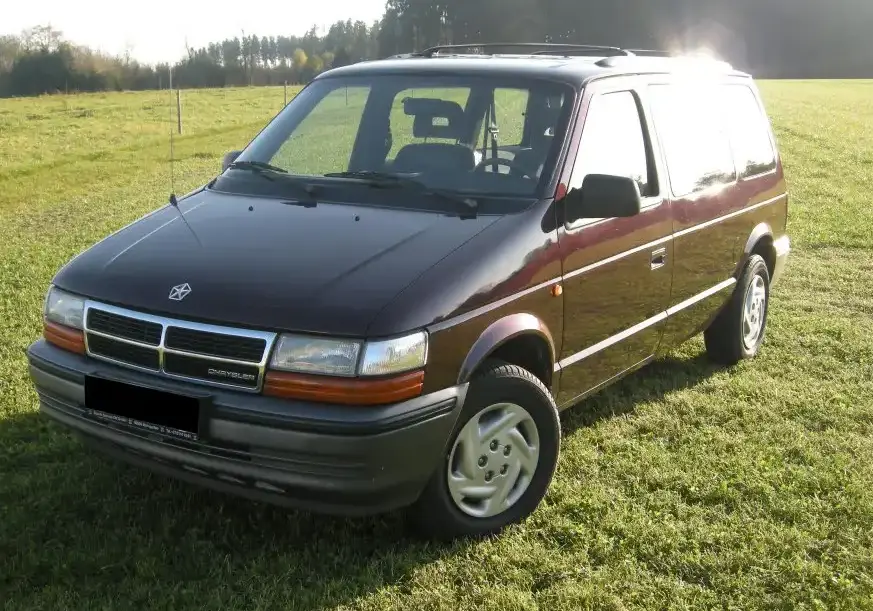
The Chrysler Voyager V 3.3i V6, produced from 2008 to 2010, represented a significant iteration of Chrysler’s popular minivan offering. Positioned as a mid-range trim within the Voyager V lineup, this variant aimed to balance affordability with a respectable level of performance and features. It was primarily marketed towards families seeking a spacious and practical vehicle for everyday use. The Voyager V series, built on Chrysler’s RS platform, was a key player in the highly competitive North American minivan segment, competing with models like the Dodge Grand Caravan, Honda Odyssey, and Toyota Sienna. This specific 3.3i V6 configuration offered a step up in power compared to the base four-cylinder models, while remaining more accessible than the higher-end trims.
Technical Specifications
| Brand | Chrysler |
| Model | Voyager |
| Generation | Voyager V |
| Type (Engine) | 3.3i V6 (174 Hp) |
| Start of production | 2008 |
| End of production | 2010 |
| Powertrain Architecture | Internal Combustion engine |
| Body type | Minivan |
| Seats | 5 |
| Doors | 5 |
| Fuel Type | Petrol (Gasoline) |
| Power | 174 Hp @ 5100 rpm |
| Power per litre | 52.7 Hp/l |
| Torque | 278 Nm @ 4000 rpm / 205.04 lb.-ft. @ 4000 rpm |
| Engine layout | Front, Transverse |
| Engine Model/Code | EGA |
| Engine displacement | 3301 cm3 / 201.44 cu. in. |
| Number of cylinders | 6 |
| Engine configuration | V-engine |
| Cylinder Bore | 93 mm / 3.66 in. |
| Piston Stroke | 81 mm / 3.19 in. |
| Compression ratio | 9.4:1 |
| Number of valves per cylinder | 2 |
| Fuel injection system | Multi-port manifold injection |
| Engine aspiration | Naturally aspirated engine |
| Valvetrain | OHC |
| Engine oil capacity | 4.7 l / 4.97 US qt | 4.14 UK qt |
| Coolant | 12.6 l / 13.31 US qt | 11.09 UK qt |
| Trunk (boot) space – minimum | 1970 l / 69.57 cu. ft. |
| Trunk (boot) space – maximum | 3640 l / 128.55 cu. ft. |
| Fuel tank capacity | 75 l / 19.81 US gal | 16.5 UK gal |
| Length | 4808 mm / 189.29 in. |
| Width | 1997 mm / 78.62 in. |
| Height | 1803 mm / 70.98 in. |
| Wheelbase | 2878 mm / 113.31 in. |
| Front track | 1600 mm / 62.99 in. |
| Rear (Back) track | 1626 mm / 64.02 in. |
| Drivetrain Architecture | The Internal combustion engine (ICE) drives the front wheels of the vehicle. |
| Drive wheel | Front wheel drive |
| Number of gears and type of gearbox | 4 gears, automatic transmission |
| Front brakes | Ventilated discs |
| Rear brakes | Disc |
| Assisting systems | ABS (Anti-lock braking system) |
| Steering type | Steering rack and pinion |
| Power steering | Hydraulic Steering |
| Tires size | 215/65 R16 |
Powertrain & Engine Architecture
The heart of the Voyager V 3.3i was the EGA engine, a 3.3-liter V6. This engine utilized a 60-degree V-configuration, contributing to a relatively smooth power delivery. The EGA engine featured a single overhead camshaft (OHC) design operating two valves per cylinder. Fuel delivery was managed by a multi-port fuel injection system, providing precise fuel metering for improved efficiency and performance. The 9.4:1 compression ratio was a compromise between power output and the ability to run on readily available 87-octane gasoline. Paired with this engine was a four-speed automatic transmission. This transmission, while not as sophisticated as some of the newer automatic gearboxes available at the time, provided smooth and adequate shifting for typical driving conditions. The transmission was tuned for comfort and fuel economy rather than outright performance. It employed a traditional torque converter design and lacked features like manual shift modes commonly found in later transmissions.
Driving Characteristics
The 174 horsepower and 205 lb-ft of torque offered by the 3.3i V6 provided adequate, though not exhilarating, performance for the Voyager V. Acceleration from 0 to 60 mph was estimated to be around 9-10 seconds. The automatic transmission’s gear ratios were optimized for everyday driving, prioritizing smooth transitions and fuel efficiency. The first gear was relatively tall, focusing on quick off-the-line acceleration, while the higher gears were geared for relaxed highway cruising. Compared to the base four-cylinder engine, the V6 offered a noticeable improvement in responsiveness, particularly when fully loaded with passengers and cargo. However, it didn’t match the brisk acceleration of the optional 3.8-liter V6 found in higher trim levels. The front-wheel-drive configuration provided predictable handling, but the Voyager V was not designed for sporty driving. The focus was on providing a comfortable and stable ride, absorbing bumps and imperfections in the road effectively. Steering feel was light and easy, making maneuvering in tight spaces simple.
Equipment & Trim Levels
The 3.3i V6 trim of the Voyager V typically included features such as air conditioning, power windows and locks, a basic audio system with an AM/FM radio and CD player, and cloth upholstery. Optional extras included alloy wheels, a sunroof, upgraded audio systems with cassette or CD changers, and rear entertainment systems featuring a DVD player and screen. Safety features like anti-lock brakes (ABS) were standard. The interior design was functional and family-oriented, with durable materials and ample storage space. The dashboard layout was straightforward and easy to use, with clearly labeled controls. The Voyager V aimed to provide a good value proposition, offering a reasonable level of equipment at a competitive price point. The 3.3i trim sat in the middle of the Voyager V lineup, offering more features than the base model but costing less than the top-of-the-line trims.
Chassis & Braking
The Voyager V utilized a conventional front-wheel-drive chassis with an independent front suspension and a twist-beam rear suspension. The front suspension featured MacPherson struts, coil springs, and a stabilizer bar, providing a comfortable ride and predictable handling. The rear suspension employed a semi-independent twist-beam design, which was cost-effective and space-efficient. This setup provided a comfortable ride, but wasn’t particularly sporty. The braking system consisted of ventilated discs at the front and solid discs at the rear. ABS was standard, enhancing braking performance and stability, especially in adverse conditions. Steering was provided by a hydraulic power steering system, offering light and easy steering effort. Tire size was typically 215/65R16, providing a balance of ride comfort and handling.
Market Reception & Comparison
The Chrysler Voyager V 3.3i V6 was generally well-received by critics as a practical and affordable minivan option. It was praised for its spacious interior, comfortable ride, and reasonable fuel economy (estimated around 18-25 mpg combined). However, some reviewers noted that the 3.3-liter V6 felt underpowered when the vehicle was fully loaded, especially when climbing hills or accelerating quickly. Compared to the four-cylinder Voyager V, the 3.3i offered a significant performance boost. Compared to the 3.8-liter V6, it offered a more budget-friendly price point but sacrificed some performance. Reliability was generally considered average for the period, with some reports of minor issues with the automatic transmission, such as slipping or harsh shifting, and the fuel injection system. Overall, the Voyager V 3.3i V6 was seen as a solid, if unremarkable, choice in the minivan segment.
Legacy
The Chrysler Voyager V 3.3i V6, while not a standout performer, remains a popular choice in the used car market due to its affordability and practicality. The EGA engine, while not known for exceptional longevity, is generally reliable with proper maintenance, including regular oil changes and coolant flushes. Parts availability is good, and repair costs are relatively low. Today, these Voyagers are often found as family haulers or work vehicles, appreciated for their spaciousness and utility. While newer minivans offer more advanced technology and features, such as Stow ‘n Go seating and advanced safety systems, the Voyager V 3.3i V6 continues to provide a dependable and economical transportation solution for many owners. Its simple design and relatively low maintenance requirements make it an attractive option for those seeking a practical and affordable minivan.