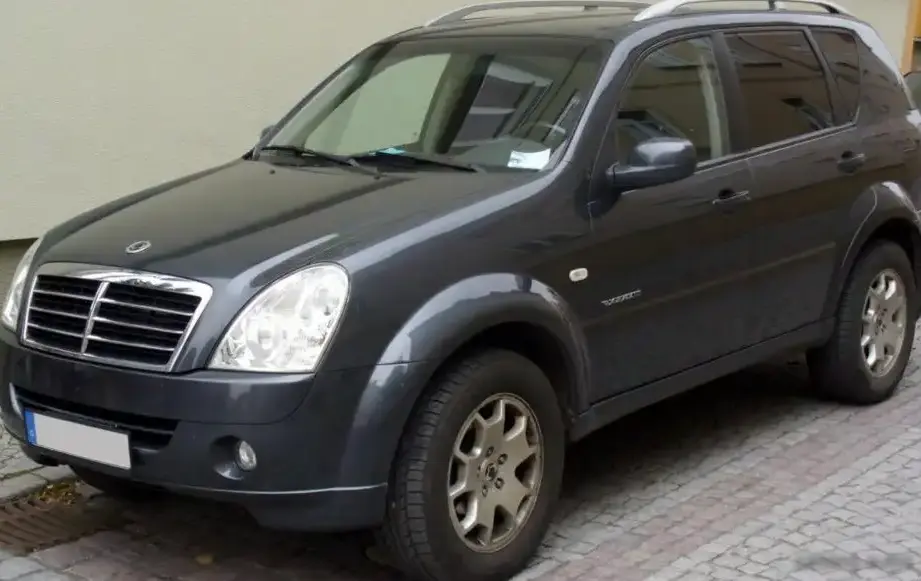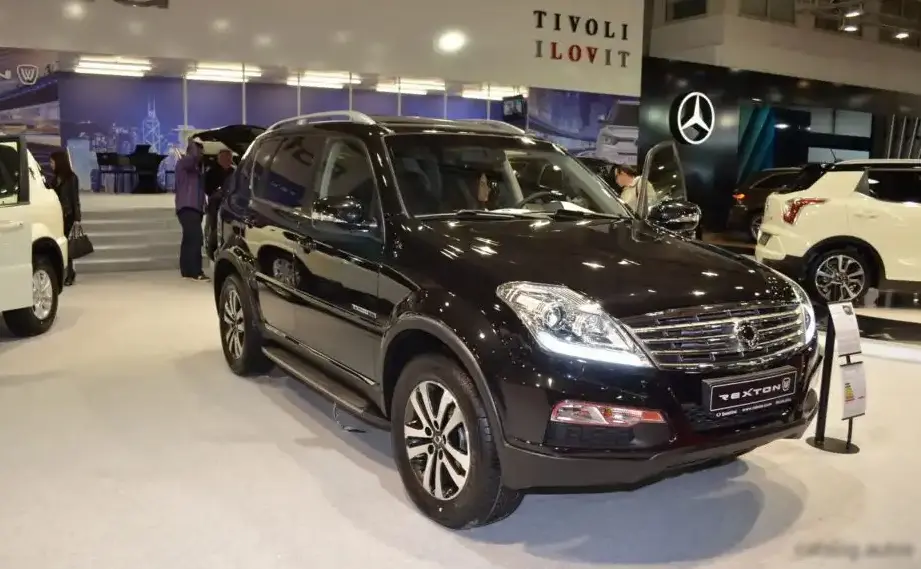
The SsangYong Rexton I (facelift 2012) RX 220 e-XDi 4WD, produced from 2015 to 2017, represents a mid-cycle refresh of the first-generation Rexton, a body-on-frame SUV originally introduced in 2001. This variant, equipped with the 2.2-liter diesel engine producing 178 horsepower, occupied a key position in the Rexton lineup, offering a balance between performance, fuel efficiency, and capability for buyers seeking a robust, all-wheel-drive SUV. The facelift brought updated styling, improved interior appointments, and refinements to the powertrain, aiming to enhance the Rexton’s appeal in a competitive segment. It was primarily marketed in Europe and select international markets, offering a more affordable alternative to established Japanese and European SUV offerings.
Technical Specifications
| Brand | SsangYong |
| Model | Rexton |
| Generation | Rexton I (facelift 2012) |
| Type | RX 220 e-XDi (178 Hp) 4WD |
| Start of production | 2015 |
| End of production | 2017 |
| Powertrain Architecture | Internal Combustion engine |
| Body type | SUV |
| Seats | 5-7 |
| Doors | 5 |
| Fuel consumption (urban) | 8.7 l/100 km (27 US mpg, 32.5 UK mpg, 11.5 km/l) |
| Fuel consumption (extra urban) | 6 l/100 km (39.2 US mpg, 47.1 UK mpg, 16.7 km/l) |
| Fuel consumption (combined) | 7 l/100 km (33.6 US mpg, 40.4 UK mpg, 14.3 km/l) |
| CO2 emissions | 184 g/km |
| Fuel Type | Diesel |
| Maximum speed | 192 km/h (119.3 mph) |
| Emission standard | Euro 6 |
| Weight-to-power ratio | 11.1 kg/Hp, 89.7 Hp/tonne |
| Weight-to-torque ratio | 5 kg/Nm, 201.6 Nm/tonne |
| Power | 178 Hp @ 4000 rpm |
| Power per litre | 82.5 Hp/l |
| Torque | 400 Nm @ 1400-2800 rpm (295.02 lb.-ft. @ 1400-2800 rpm) |
| Engine layout | Front, Longitudinal |
| Engine Model/Code | D22DTR |
| Engine displacement | 2157 cm3 (131.63 cu. in.) |
| Number of cylinders | 4 |
| Engine configuration | Inline |
| Cylinder Bore | 86.2 mm (3.39 in.) |
| Piston Stroke | 92.4 mm (3.64 in.) |
| Compression ratio | 15.5:1 |
| Fuel injection system | Diesel Commonrail |
| Engine aspiration | Turbocharger, Intercooler |
| Engine oil capacity | 6 l (6.34 US qt | 5.28 UK qt) |
| Coolant | 11.5 l (12.15 US qt | 10.12 UK qt) |
| Kerb Weight | 1984-2069 kg (4373.97 – 4561.36 lbs.) |
| Max. weight | 2710 kg (5974.53 lbs.) |
| Max load | 641-726 kg (1413.16 – 1600.56 lbs.) |
| Fuel tank capacity | 78 l (20.61 US gal | 17.16 UK gal) |
| Permitted trailer load with brakes (12%) | 2600 kg (5732.02 lbs.) |
| Permitted trailer load without brakes | 750 kg (1653.47 lbs.) |
| Length | 4755 mm (187.2 in.) |
| Width | 1900 mm (74.8 in.) |
| Height | 1785-1840 mm (70.28 – 72.44 in.) |
| Wheelbase | 2835 mm (111.61 in.) |
| Front track | 1570 mm (61.81 in.) |
| Rear track | 1570 mm (61.81 in.) |
| Front overhang | 885 mm (34.84 in.) |
| Rear overhang | 1035 mm (40.75 in.) |
| Ride height (ground clearance) | 216 mm (8.5 in.) |
| Minimum turning circle | 11.4 m (37.4 ft.) |
| Approach angle | 28.0° |
| Departure angle | 25.5° |
| Drivetrain Architecture | The Internal combustion engine (ICE) drives the rear wheels permanently, and the front wheels are driven through an electrically or mechanically operated clutch if necessary. |
| Drive wheel | All wheel drive (4×4) |
| Number of gears | 6 |
| Type of gearbox | Manual transmission |
| Front suspension | Double wishbone |
| Rear suspension | Independent multi-link suspension |
| Front brakes | Ventilated discs |
| Rear brakes | Disc |
| Assisting systems | ABS (Anti-lock braking system) |
| Steering type | Steering rack and pinion |
| Power steering | Hydraulic Steering |
| Tires size | 235/75 R16; 255/60 R18 |
| Wheel rims size | 7.0J x 16; 7.5J x 18 |
INTRODUCTION
The SsangYong Rexton I, after its initial launch, received a significant facelift in 2012, and the 2015-2017 RX 220 e-XDi 4WD model represents a refined version of this updated design. Built on a traditional body-on-frame chassis, the Rexton aimed to provide a rugged and spacious SUV experience. The RX 220 e-XDi, powered by the 2.2-liter diesel, was positioned as a versatile option within the range, appealing to those needing a capable vehicle for both on-road comfort and occasional off-road excursions. It competed with vehicles like the Mitsubishi Pajero, Kia Sorento, and Hyundai Santa Fe, offering a different proposition with its robust construction and available four-wheel drive system.
Powertrain & Engine Architecture
The heart of the RX 220 e-XDi is the D22DTR 2.2-liter inline-four diesel engine. This engine utilizes a common-rail direct injection system, delivering fuel at extremely high pressure for improved combustion efficiency and reduced emissions. A turbocharger with an intercooler further enhances performance by forcing more air into the cylinders. The engine produces 178 horsepower at 4000 rpm and a substantial 400 Nm (295 lb-ft) of torque between 1400 and 2800 rpm, providing good low-end grunt for towing and off-road driving. The engine features a compression ratio of 15.5:1. The Rexton RX 220 e-XDi was primarily offered with a 6-speed manual transmission, sending power to all four wheels via a part-time four-wheel-drive system. This system allows the driver to select between two-wheel drive, four-wheel drive high, and four-wheel drive low for enhanced traction in challenging conditions.
Driving Characteristics
The RX 220 e-XDi, with its 178 hp and 400 Nm of torque, offered respectable, though not exhilarating, performance. Acceleration was adequate for everyday driving, and the engine’s strong low-end torque made it a capable towing vehicle. Compared to higher-output Rexton variants, such as those with larger engines, the RX 220 e-XDi felt less powerful, particularly when fully loaded or tackling steep inclines. However, the 6-speed manual transmission allowed drivers to keep the engine in its optimal power band. The four-wheel-drive system provided confident traction on slippery surfaces, making it suitable for light off-road adventures. The ride quality, typical of body-on-frame SUVs, was generally comfortable, but could be somewhat bouncy on uneven roads.
Equipment & Trim Levels
The RX 220 e-XDi typically came equipped with a reasonable level of standard features. These included air conditioning, power windows and mirrors, central locking, and an audio system with USB connectivity. Higher trim levels added features such as leather upholstery, heated front seats, a sunroof, and a more advanced infotainment system. Safety features included ABS brakes, airbags, and electronic stability control. The interior design was functional and durable, with a focus on practicality rather than luxury. The Rexton offered seating for five or seven passengers, depending on the configuration.
Chassis & Braking
The Rexton I utilized a traditional body-on-frame construction, providing a robust and durable chassis. The front suspension consisted of double wishbones, while the rear featured an independent multi-link setup. This suspension configuration aimed to balance ride comfort with handling stability. Braking duties were handled by ventilated discs at the front and solid discs at the rear. The hydraulic power steering provided a reasonably direct and responsive feel. The Rexton’s relatively high ground clearance of 216 mm (8.5 inches) contributed to its off-road capability.
Market Reception & Comparison
The SsangYong Rexton RX 220 e-XDi was generally well-received as a practical and capable SUV, particularly for its price point. Critics praised its spacious interior, robust construction, and strong towing capacity. However, it was often criticized for its somewhat dated design, less refined engine compared to some competitors, and relatively basic interior appointments. Compared to other Rexton variants, the RX 220 e-XDi offered a more affordable entry point into the range, but at the expense of outright performance. Fuel economy was reasonable for a vehicle of its size and type, averaging around 7 l/100 km (33.6 US mpg) in combined driving.
Legacy
The SsangYong Rexton I, including the RX 220 e-XDi variant, has established a reputation for reliability and durability, particularly its powertrain. While not known for cutting-edge technology, the D22DTR engine has proven to be relatively robust when properly maintained. On the used car market, these Rextons represent a good value proposition for buyers seeking a capable and affordable SUV. However, potential buyers should be aware of the vehicle’s age and potential maintenance requirements, such as checking for rust and ensuring the four-wheel-drive system is functioning correctly. The Rexton I laid the foundation for SsangYong’s continued presence in the SUV market, and the RX 220 e-XDi remains a popular choice for those seeking a dependable and practical vehicle.