
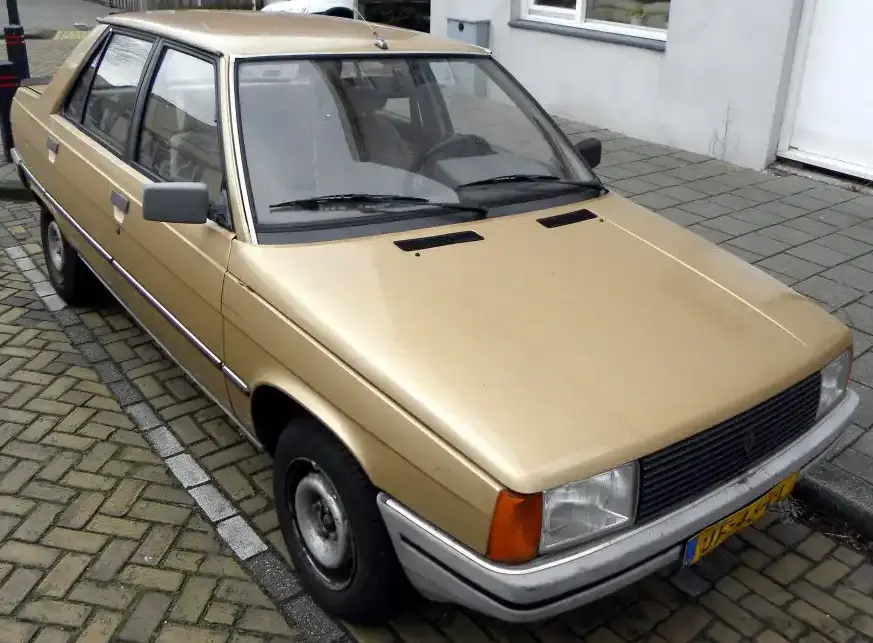
Technical Specifications
| Brand | Renault |
| Model | 9 |
| Generation | 9 (L42) |
| Type (Engine) | 1.7 (L42L) (75 Hp) |
| Start of production | 1986 |
| End of production | 1988 |
| Powertrain Architecture | Internal Combustion engine |
| Body type | Sedan |
| Seats | 5 |
| Doors | 4 |
| Fuel Type | Petrol (Gasoline) |
| Power | 75 Hp |
| Engine Model/Code | F2N 730 |
| Engine aspiration | Naturally aspirated engine |
| Engine oil capacity | 5.5 l (5.81 US qt | 4.84 UK qt) |
| Coolant capacity | 6.7 l (7.08 US qt | 5.9 UK qt) |
| Fuel tank capacity | 47 l (12.42 US gal | 10.34 UK gal) |
The Renault 9 (L42) 1.7 (L42L), producing 75 horsepower, was a significant model within the broader Renault 9 range, manufactured between 1986 and 1988. Positioned as a mainstream offering in the compact sedan segment, it represented a key part of Renault’s strategy to offer affordable and practical transportation to a wide European audience. The L42 series Renault 9 aimed to modernize Renault’s offerings, replacing the aging Renault 11, and provided a more contemporary design and improved mechanicals. This 1.7-liter variant served as a balance between affordability and acceptable performance for everyday driving, slotting below the more powerful 1.4 and 1.6-liter options.
Powertrain & Engine Architecture
The Renault 9 1.7 (L42L) was powered by the F2N 730 engine, a 1.7-liter inline-four cylinder gasoline engine. This engine was a relatively simple design, utilizing a cast iron block and an aluminum cylinder head. It featured a single overhead camshaft (SOHC) operating two valves per cylinder. Fuel delivery was managed by a Bosch mechanical fuel injection system, a common setup for the era, providing a step up from carburation in terms of efficiency and emissions control. The F2N engine was known for its robustness and relative simplicity, making it easier to maintain compared to more complex contemporary engines. The engine’s 75 horsepower output was achieved at approximately 5,500 rpm, with peak torque of around 128 Nm (94 lb-ft) delivered at 3,000 rpm. The engine was typically paired with a four-speed manual transmission, but a three-speed automatic transmission was also offered, which is the focus of this article. The automatic transmission, while providing convenience, did impact acceleration and fuel economy compared to the manual counterpart.
Driving Characteristics
The Renault 9 1.7 with the three-speed automatic transmission offered a comfortable, if not particularly sporty, driving experience. Acceleration was adequate for everyday driving, but noticeably slower than the manual transmission versions or the higher-powered 1.6-liter models. The automatic transmission’s gear ratios were geared towards fuel efficiency and smooth cruising rather than rapid acceleration. The shift points were relatively conservative, prioritizing comfort over performance. In real-world conditions, overtaking maneuvers required careful planning, and the engine could feel strained when climbing hills or carrying a full load of passengers. The suspension, while providing a reasonably comfortable ride, wasn’t particularly sophisticated, resulting in some body roll during cornering. Steering was light and easy, making it well-suited for urban driving. The overall driving experience was geared towards practicality and ease of use, making it a popular choice for drivers who prioritized convenience over performance.
Equipment & Trim Levels
The 1.7L automatic Renault 9 typically fell into the mid-range of the model lineup. Standard equipment included cloth upholstery, a basic instrument cluster, and manual windows and door locks. Power steering was often included, but air conditioning was typically an optional extra. The interior was functional and durable, with a focus on practicality rather than luxury. Higher trim levels offered upgrades such as upgraded upholstery, a more comprehensive instrument cluster, and optional features like a sunroof and central locking. The dashboard layout was straightforward and easy to use, with clearly labeled controls. The overall interior ambiance was typical of a mainstream compact sedan of the late 1980s – functional, durable, and reasonably comfortable.
Chassis & Braking
The Renault 9 L42 utilized a relatively conventional chassis design, featuring independent front suspension with MacPherson struts and a torsion beam rear suspension. The front suspension provided a decent level of comfort and handling, while the rear torsion beam kept costs down and provided adequate stability. Braking was typically accomplished with disc brakes on the front wheels and drum brakes on the rear wheels. The braking system was adequate for normal driving conditions, but lacked the stopping power of more modern systems. Stabilizer bars were often included, particularly on higher trim levels, to reduce body roll during cornering. The overall chassis and braking setup were designed to provide a safe and reliable driving experience, prioritizing affordability and practicality over outright performance.
Market Reception & Comparison
The Renault 9 1.7 automatic received generally positive reviews from automotive critics. It was praised for its affordability, practicality, and comfortable ride. However, the automatic transmission was often criticized for its sluggish performance and impact on fuel economy. Compared to the manual transmission versions, the automatic models were noticeably slower and less fuel-efficient. The 1.6-liter models offered a better balance of performance and economy, making them a popular choice for drivers who wanted more power. The 1.4-liter models were even more affordable but offered significantly less performance. In terms of reliability, the Renault 9 1.7 was generally considered to be a reliable car, with the F2N engine proving to be durable and long-lasting. However, like all cars of this era, it was susceptible to rust, particularly in regions with harsh winters.
Legacy
The Renault 9 1.7 automatic, while not the most exciting version of the model, remains a fondly remembered car for many European drivers. The F2N engine, in particular, has a reputation for being robust and relatively easy to maintain. In the used car market today, these cars are becoming increasingly rare and are sought after by collectors and enthusiasts. While finding a well-maintained example can be challenging, they offer a glimpse into a bygone era of affordable and practical motoring. The three-speed automatic transmission, while dated by modern standards, adds to the car’s unique character and provides a nostalgic driving experience. The Renault 9 1.7 automatic represents a significant chapter in Renault’s history and remains a testament to the company’s commitment to providing affordable and reliable transportation.
