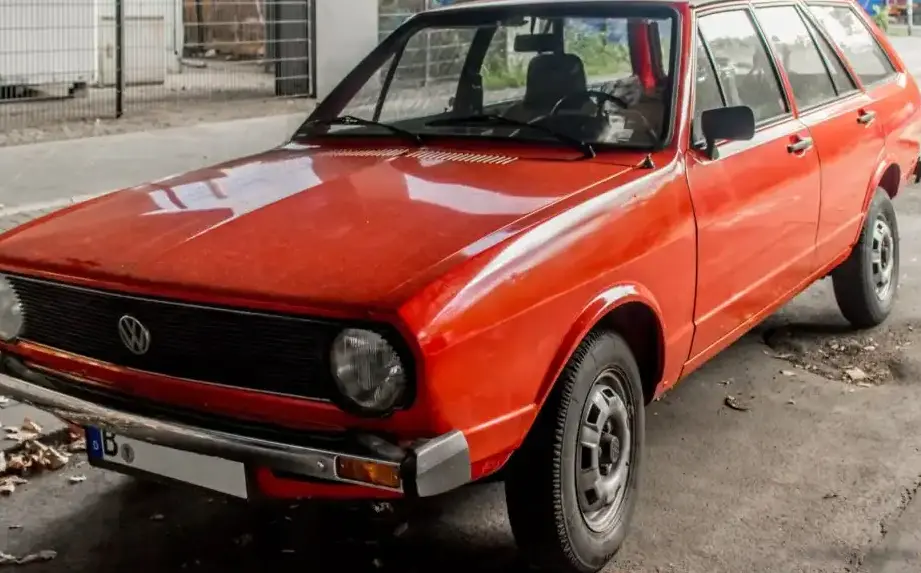
The Volkswagen Passat Variant (B1) 1.5, produced between 1973 and 1975, represents an early iteration of Volkswagen’s foray into the station wagon market with the Passat line. Positioned as an entry-level offering within the B1 Passat range, this variant aimed to provide practical family transport with reasonable fuel economy. It was a key component of Volkswagen’s strategy to broaden the appeal of the Passat beyond the standard sedan, capitalizing on the growing popularity of estate cars in Europe. The B1 Passat, and by extension the Variant, was built on Volkswagen’s new platform, designed to offer more space and comfort than the aging Type 4 it partially replaced. This model served as a crucial stepping stone in establishing the Passat as a mainstay in Volkswagen’s lineup.
Technical Specifications
| Brand | Volkswagen |
| Model | Passat |
| Generation | Passat Variant (B1) |
| Type (Engine) | 1.5 (86 Hp) |
| Start of production | 1973 |
| End of production | 1975 |
| Powertrain Architecture | Internal Combustion engine |
| Body type | Station wagon (estate) |
| Fuel Type | Petrol (Gasoline) |
| Power | 86 Hp |
| Engine Model/Code | ZC |
| Engine aspiration | Naturally aspirated engine |
Powertrain & Engine Architecture
The Passat Variant 1.5 utilized the Volkswagen ZC engine, a 1493cc inline-four cylinder, naturally aspirated gasoline engine. This engine was a relatively simple design, featuring a single overhead camshaft (SOHC) operating two valves per cylinder. Fuel delivery was managed by a Solex carburetor, a common setup for the time, providing adequate but not particularly sophisticated fuel atomization. The ZC engine produced 86 horsepower at 5,800 rpm and approximately 84 lb-ft of torque at 3,500 rpm. The engine block was cast iron, contributing to its durability, while the cylinder head was aluminum.
The transmission paired with the 1.5-liter engine was typically a four-speed automatic gearbox. This automatic transmission, while offering convenience, was not known for its performance or efficiency compared to the available manual transmission options. It featured a traditional torque converter design and relatively widely spaced gear ratios, prioritizing smooth operation over rapid acceleration. The automatic transmission was a significant selling point for buyers prioritizing ease of use, particularly in urban environments.
Driving Characteristics
The Passat Variant 1.5 with the automatic transmission offered a comfortable, if somewhat leisurely, driving experience. Acceleration was modest, with a 0-60 mph time estimated to be around 14-16 seconds. The automatic transmission’s gear ratios were geared towards fuel economy and smooth cruising rather than spirited driving. The engine felt strained when pushed hard, and overtaking maneuvers required careful planning. Compared to the manual transmission versions of the 1.5, or the more powerful 1.6-liter and later 1.5 fuel-injected variants, the automatic 1.5 felt noticeably slower. However, the automatic transmission provided a level of convenience that appealed to a different segment of the market. The suspension, while adequate, was tuned for comfort, resulting in a slightly softer and less precise handling feel than the sportier Passat models.
Equipment & Trim Levels
The 1.5 Passat Variant, being an entry-level trim, typically came with a fairly basic level of equipment. Standard features generally included cloth upholstery, vinyl floor covering, and basic instrumentation. The dashboard was typically constructed from durable plastic, and featured a simple layout. Optional extras included a radio, upgraded upholstery, and a sunroof. The exterior trim was relatively understated, with chrome bumpers and simple hubcaps. The focus was on providing a functional and affordable family vehicle, rather than luxury or extensive features. The interior space was a key selling point, offering ample room for passengers and cargo, a primary reason for choosing the Variant over the sedan.
Chassis & Braking
The Passat Variant (B1) featured an independent front suspension with MacPherson struts and a torsion beam rear suspension. This setup provided a reasonable balance between ride comfort and handling. The braking system consisted of disc brakes on the front wheels and drum brakes on the rear wheels. The drum brakes on the rear were a cost-saving measure typical of entry-level models. Steering was accomplished via a recirculating ball system, which provided adequate but not particularly precise steering feel. Stabilizer bars were often omitted on the base 1.5 models, further contributing to the softer ride quality. The chassis was designed to accommodate the increased weight and altered weight distribution of the station wagon body style.
Market Reception & Comparison
The Passat Variant 1.5 Automatic received mixed reviews. Critics generally praised its practicality and spaciousness, but noted its lack of performance. Compared to the manual transmission versions, the automatic was considered significantly slower and less engaging to drive. Fuel economy was reasonable for the time, but not exceptional. The 1.6-liter and later fuel-injected 1.5 variants offered improved performance and fuel efficiency, making them more desirable options for drivers seeking a more dynamic driving experience. However, the 1.5 Automatic appealed to buyers who prioritized convenience and ease of use over outright performance. It was often seen as a sensible and practical choice for families.
Legacy
The Volkswagen Passat Variant (B1) 1.5 Automatic, while not the most powerful or exciting version of the B1 Passat, played an important role in establishing the Passat as a successful family car. The ZC engine, while relatively simple, proved to be reasonably reliable, and many examples are still on the road today. The automatic transmission, while not known for its longevity, could provide years of service with proper maintenance. In the used car market, these models are often sought after by enthusiasts looking for a classic Volkswagen with a comfortable and practical character. Parts availability is generally good, making them relatively easy to maintain and restore. The 1.5 Automatic represents a significant chapter in the Passat’s history, demonstrating Volkswagen’s commitment to providing a range of options to meet the diverse needs of its customers.