
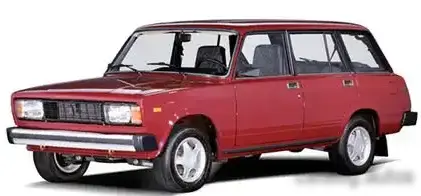
The Lada 21041 1.2, producing 58 horsepower, was a variant of the Lada 2104 series, a popular station wagon (estate) produced by AvtoVAZ in the Soviet Union between 1984 and 1992. Positioned as an entry-level offering within the 2104 range, it provided affordable transportation for families and represented a significant portion of the model’s sales volume, particularly in Eastern European markets. The 2104 itself was a modernization of the earlier Lada 2103, inheriting its basic architecture but featuring updated styling and some mechanical improvements. The 21041 designation specifically denotes the 1.2-liter engine variant.
Technical Specifications
| Brand | Lada |
| Model | 2104 |
| Generation | 21041 |
| Type (Engine) | 1.2 (58 Hp) |
| Start of production | 1984 |
| End of production | 1992 |
| Powertrain Architecture | Internal Combustion engine |
| Body type | Station wagon (estate) |
| Seats | 5 |
| Doors | 5 |
| Fuel Type | Petrol (Gasoline) |
| Weight-to-power ratio | 17.6 kg/Hp, 56.9 Hp/tonne |
| Weight-to-torque ratio | 12.1 kg/Nm, 82.4 Nm/tonne |
| Power | 58 Hp @ 5600 rpm |
| Power per litre | 48.4 Hp/l |
| Torque | 84 Nm @ 3400 rpm (61.96 lb.-ft. @ 3400 rpm) |
| Engine layout | Front, Longitudinal |
| Engine displacement | 1198 cm3 (73.11 cu. in.) |
| Number of cylinders | 4 |
| Engine configuration | Inline |
| Number of valves per cylinder | 2 |
| Fuel injection system | Carburettor |
| Engine aspiration | Naturally aspirated engine |
| Kerb Weight | 1020 kg (2248.72 lbs) |
| Max. weight | 1475 kg (3251.82 lbs) |
| Max load | 455 kg (1003.1 lbs) |
| Trunk (boot) space – minimum | 345 l (12.18 cu. ft.) |
| Trunk (boot) space – maximum | 1035 l (36.55 cu. ft.) |
| Fuel tank capacity | 42 l (11.1 US gal | 9.24 UK gal) |
| Length | 4115 mm (162.01 in) |
| Width | 1620 mm (63.78 in) |
| Height | 1443 mm (56.81 in) |
| Wheelbase | 2424 mm (95.43 in) |
| Front track | 1365 mm (53.74 in) |
| Rear (Back) track | 1321 mm (52.01 in) |
| Drivetrain Architecture | The Internal combustion engine (ICE) drives the rear wheels of the vehicle. |
| Drive wheel | Rear wheel drive |
| Number of gears and type of gearbox | 5 gears, manual transmission |
| Front suspension | Double wishbone |
| Rear suspension | Rigid axle suspension |
| Front brakes | Drum |
| Rear brakes | Drum |
| Steering type | Worm-reduction unit |
Powertrain & Engine Architecture
The heart of the 21041 was the 1.2-liter (1198cc) inline-four cylinder engine. This engine, often referred to by its internal code, was a relatively simple design featuring a two-valve per cylinder configuration and a single carburetor for fuel delivery. The carburetor system, while common for the era, contributed to less precise fuel metering and higher emissions compared to fuel injection systems. The engine’s longitudinal front-engine layout was a carryover from earlier Lada designs. The 58 horsepower peak was achieved at 5600 rpm, and the engine produced 84 Nm (61.96 lb-ft) of torque at 3400 rpm. The engine was mated to a five-speed manual transmission, which was the standard offering for this variant. An automatic transmission was not available for the 1.2-liter engine.
Driving Characteristics
The 21041 1.2 offered modest performance. With a weight of around 1020 kg (2248.72 lbs), the car’s power-to-weight ratio resulted in leisurely acceleration. The five-speed manual transmission helped to keep the engine within its optimal operating range, but overtaking maneuvers required careful planning. Compared to the more powerful 1.5 and 1.6-liter versions of the 2104, the 1.2 felt noticeably slower. The gear ratios were tuned for economy rather than outright speed. The rear-wheel-drive configuration provided predictable handling, but the relatively soft suspension and basic steering system didn’t offer a particularly engaging driving experience. The focus was on providing reliable and affordable transportation, not sporty performance.
Equipment & Trim Levels
The 21041 1.2 was typically equipped with basic amenities. Standard features included cloth upholstery, a simple dashboard layout with analog gauges, and basic exterior trim. Power steering, electric windows, and central locking were generally not available on this base model. Optional extras, when available, might have included a radio, upgraded seat covers, or a sunroof. The interior was functional and durable, prioritizing practicality over luxury. The trim level was considered the entry point into the 2104 range, appealing to budget-conscious buyers.
Chassis & Braking
The 21041 utilized a body-on-frame construction, a common practice for Soviet-era vehicles. The front suspension employed a double wishbone design, while the rear suspension featured a rigid axle. This setup provided a comfortable ride on rough roads, but it wasn’t particularly sophisticated in terms of handling. Braking was handled by drum brakes on all four wheels, which were adequate for the car’s performance but lacked the stopping power of disc brakes. The steering system was a worm-reduction unit, known for its simplicity but also for its lack of precision and feedback.
Market Reception & Comparison
The Lada 21041 1.2 was primarily sold in Eastern European markets, where it was valued for its affordability and reliability. Critics generally acknowledged its practicality but noted its lack of refinement and performance. Compared to the 1.5 and 1.6-liter versions of the 2104, the 1.2 offered better fuel economy but significantly less power. The 1.5-liter engine was often considered a more balanced choice, offering a reasonable compromise between performance and economy. The 1.2-liter version was popular among drivers who prioritized fuel efficiency and low running costs over outright speed.
Legacy
The Lada 21041 1.2, while not a performance icon, remains a significant vehicle in the history of Eastern European motoring. Its simple design and robust construction contributed to its longevity, and many examples are still on the road today. The 1.2-liter engine, while not particularly powerful, proved to be relatively reliable. In the used car market, the 21041 1.2 is often sought after by enthusiasts and collectors who appreciate its classic Soviet-era charm and affordability. Parts availability can be a challenge, but the car’s simplicity makes it relatively easy to maintain for those with mechanical skills. The 21041 represents a bygone era of automotive engineering, offering a glimpse into the transportation needs and priorities of a different time.
