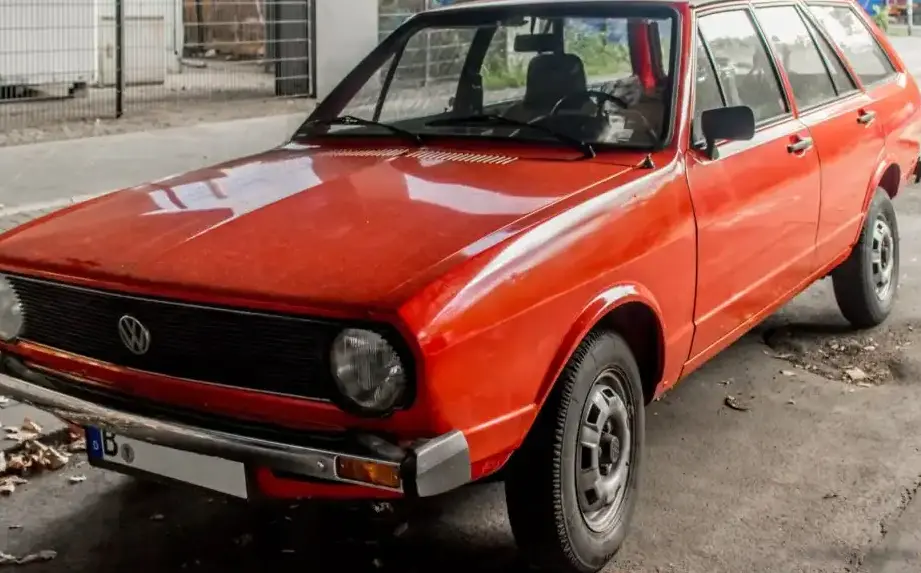
The Volkswagen Passat Variant (B1) 1.5 D, produced between 1978 and 1980, represented a practical and economical offering within the first generation of the Passat. This variant, designated by its 1471cc diesel engine producing 50 horsepower, was primarily aimed at buyers seeking a fuel-efficient and spacious station wagon for family or commercial use. It occupied the entry-level position in the Passat Variant lineup, below the gasoline-powered models and offering a more affordable alternative. The B1 Passat, launched in 1973, was a significant departure for Volkswagen, adopting a front-engine, front-wheel-drive layout – a move away from the rear-engined, air-cooled designs that had defined the brand for decades. The Variant (estate) body style further broadened the Passat’s appeal, providing increased cargo capacity and versatility.
Technical Specifications
| Brand | Volkswagen |
| Model | Passat |
| Generation | Passat Variant (B1) |
| Type (Engine) | 1.5 D (50 Hp) |
| Start of production | 1978 |
| End of production | 1980 |
| Powertrain Architecture | Internal Combustion engine |
| Body type | Station wagon (estate) |
| Seats | 5 |
| Doors | 5 |
| Fuel consumption (extra urban) | 4.5 l/100 km (52.3 US mpg, 62.8 UK mpg, 22.2 km/l) |
| Fuel Type | Diesel |
| Acceleration 0 – 60 mph | 22.5 sec |
| Maximum speed | 142 km/h (88.23 mph) |
| Weight-to-power ratio | 18.9 kg/Hp, 52.9 Hp/tonne |
| Weight-to-torque ratio | 11.5 kg/Nm, 86.8 Nm/tonne |
| Power | 50 Hp @ 5000 rpm |
| Power per litre | 34 Hp/l |
| Torque | 82 Nm @ 3000 rpm (60.48 lb.-ft. @ 3000 rpm) |
| Engine layout | Front, Longitudinal |
| Engine Model/Code | CK |
| Engine displacement | 1471 cm3 (89.77 cu. in.) |
| Number of cylinders | 4 |
| Engine configuration | Inline |
| Cylinder Bore | 76.5 mm (3.01 in.) |
| Piston Stroke | 80 mm (3.15 in.) |
| Compression ratio | 23.5:1 |
| Number of valves per cylinder | 2 |
| Fuel injection system | Precombustion chamber injection |
| Engine aspiration | Naturally aspirated engine |
| Valvetrain | SOHC |
| Engine oil capacity | 3.5 l (3.7 US qt | 3.08 UK qt) |
| Coolant | 5.5 l (5.81 US qt | 4.84 UK qt) |
| Kerb Weight | 945 kg (2083.37 lbs.) |
| Max. weight | 1420 kg (3130.56 lbs.) |
| Max load | 475 kg (1047.2 lbs.) |
| Trunk (boot) space – minimum | 699 l (24.68 cu. ft.) |
| Trunk (boot) space – maximum | 1461 l (51.59 cu. ft.) |
| Permitted trailer load with brakes (12%) | 750 kg (1653.47 lbs.) |
| Permitted trailer load without brakes | 450 kg (992.08 lbs.) |
| Length | 4265 mm (167.91 in.) |
| Width | 1615 mm (63.58 in.) |
| Height | 1359 mm (53.5 in.) |
| Wheelbase | 2469 mm (97.2 in.) |
| Front track | 1341 mm (52.8 in.) |
| Rear (Back) track | 1349 mm (53.11 in.) |
| Ride height (ground clearance) | 122 mm (4.8 in.) |
| Minimum turning circle (turning diameter) | 10.3 m (33.79 ft.) |
| Drivetrain Architecture | The Internal combustion engine (ICE) drives the front wheels of the vehicle. |
| Drive wheel | Front wheel drive |
| Number of gears and type of gearbox | 4 gears, manual transmission |
| Front suspension | Wishbone, Transverse stabilizer |
| Rear suspension | Transverse stabilizer, Trailing arm |
| Front brakes | Disc, 238.76 mm |
| Rear brakes | Drum, 180.34 mm |
| Steering type | Steering rack and pinion |
| Wheel rims size | Front wheel rims: 5J x 13Rear wheel rims: 5J x 13 |
Powertrain & Engine Architecture
The heart of the Passat Variant 1.5 D was the CK engine, a 1.5-liter inline-four diesel. This engine utilized precombustion chamber injection, a common diesel technology of the era. Fuel was injected into a precombustion chamber, where it was partially ignited before entering the main combustion chamber, promoting more complete combustion and reducing engine noise. The engine featured a single overhead camshaft (SOHC) valvetrain operating two valves per cylinder. The relatively high compression ratio of 23.5:1 was typical for diesel engines, contributing to their efficiency. The engine was mounted longitudinally in the front of the vehicle, driving the front wheels. The four-speed manual transmission was the only gearbox option available with this engine, prioritizing fuel economy over outright performance.
Driving Characteristics
The 1.5 D Passat Variant was not designed for speed. With only 50 horsepower, acceleration was leisurely, taking approximately 22.5 seconds to reach 60 mph. Top speed was limited to around 88 mph. The four-speed manual transmission offered limited gearing options, and the engine’s narrow power band required frequent shifting to maintain momentum, especially when loaded. Compared to the gasoline-powered Passat variants, the 1.5 D offered significantly less power but superior fuel economy. The diesel’s torque characteristics, however, provided reasonable pulling power for everyday driving and hauling loads, making it suitable for those prioritizing practicality over performance.
Equipment & Trim Levels
The 1.5 D Passat Variant was typically equipped with basic amenities. Standard features included cloth upholstery, a simple dashboard layout, and manual windows and door locks. The interior was functional and durable, reflecting the car’s utilitarian purpose. Optional extras were limited, but could include a radio, upgraded seat fabrics, and a sunroof. The trim level was generally considered the base model, focusing on affordability and essential features. The emphasis was on providing a reliable and economical vehicle rather than luxury or advanced technology.
Chassis & Braking
The Passat Variant B1 featured an independent front suspension with wishbones and a transverse stabilizer, providing a reasonable level of ride comfort and handling. The rear suspension utilized a trailing arm setup with a transverse stabilizer. Braking was accomplished via disc brakes on the front wheels and drum brakes on the rear. The braking system was adequate for the vehicle’s weight and performance, but lacked the stopping power of more modern systems. The relatively narrow tires (5J x 13) contributed to the car’s modest grip levels.
Market Reception & Comparison
The 1.5 D Passat Variant was well-received in Europe as an economical and practical family vehicle. Its fuel efficiency was a major selling point, particularly during the oil crises of the 1970s. Critics acknowledged its lack of performance but praised its spacious interior and load-carrying capacity. Compared to the gasoline-powered Passat variants, the 1.5 D offered significantly better fuel economy but considerably less power. The 1.6-liter gasoline engine, for example, offered around 75 horsepower, providing a noticeable performance advantage. However, the diesel’s lower running costs made it an attractive option for budget-conscious buyers.
Legacy
The Volkswagen Passat Variant (B1) 1.5 D, while not a performance icon, proved to be a durable and reliable vehicle. The CK diesel engine, though relatively simple in design, was known for its longevity. Today, these cars are relatively rare, and well-maintained examples are sought after by enthusiasts and collectors. The 1.5 D powertrain, while not particularly powerful by modern standards, remains relatively straightforward to maintain and repair. Its simplicity and robustness contribute to its enduring appeal, making it a testament to Volkswagen’s engineering principles of the era.