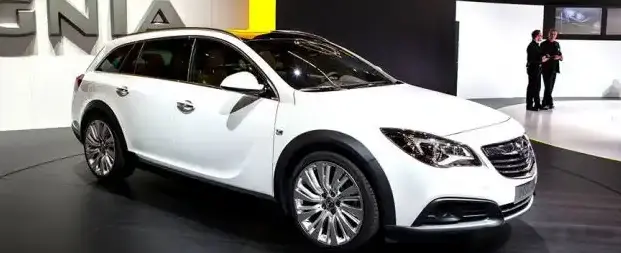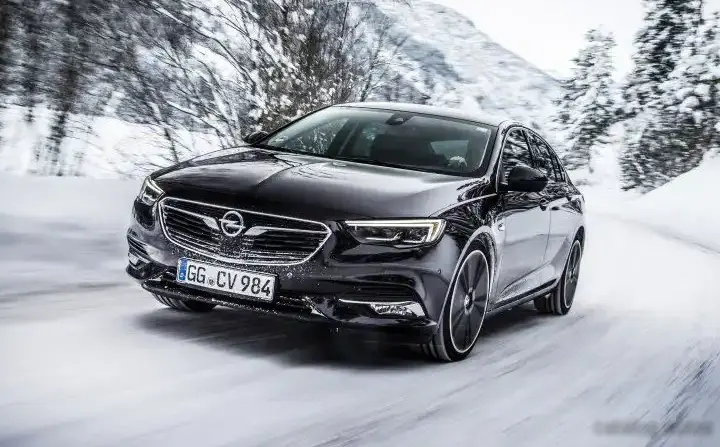
The Opel Insignia Grand Sport (B) 1.5 Turbo, producing 165 horsepower, was a key variant in the second generation of Opel’s flagship D-segment hatchback, produced from June 2017 to June 2018. Positioned as a mid-range offering within the Insignia B lineup, it aimed to balance fuel efficiency with acceptable performance for everyday driving. This model represented Opel’s attempt to modernize the Insignia, offering a more spacious and lighter platform compared to its predecessor, built on the GM’s Epsilon II platform. The Grand Sport designation signified the hatchback body style, differentiating it from the later Sports Tourer (estate) version.
Technical Specifications
| Brand | Opel |
| Model | Insignia |
| Generation | Insignia Grand Sport (B) |
| Type (Engine) | 1.5 Turbo (165 Hp) |
| Start of production | June, 2017 |
| End of production | June, 2018 |
| Powertrain Architecture | Internal Combustion engine |
| Body type | Hatchback |
| Seats | 5 |
| Doors | 5 |
| Fuel consumption (urban) | 7.3 l/100 km (32.2 US mpg) |
| Fuel consumption (extra urban) | 5.2 l/100 km (45.2 US mpg) |
| Fuel consumption (combined) | 6 l/100 km (39.2 US mpg) |
| CO2 emissions | 136 g/km |
| Fuel Type | Petrol (Gasoline) |
| Acceleration 0 – 100 km/h | 8.9 sec |
| Acceleration 0 – 62 mph | 8.9 sec |
| Acceleration 0 – 60 mph | 8.5 sec |
| Maximum speed | 222 km/h (137.94 mph) |
| Emission standard | Euro 6 |
| Weight-to-power ratio | 8.3 kg/Hp |
| Weight-to-torque ratio | 5.5 kg/Nm |
| Power | 165 Hp @ 5600 rpm |
| Torque | 250 Nm @ 2000-4500 rpm (184.39 lb.-ft.) |
| Engine layout | Front, Transverse |
| Engine Model/Code | B15XFT |
| Engine displacement | 1490 cm3 (90.93 cu. in.) |
| Number of cylinders | 4 |
| Engine configuration | Inline |
| Cylinder Bore | 74 mm (2.91 in.) |
| Piston Stroke | 86.6 mm (3.41 in.) |
| Compression ratio | 10.1:1 |
| Number of valves per cylinder | 4 |
| Fuel injection system | Direct injection |
| Engine aspiration | Turbocharger, Intercooler |
| Valvetrain | DOHC |
| Engine oil capacity | 4 l (4.23 US qt | 3.52 UK qt) |
| Coolant capacity | 5.4 l (5.71 US qt | 4.75 UK qt) |
| Kerb Weight | 1365 kg (3009.31 lbs.) |
| Max. weight | 2015 kg (4442.31 lbs.) |
| Max load | 650 kg (1433 lbs.) |
| Trunk (boot) space – minimum | 490 l (17.3 cu. ft.) |
| Trunk (boot) space – maximum | 1450 l (51.21 cu. ft.) |
| Fuel tank capacity | 62 l (16.38 US gal | 13.64 UK gal) |
| Max. roof load | 100 kg (220.46 lbs.) |
| Permitted trailer load with brakes (12%) | 1405 kg (3097.49 lbs.) |
| Permitted trailer load without brakes | 700 kg (1543.24 lbs.) |
| Length | 4897 mm (192.8 in.) |
| Width | 1863 mm (73.35 in.) |
| Width with mirrors folded | 1941 mm (76.42 in.) |
| Width including mirrors | 2093 mm (82.4 in.) |
| Height | 1455 mm (57.28 in.) |
| Wheelbase | 2829 mm (111.38 in.) |
| Front track | 1607 mm (63.27 in.) |
| Rear track | 1610 mm (63.39 in.) |
| Front overhang | 990 mm (38.98 in.) |
| Rear overhang | 1078 mm (42.44 in.) |
| Minimum turning circle | 11.74 m (38.52 ft.) |
| Drivetrain Architecture | Front wheel drive |
| Number of gears | 6 |
| Gearbox type | Manual transmission |
| Front suspension | Independent type McPherson |
| Front brakes | Ventilated discs |
| Rear brakes | Disc |
| Steering type | Steering rack and pinion |
| Power steering | Electric Steering |
| Tires size | 215/60 R16 |
| Wheel rims size | 6.5 J x 16 |
Powertrain & Engine Architecture
The heart of the Insignia Grand Sport 1.5 Turbo is the B15XFT engine, a 1.5-liter turbocharged inline-four cylinder gasoline engine. This engine is part of Opel’s Small Displacement Gasoline (SDG) family, designed for efficiency and reduced emissions. It features direct fuel injection, delivering fuel directly into the combustion chamber for improved combustion control and power output. The engine utilizes a single-scroll turbocharger with an intercooler to enhance performance. The valvetrain employs a Dual Overhead Camshaft (DOHC) configuration with four valves per cylinder, optimizing airflow for increased power and torque. The 6-speed manual transmission was standard, providing a balance between fuel economy and driver engagement. The engine’s relatively small displacement and turbocharging contribute to a broad torque curve, peaking at 250 Nm (184 lb-ft) between 2000 and 4500 rpm.
Driving Characteristics
The 165 hp 1.5 Turbo engine, paired with the 6-speed manual transmission, offered a respectable, though not exhilarating, driving experience. Acceleration from 0 to 100 km/h (0-62 mph) took approximately 8.9 seconds. The engine felt responsive in everyday driving situations, with sufficient power for overtaking and highway cruising. However, compared to the more powerful 2.0-liter turbocharged engine options available in the Insignia B range, the 1.5 Turbo felt less potent, particularly when fully loaded or tackling steep inclines. The manual transmission provided precise shifts, and the gear ratios were well-matched to the engine’s torque curve, ensuring adequate power delivery across a wide range of speeds. The front-wheel-drive configuration offered predictable handling, but lacked the all-wheel-drive stability of higher-spec Insignia models.
Equipment & Trim Levels
The 1.5 Turbo variant typically came with a reasonable level of standard equipment. This included air conditioning, a touchscreen infotainment system with Bluetooth connectivity, power windows and mirrors, and a suite of safety features such as ABS, ESP (Electronic Stability Program), and multiple airbags. Interior upholstery was generally cloth, with options for upgraded materials available. Common optional extras included heated seats, a panoramic sunroof, advanced driver-assistance systems (ADAS) like adaptive cruise control and lane departure warning, and upgraded audio systems. Trim levels varied slightly depending on the market, but generally offered progressive upgrades in terms of comfort and convenience features.
Chassis & Braking
The Insignia Grand Sport B featured an independent McPherson strut suspension setup at the front, providing a comfortable ride and responsive handling. The rear suspension utilized a multi-link system, further enhancing ride quality and stability. Braking duties were handled by ventilated discs at the front and solid discs at the rear. The braking system was equipped with ABS (Anti-lock Braking System) and ESP (Electronic Stability Program) as standard, ensuring safe and controlled stopping performance. The steering system employed an electric power steering (EPS) setup, offering light and precise steering feel.
Market Reception & Comparison
The Insignia Grand Sport 1.5 Turbo was generally well-received by automotive critics as a practical and fuel-efficient option within the D-segment. It was praised for its spacious interior, comfortable ride, and reasonable performance. However, some reviewers noted that the engine lacked the outright punch of its larger counterparts. Compared to the 2.0-liter turbocharged versions, the 1.5 Turbo offered better fuel economy but sacrificed some performance. Against competitors like the Ford Mondeo, Volkswagen Passat, and Skoda Superb, the Insignia 1.5 Turbo held its own in terms of value for money and practicality. Its fuel economy figures of around 6 l/100 km (39.2 US mpg) were competitive within its class.
Legacy
The 1.5 Turbo engine proved to be a relatively reliable unit, with few widespread mechanical issues reported. The Insignia Grand Sport B, in general, has established a reputation for being a well-built and durable vehicle. On the used car market, the 1.5 Turbo variant represents a more affordable entry point into the Insignia B range. Its fuel efficiency and reasonable running costs make it an attractive option for buyers seeking a spacious and practical family car. While not the most exciting version of the Insignia, the 1.5 Turbo offers a compelling blend of value, comfort, and efficiency, ensuring its continued presence on roads today.