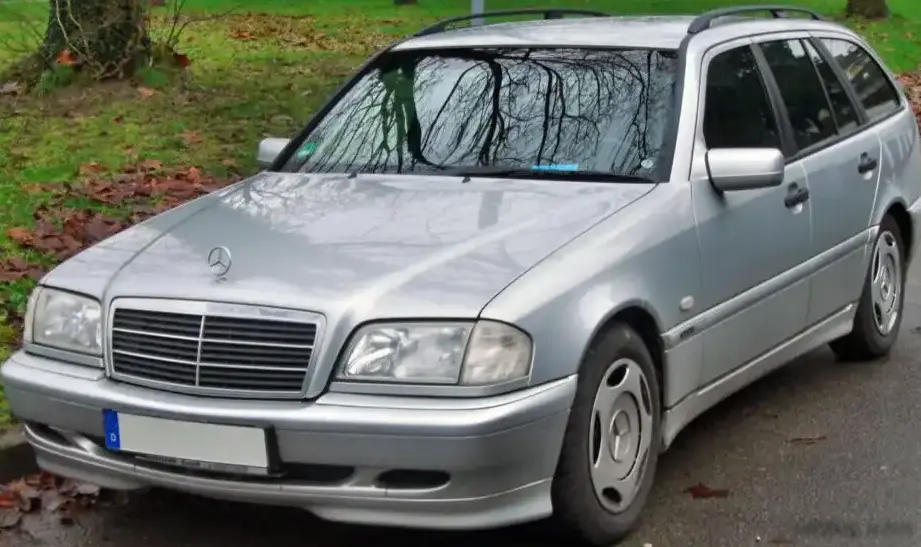
The Mercedes-Benz C-Class T-modell (S202), specifically the facelifted version produced from 1997 onwards, represented a significant expansion of the C-Class range into the practical realm of the station wagon, or “estate” as it was commonly known in Europe. The AMG C 55 T-modell, introduced in July 1998 and produced through 2000, was the performance flagship of this body style, combining the utility of a wagon with the potent power of Mercedes-AMG’s naturally aspirated V8 engine. This variant occupied the premium segment of the S202 lineup, offering a unique blend of performance, luxury, and practicality aimed at discerning buyers.
Technical Specifications
| Brand | Mercedes-Benz |
| Model | C-Class |
| Generation | C-Class T-modell (S202, facelift 1997) |
| Type (Engine) | AMG C 55 V8 (347 Hp) 5G-TRONIC |
| Start of production | July, 1998 |
| End of production | 2000 |
| Powertrain Architecture | Internal Combustion engine |
| Body type | Station wagon (estate) |
| Seats | 5 |
| Doors | 5 |
| Fuel consumption (economy) – urban (NEDC) | 17.1 l/100 km (13.8 US mpg, 16.5 UK mpg, 5.8 km/l) |
| Fuel consumption (economy) – extra urban (NEDC) | 8.5 l/100 km (27.7 US mpg, 33.2 UK mpg, 11.8 km/l) |
| Fuel consumption (economy) – combined (NEDC) | 11.7 l/100 km (20.1 US mpg, 24.1 UK mpg, 8.5 km/l) |
| CO2 emissions (NEDC) | 280 g/km |
| Fuel Type | Petrol (Gasoline) |
| Acceleration 0 – 100 km/h | 5.7 sec |
| Acceleration 0 – 62 mph | 5.7 sec |
| Acceleration 0 – 60 mph | 5.4 sec |
| Maximum speed | 250 km/h (155.34 mph), Electronically limited |
| Weight-to-power ratio | 4.4 kg/Hp, 226.1 Hp/tonne |
| Weight-to-torque ratio | 3 kg/Nm, 332.2 Nm/tonne |
| Power | 347 Hp @ 5500 rpm |
| Power per litre | 63.8 Hp/l |
| Torque | 510 Nm @ 3000-4300 rpm (376.16 lb.-ft. @ 3000-4300 rpm) |
| Engine layout | Front, Longitudinal |
| Engine Model/Code | M 113 E 55 / 113.983 |
| Engine displacement | 5439 cm3 (331.91 cu. in.) |
| Number of cylinders | 8 |
| Engine configuration | V-engine |
| Cylinder Bore | 97 mm (3.82 in.) |
| Piston Stroke | 92 mm (3.62 in.) |
| Compression ratio | 10.5:1 |
| Number of valves per cylinder | 3 |
| Fuel injection system | Multi-port manifold injection |
| Engine aspiration | Naturally aspirated engine |
| Valvetrain | SOHC |
| Engine oil capacity | 8.5 l (8.98 US qt | 7.48 UK qt) |
| Kerb Weight | 1535 kg (3384.1 lbs.) |
| Max. weight | 2010 kg (4431.29 lbs.) |
| Max load | 475 kg (1047.2 lbs.) |
| Trunk (boot) space – minimum | 465 l (16.42 cu. ft.) |
| Trunk (boot) space – maximum | 1510 l (53.33 cu. ft.) |
| Fuel tank capacity | 62 l (16.38 US gal | 13.64 UK gal) |
| Max. roof load | 100 kg (220.46 lbs.) |
| Length | 4516 mm (177.8 in.) |
| Width | 1723 mm (67.83 in.) |
| Height | 1431 mm (56.34 in.) |
| Wheelbase | 2690 mm (105.91 in.) |
| Front track | 1509 mm (59.41 in.) |
| Rear (Back) track | 1483 mm (58.39 in.) |
| Minimum turning circle | 10.7 m (35.1 ft.) |
| Drivetrain Architecture | Rear wheel drive |
| Number of gears and type of gearbox | 5 gears, automatic transmission G-TRONIC |
| Front suspension | Double wishbone, Transverse stabilizer |
| Rear suspension | Independent multi-link spring suspension with stabilizer |
| Front brakes | Ventilated discs |
| Rear brakes | Ventilated discs |
| Assisting systems | ABS (Anti-lock braking system) |
| Steering type | Cone worm with recirculation balls |
| Power steering | Hydraulic Steering |
| Tires size | Front wheel tires: 225/45 R17 Rear wheel tires: 245/40 R17 |
| Wheel rims size | Front wheel rims: 7.5J x 17 Rear wheel rims: 8.5J x 17 |
INTRODUCTION
The AMG C 55 T-modell was a relatively short-lived but highly desirable variant of the S202 C-Class. Built on the W202 platform, the S202 introduced a station wagon body style to the C-Class range, broadening its appeal. The facelift in 1997 brought cosmetic and mechanical updates, and the introduction of the C 55 T-modell in 1998 marked the pinnacle of performance for this generation of C-Class wagons. It offered a compelling alternative to traditional sedans, providing the same level of AMG performance in a more versatile package.
Powertrain & Engine Architecture
The heart of the C 55 T-modell was the M113 E 55 engine, a 5.4-liter naturally aspirated V8. This engine, also found in other AMG models of the era, was known for its robust construction and smooth power delivery. The M113 featured a cast iron block and aluminum cylinder heads, with three valves per cylinder (two intake, one exhaust) operated by a single overhead camshaft (SOHC) per bank. Fuel was delivered via multi-port fuel injection. The engine produced 347 horsepower at 5500 rpm and 510 Nm (376 lb-ft) of torque between 3000 and 4300 rpm. This power was channeled through a five-speed 5G-TRONIC automatic transmission, which was specifically tuned to handle the engine’s output. The transmission offered smooth shifts and a relatively quick response, although it lacked the manual control options found in some contemporary performance cars.
Driving Characteristics
The combination of the powerful V8 and the automatic transmission resulted in a driving experience that was both refined and exhilarating. Acceleration to 60 mph was achieved in approximately 5.4-5.7 seconds, and the electronically limited top speed was 250 km/h (155 mph). While not as overtly aggressive as some later AMG models, the C 55 T-modell offered ample power for confident overtaking and spirited driving. The automatic transmission, while smooth, did slightly diminish the sense of direct control compared to a manual gearbox. The gear ratios were optimized for a balance of acceleration and cruising efficiency. The wagon’s increased weight compared to the sedan was noticeable, but the powerful engine mitigated much of the impact on performance.
Equipment & Trim Levels
The AMG C 55 T-modell was generously equipped, reflecting its position as the range-topping variant. Standard features included leather upholstery, automatic climate control, power-adjustable front seats, and a premium sound system. AMG-specific touches included unique body styling (front and rear bumpers, side skirts), AMG wheels, and a sport-tuned suspension. Optional extras included a sunroof, navigation system, and upgraded interior trim options. The interior generally featured a dark wood trim and a sporty three-spoke steering wheel.
Chassis & Braking
The C 55 T-modell benefited from a revised suspension setup compared to the standard C-Class wagon. It featured stiffer springs, upgraded dampers, and a thicker stabilizer bar to reduce body roll and improve handling. The braking system consisted of ventilated discs on all four wheels, providing ample stopping power. The anti-lock braking system (ABS) was standard. The steering was a hydraulic power-assisted system, offering a good balance of feel and assistance.
Market Reception & Comparison
The AMG C 55 T-modell was generally well-received by automotive critics, who praised its combination of performance, practicality, and luxury. It was often compared to other high-performance wagons of the time, such as the Audi S4 Avant and the BMW 540i Touring. While the C 55 offered a compelling package, some critics noted that the automatic transmission lacked the engagement of a manual gearbox. Fuel economy was also a concern, with combined fuel consumption figures around 11.7 l/100 km (20.1 mpg). Compared to the standard C-Class wagons, the C 55 offered a significant performance upgrade, but at a considerable price premium.
Legacy
The AMG C 55 T-modell remains a sought-after vehicle among enthusiasts today. Its relatively low production numbers and unique combination of attributes have made it a collectible item. The M113 V8 engine is known for its durability and reliability, although maintenance costs can be higher than for smaller, more modern engines. Finding well-maintained examples can be challenging, but the C 55 T-modell offers a rewarding ownership experience for those seeking a classic AMG wagon with a distinctive character. The car represents a unique moment in Mercedes-AMG’s history, bridging the gap between traditional luxury and high-performance motoring.