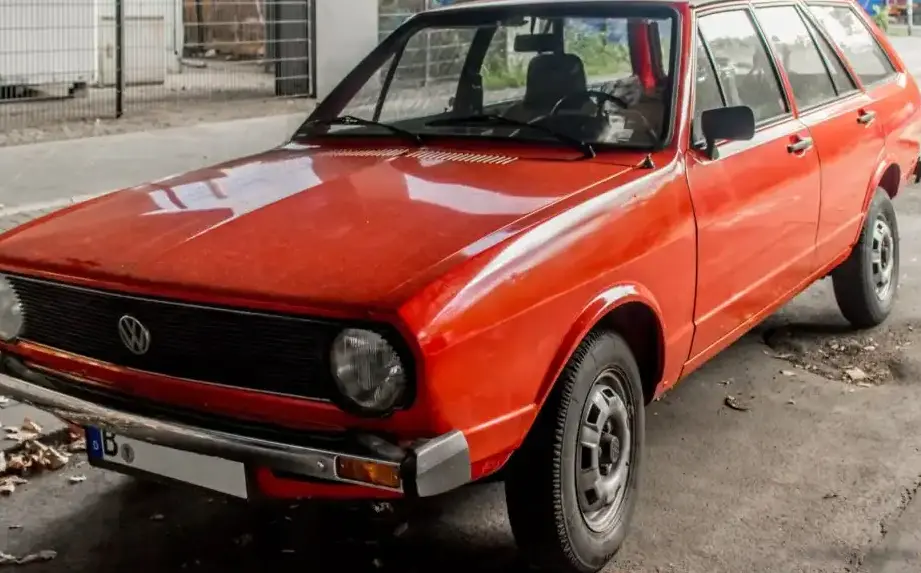
The Volkswagen Passat Variant (B1) 1.6, produced between 1973 and 1975, represents an early iteration of Volkswagen’s foray into the station wagon market with the Passat line. Positioned as an entry-level offering within the B1 Passat range, this variant aimed to provide practical, affordable transportation for families. It was a key component of Volkswagen’s strategy to broaden the appeal of the Passat beyond the standard sedan, capitalizing on the growing popularity of estate cars in Europe. The B1 Passat, and by extension the Variant, was built on Volkswagen’s new platform, designed to offer more space and comfort than the aging Type 4 it partially replaced. This model served as a crucial stepping stone in establishing the Passat as a mainstay in Volkswagen’s lineup.
Technical Specifications
| Brand | Volkswagen |
| Model | Passat |
| Generation | Passat Variant (B1) |
| Type (Engine) | 1.6 (75 Hp) |
| Start of production | 1973 |
| End of production | 1975 |
| Powertrain Architecture | Internal Combustion engine |
| Body type | Station wagon (estate) |
| Fuel Type | Petrol (Gasoline) |
| Power | 75 Hp |
| Engine Model/Code | YN |
| Engine aspiration | Naturally aspirated engine |
| Engine oil capacity | 3 l (3.17 US qt | 2.64 UK qt) |
| Coolant capacity | 4 l (4.23 US qt | 3.52 UK qt) |
Powertrain & Engine Architecture
The Passat Variant 1.6 utilized the Volkswagen YN engine, a 1.6-liter inline-four cylinder gasoline engine. This engine was a relatively simple design, featuring a single overhead camshaft (SOHC) and a two-barrel carburetor. The YN engine was known for its durability and ease of maintenance, characteristics valued in the early 1970s. It produced 75 horsepower at approximately 5,800 rpm and 98 lb-ft of torque at 3,000 rpm. The engine employed a conventional wet sump lubrication system and a distributor ignition system. While not a powerhouse, the YN engine provided adequate performance for the Passat Variant, especially considering the vehicle’s intended role as a practical family car. The engine’s design prioritized fuel economy and reliability over outright performance. The transmission offered was typically a four-speed manual, but a three-speed automatic transmission was also available, though less common. The automatic transmission was a conventional hydraulic unit, offering smooth but not particularly quick shifts.
Driving Characteristics
The 1.6-liter engine, paired with either the manual or automatic transmission, delivered a driving experience focused on practicality rather than sportiness. Acceleration was modest, with a 0-60 mph time estimated around 14-16 seconds. The automatic transmission, while providing convenience, further reduced acceleration performance due to its less efficient power transfer and wider gear spacing. The gear ratios in the manual transmission were geared towards fuel efficiency, with a relatively tall final drive. The suspension, consisting of independent front suspension with MacPherson struts and a torsion beam rear axle, provided a comfortable ride, absorbing bumps and imperfections in the road reasonably well. However, handling was not particularly sharp, with noticeable body roll in corners. The steering was relatively light, making it easy to maneuver in urban environments, but lacking in feedback at higher speeds. Compared to the later, more powerful Passat variants (such as those with the 1.8 or 2.0-liter engines), the 1.6 offered a noticeably slower and less engaging driving experience.
Equipment & Trim Levels
The Passat Variant 1.6 was typically equipped with basic, functional features. Standard equipment included cloth upholstery, vinyl floor covering, and basic instrumentation consisting of a speedometer, fuel gauge, and temperature gauge. The dashboard was relatively simple in design, with minimal ornamentation. Optional extras included a radio, heated rear window, and upgraded upholstery. The trim level was generally quite basic, reflecting the car’s position as an entry-level model. The exterior featured chrome trim around the windows and bumpers, and relatively simple steel wheels with hubcaps. The interior space was a key selling point, offering ample room for passengers and cargo. The rear seats could be folded down to create a larger cargo area, enhancing the vehicle’s practicality.
Chassis & Braking
The Passat Variant 1.6 featured a monocoque body construction, providing a good balance of strength and weight. The front suspension utilized MacPherson struts, coil springs, and an anti-roll bar. The rear suspension employed a torsion beam axle, which was a cost-effective and space-saving design. Braking was initially provided by drum brakes on all four wheels, although some later models were equipped with front disc brakes. The braking system was adequate for normal driving conditions, but lacked the stopping power of more modern systems. Steering was of the worm and roller type, providing relatively light steering effort but limited feedback. The tires were typically narrow, reflecting the emphasis on fuel economy and ride comfort rather than high-performance handling.
Market Reception & Comparison
The Passat Variant 1.6 was generally well-received in the European market as a practical and affordable family car. Critics praised its spacious interior, comfortable ride, and fuel efficiency. However, the engine’s lack of power was a common criticism, particularly when the car was fully loaded with passengers and luggage. Compared to other station wagons of the time, such as the Opel Caravan and Ford Estate, the Passat Variant offered a competitive level of space and practicality, but often lacked the refinement and performance of its rivals. The 1.6-liter engine offered better fuel economy than the larger engine options, but at the cost of performance. The automatic transmission, while convenient, further reduced fuel economy and acceleration. The Passat Variant 1.6 appealed to buyers who prioritized practicality and affordability over performance and luxury.
Legacy
The Passat Variant 1.6, while not the most powerful or technologically advanced version of the B1 Passat, played a significant role in establishing the Passat as a successful model line for Volkswagen. The YN engine proved to be remarkably durable, and many examples of the 1.6-liter Passat Variant are still on the road today. In the used car market, these vehicles are often sought after by enthusiasts and collectors who appreciate their simplicity and classic styling. Maintenance is relatively straightforward, and parts are generally readily available. However, potential buyers should be aware of common issues such as rust, particularly in areas prone to corrosion. The Passat Variant 1.6 represents a significant chapter in Volkswagen’s history, demonstrating the company’s commitment to providing practical and affordable transportation for families.