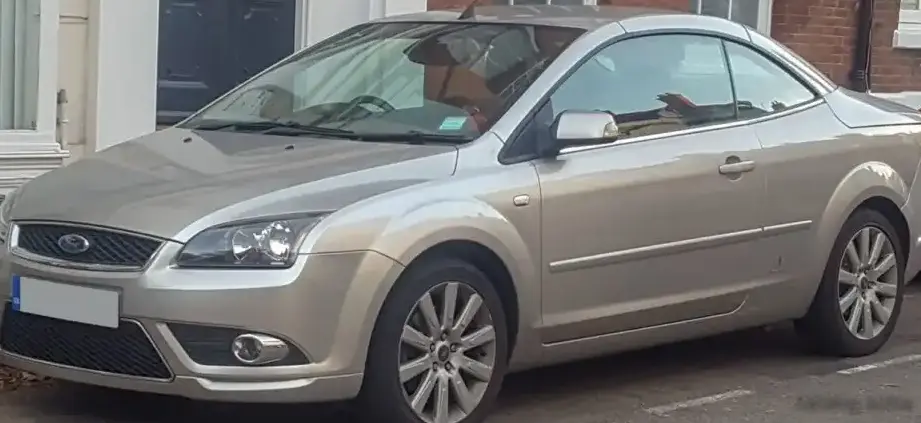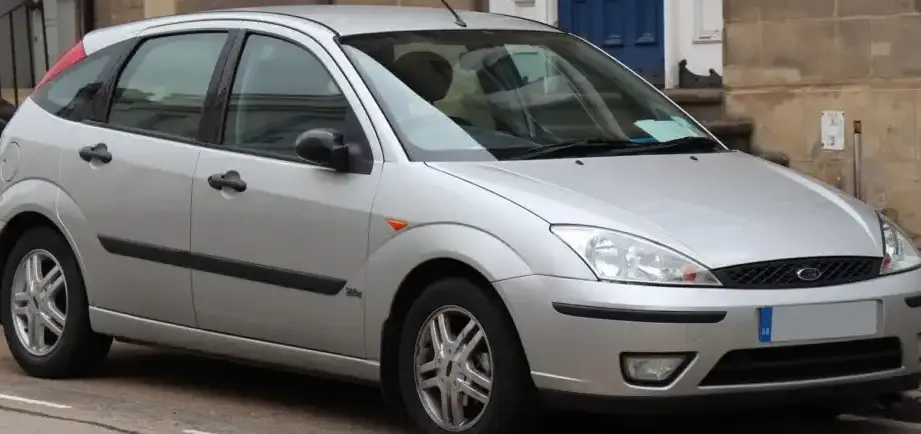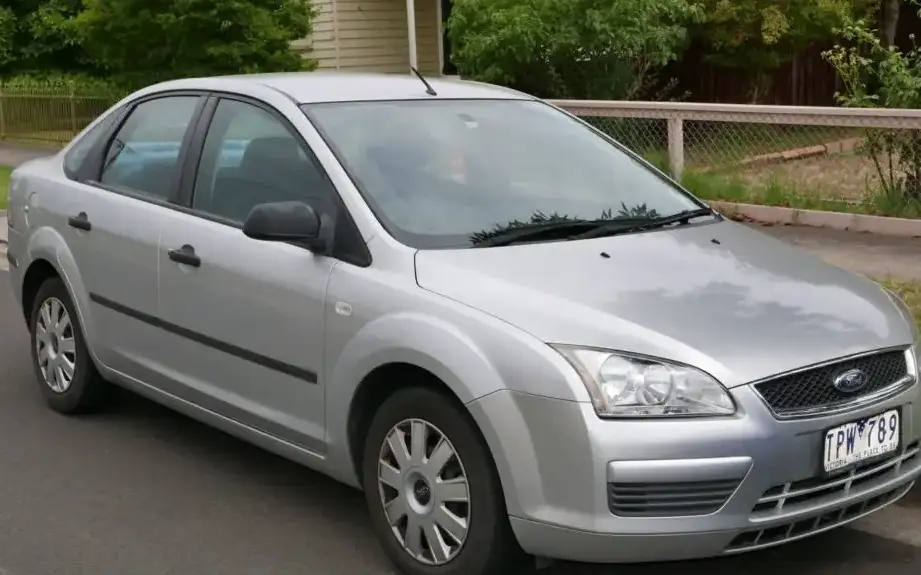
The Ford Focus II Sedan 1.4 Duratec 16V (80 hp) was a mainstream offering within the second generation of the globally successful Ford Focus range, produced from 2005 to 2010. Positioned as the entry-level engine option in many markets, particularly in Europe, this variant aimed to provide affordable and economical transportation. It was a key component of Ford’s strategy to offer a broad range of choices to cater to diverse customer needs. The Focus II, built on the C170 platform, represented a significant step forward in terms of refinement, safety, and driving dynamics compared to its predecessor.
Technical Specifications
| Brand | Ford |
| Model | Focus |
| Generation | Focus II Sedan |
| Type (Engine) | 1.4 Duratec 16V (80 Hp) |
| Start of production | 2005 |
| End of production | 2010 |
| Powertrain Architecture | Internal Combustion engine |
| Body type | Sedan |
| Seats | 5 |
| Doors | 4 |
| Fuel consumption (urban) | 8.7 l/100 km (27 US mpg, 32.5 UK mpg, 11.5 km/l) |
| Fuel consumption (extra urban) | 5.4 l/100 km (43.6 US mpg, 52.3 UK mpg, 18.5 km/l) |
| Fuel Type | Petrol (Gasoline) |
| Acceleration 0 – 100 km/h | 14.2 sec |
| Acceleration 0 – 62 mph | 14.2 sec |
| Acceleration 0 – 60 mph | 13.5 sec |
| Maximum speed | 166 km/h (103.15 mph) |
| Weight-to-power ratio | 14.9 kg/Hp, 66.9 Hp/tonne |
| Weight-to-torque ratio | 9.4 kg/Nm, 106.3 Nm/tonne |
| Power | 80 Hp @ 5000 rpm |
| Power per litre | 57.6 Hp/l |
| Torque | 127 Nm @ 3500 rpm (93.67 lb.-ft. @ 3500 rpm) |
| Engine layout | Front, Transverse |
| Engine Model/Code | ASDA, ASDB |
| Engine displacement | 1388 cm3 (84.7 cu. in.) |
| Number of cylinders | 4 |
| Engine configuration | Inline |
| Cylinder Bore | 76 mm (2.99 in.) |
| Piston Stroke | 76.5 mm (3.01 in.) |
| Compression ratio | 11:1 |
| Number of valves per cylinder | 4 |
| Fuel injection system | Multi-port manifold injection |
| Engine aspiration | Naturally aspirated engine |
| Valvetrain | DOHC |
| Engine oil capacity | 3.8 l (4.02 US qt | 3.34 UK qt) |
| Coolant capacity | 5.2 l (5.49 US qt | 4.58 UK qt) |
| Kerb Weight | 1195 kg (2634.52 lbs.) |
| Max. weight | 1735 kg (3825.02 lbs.) |
| Max load | 540 kg (1190.5 lbs.) |
| Trunk (boot) space – minimum | 467 l (16.49 cu. ft.) |
| Trunk (boot) space – maximum | 931 l (32.88 cu. ft.) |
| Fuel tank capacity | 55 l (14.53 US gal | 12.1 UK gal) |
| Length | 4488 mm (176.69 in.) |
| Width | 1840 mm (72.44 in.) |
| Height | 1497 mm (58.94 in.) |
| Wheelbase | 2640 mm (103.94 in.) |
| Front track | 1535 mm (60.43 in.) |
| Rear track | 1531 mm (60.28 in.) |
| Drivetrain Architecture | Front wheel drive |
| Number of gears | 5 |
| Gearbox type | Manual transmission |
| Front suspension | Spring Strut |
| Rear suspension | Transverse stabilizer |
| Front brakes | Disc |
| Rear brakes | Drum |
| Steering type | Steering rack and pinion |
| Tires size | 195/65 R15 |
Powertrain & Engine Architecture
The 1.4 Duratec engine, specifically the ASDA or ASDB variants depending on the market, is a naturally aspirated, inline-four cylinder engine. It features a double overhead camshaft (DOHC) valvetrain with four valves per cylinder, contributing to reasonable breathing for its displacement. Fuel delivery is managed by a multi-port fuel injection system. This engine is part of the Duratec family, known for its relatively simple design and focus on fuel efficiency. The 1.4L engine produces 80 horsepower at 5000 rpm and 93.67 lb-ft of torque at 3500 rpm. The engine’s design prioritized refinement and low-end torque over outright power. The five-speed manual transmission was the standard pairing, offering a balance between fuel economy and usability.
Driving Characteristics
The 1.4 Duratec 80 hp engine, when coupled with the five-speed manual transmission, provided adequate, but not exhilarating, performance. Acceleration from 0-60 mph took around 13.5 seconds, and top speed was approximately 103 mph. The engine felt most comfortable in the mid-range, offering sufficient power for everyday driving situations. Compared to higher-output versions of the Focus II, such as those equipped with the 1.6L or 2.0L engines, the 1.4L felt noticeably slower, particularly when fully loaded or tackling steep inclines. The gear ratios were tuned for economy, meaning the engine often needed to be revved to maintain speed, especially on the highway. The manual transmission offered a more engaging driving experience than the optional automatic, providing better control and responsiveness.
Equipment & Trim Levels
The 1.4 Duratec variant typically represented the base trim level of the Focus II Sedan. Standard equipment generally included power steering, central locking, electric front windows, and an audio system. Air conditioning was often an optional extra. Interior upholstery was typically cloth, and the dashboard featured a functional, if somewhat basic, design. Higher trim levels, such as the Ghia or Titanium, added features like alloy wheels, upgraded audio systems, climate control, and more luxurious interior appointments. The 1.4L model was often targeted at buyers prioritizing affordability and practicality over luxury features.
Chassis & Braking
The Focus II Sedan featured a MacPherson strut front suspension and a multi-link rear suspension, providing a good balance of ride comfort and handling. The 1.4L variant, due to its lower weight, generally exhibited slightly more agile handling than its higher-powered siblings. The braking system consisted of disc brakes on the front wheels and drum brakes on the rear. While adequate for normal driving conditions, the rear drum brakes were a cost-saving measure and didn’t offer the same stopping power as disc brakes all around. A transverse stabilizer bar was included on both axles to reduce body roll during cornering.
Market Reception & Comparison
The 1.4 Duratec Focus II Sedan was generally well-received as an affordable and economical option. Critics praised its fuel efficiency and comfortable ride, but noted its lack of outright performance. Compared to other engines in the Focus II lineup, the 1.4L offered the best fuel economy, but at the expense of acceleration and overall driving enjoyment. The 1.6L engine provided a noticeable performance upgrade without a significant penalty in fuel economy, making it a popular alternative. The 1.8L and 2.0L engines were reserved for those seeking more spirited driving experiences. In terms of reliability, the 1.4 Duratec engine proved to be generally dependable, although regular maintenance was essential to prevent issues.
Legacy
The 1.4 Duratec engine, while not known for its performance, established a reputation for reliability and fuel efficiency. In the used car market, Focus II Sedans equipped with this engine remain relatively affordable and represent a practical choice for budget-conscious buyers. The engine’s simplicity makes it relatively easy and inexpensive to maintain. While not a collector’s item, the 1.4L Focus II Sedan continues to provide reliable transportation for many owners, demonstrating the enduring appeal of Ford’s commitment to building practical and dependable vehicles.