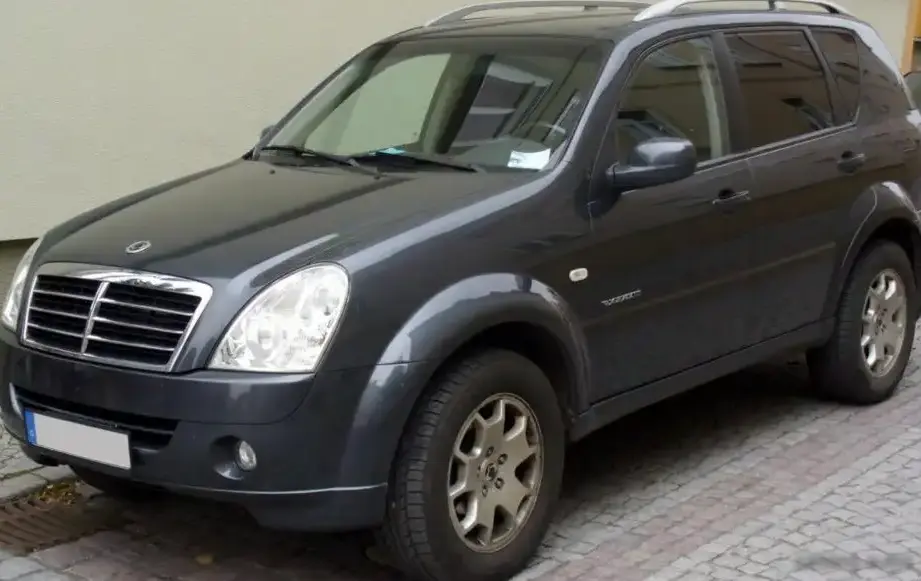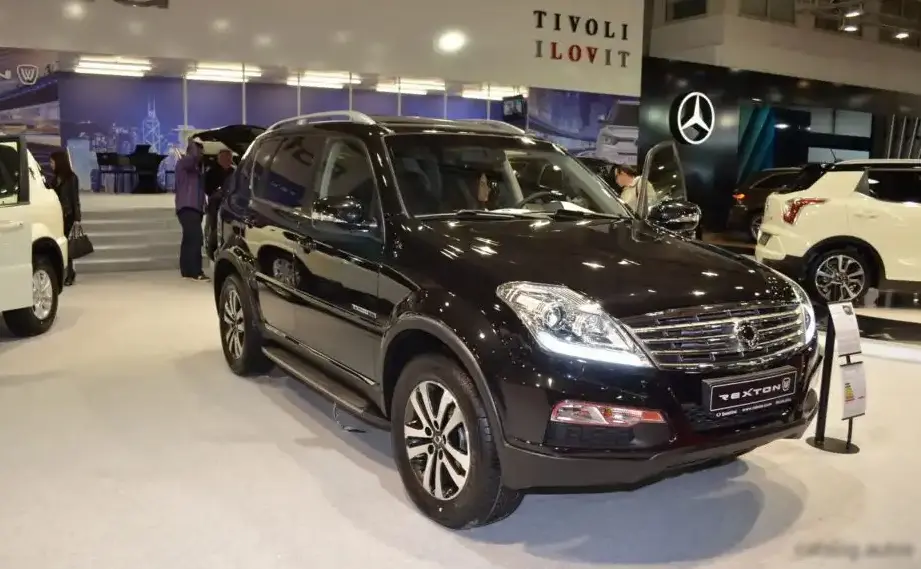
The SsangYong Rexton I (facelift 2012) RX 270 XDi, equipped with a 2.7-liter diesel engine producing 161 horsepower and paired with a five-speed automatic transmission, represents a significant iteration of SsangYong’s flagship SUV. Introduced in 2012 as part of a facelift for the first-generation Rexton (codenamed J80), this variant aimed to balance fuel efficiency with the capability expected of a body-on-frame SUV. Production continued until 2017, positioning it as a key model in SsangYong’s lineup during a period of increasing competition in the mid-size SUV segment. This particular configuration, the RX 270 XDi with automatic transmission and four-wheel drive, was a mid-range offering, slotting between the base models and the more powerful, often manually-equipped, versions.
Technical Specifications
| Brand | SsangYong |
| Model | Rexton |
| Generation | Rexton I (facelift 2012) |
| Type | RX 270 XDi (161 Hp) DPF TOD 4WD Automatic |
| Start of production | 2012 |
| End of production | 2017 |
| Powertrain Architecture | Internal Combustion engine |
| Body type | SUV |
| Seats | 5-7 |
| Doors | 5 |
| Fuel consumption (urban) | 13.1 l/100 km (18 US mpg, 21.6 UK mpg, 7.6 km/l) |
| Fuel consumption (extra urban) | 7.4 l/100 km (31.8 US mpg, 38.2 UK mpg, 13.5 km/l) |
| Fuel consumption (combined) | 9.4 l/100 km (25 US mpg, 30.1 UK mpg, 10.6 km/l) |
| CO2 emissions | 250 g/km |
| Fuel Type | Diesel |
| Maximum speed | 188 km/h (116.82 mph) |
| Emission standard | Euro 4 |
| Weight-to-power ratio | 12.4 kg/Hp, 80.5 Hp/tonne |
| Weight-to-torque ratio | 5.9 kg/Nm, 170 Nm/tonne |
| Power | 161 Hp @ 4000 rpm |
| Power per litre | 59.7 Hp/l |
| Torque | 340 Nm @ 1800-3250 rpm (250.77 lb.-ft. @ 1800-3250 rpm) |
| Engine layout | Front, Longitudinal |
| Engine Model/Code | D27DT |
| Engine displacement | 2696 cm3 (164.52 cu. in.) |
| Number of cylinders | 5 |
| Engine configuration | Inline |
| Cylinder Bore | 86.2 mm (3.39 in.) |
| Piston Stroke | 92.4 mm (3.64 in.) |
| Compression ratio | 17.5:1 |
| Number of valves per cylinder | 4 |
| Fuel injection system | Diesel Commonrail |
| Engine aspiration | Turbocharger, Intercooler |
| Valvetrain | DOHC |
| Engine oil capacity | 8.5 l (8.98 US qt | 7.48 UK qt) |
| Coolant | 11 l (11.62 US qt | 9.68 UK qt) |
| Kerb Weight | 2000-2101 kg (4409.25 – 4631.91 lbs.) |
| Max. weight | 2760 kg (6084.76 lbs.) |
| Max load | 659-760 kg (1452.85 – 1675.51 lbs.) |
| Fuel tank capacity | 78 l (20.61 US gal | 17.16 UK gal) |
| Permitted trailer load with brakes (12%) | 3200 kg (7054.79 lbs.) |
| Permitted trailer load without brakes | 750 kg (1653.47 lbs.) |
| Length | 4755 mm (187.2 in.) |
| Width | 1900 mm (74.8 in.) |
| Height | 1840 mm (72.44 in.) |
| Wheelbase | 2835 mm (111.61 in.) |
| Front track | 1570 mm (61.81 in.) |
| Rear track | 1570 mm (61.81 in.) |
| Front overhang | 885 mm (34.84 in.) |
| Rear overhang | 1035 mm (40.75 in.) |
| Ride height (ground clearance) | 206 mm (8.11 in.) |
| Minimum turning circle | 11.4 m (37.4 ft.) |
| Approach angle | 28° |
| Departure angle | 25.5° |
| Ramp-over angle | 22.5° |
| Drivetrain Architecture | The Internal combustion engine (ICE) drives the rear wheels permanently, and the front wheels are driven through an electrically or mechanically operated clutch if necessary. |
| Drive wheel | All wheel drive (4×4) |
| Number of gears | 5 |
| Gearbox type | automatic transmission |
| Front suspension | Coil spring, Double wishbone |
| Rear suspension | Rigid axle suspension, Coil spring |
| Front brakes | Ventilated discs |
| Rear brakes | Disc |
| Assisting systems | ABS (Anti-lock braking system) |
| Steering type | Steering rack and pinion |
| Power steering | Hydraulic Steering |
| Tires size | 235/75 R16; 255/70 R16; 255/60 R18 |
| Wheel rims size | 16; 18 |
Powertrain & Engine Architecture
The RX 270 XDi utilizes SsangYong’s D27DT 2.7-liter inline five-cylinder diesel engine. This engine, a mainstay in SsangYong vehicles for a period, features a common-rail direct injection system and a turbocharger with an intercooler. The D27DT is known for its relatively robust construction, though it isn’t without its quirks. The engine’s 17.5:1 compression ratio contributes to its efficiency, while the DOHC valvetrain helps optimize airflow. The five-speed automatic transmission, sourced from a variety of suppliers over the Rexton’s production run, is designed for smooth operation but isn’t particularly quick-shifting. It prioritizes comfort over performance. The inclusion of a diesel particulate filter (DPF) was crucial for meeting Euro 4 emission standards, but also introduced potential maintenance concerns related to DPF regeneration.
Driving Characteristics
The 161 horsepower and 340 Nm (250.77 lb.-ft.) of torque delivered by the RX 270 XDi automatic provide adequate, but not exhilarating, performance. Acceleration is leisurely, with a 0-60 mph time estimated around 12-13 seconds. The automatic transmission’s gear ratios are tuned for fuel economy and ease of driving, rather than sporty responsiveness. Compared to the manual transmission versions or those equipped with the more powerful engines, the automatic feels noticeably slower. However, the torque delivery is strong from low RPMs, making it suitable for towing and off-road driving. The full-time four-wheel-drive system, utilizing SsangYong’s TOD (Torque on Demand) technology, provides enhanced traction in various conditions.
Equipment & Trim Levels
The RX 270 XDi automatic typically came equipped with features such as air conditioning, power windows, central locking, and an audio system. Higher trim levels added features like leather upholstery, heated seats, a sunroof, and upgraded audio systems. Safety features included ABS brakes and, depending on the year, airbags. The interior design was functional but not particularly luxurious, reflecting the Rexton’s positioning as a value-oriented SUV. The dashboard layout was straightforward, with easy-to-use controls.
Chassis & Braking
The Rexton I utilizes a traditional body-on-frame construction, providing a robust and durable platform. The front suspension features a double wishbone setup, while the rear employs a rigid axle with coil springs. This configuration prioritizes ride comfort and off-road capability over precise handling. Braking duties are handled by ventilated discs at the front and solid discs at the rear. The hydraulic power steering provides a reasonably direct feel, though it lacks the feedback of more modern systems.
Market Reception & Comparison
The Rexton I (facelift 2012) RX 270 XDi automatic was generally well-received as a practical and affordable SUV. Critics praised its spacious interior, robust construction, and capable four-wheel-drive system. However, the engine was often criticized for being somewhat noisy and lacking refinement compared to competitors. Fuel economy, while reasonable for a vehicle of its size and type, wasn’t class-leading. Compared to other trims, the 161 hp automatic offered a balance between performance and fuel efficiency, appealing to buyers who prioritized comfort and practicality over outright speed.
Legacy
The SsangYong Rexton I RX 270 XDi automatic has proven to be a relatively reliable vehicle, particularly when properly maintained. The D27DT engine, while not without its potential issues (such as DPF problems and occasional turbocharger failures), is generally durable. The automatic transmission, if serviced regularly, can provide years of trouble-free operation. In the used car market, these Rextons represent a good value proposition for buyers seeking a capable and affordable SUV. However, potential buyers should be aware of the potential maintenance costs associated with the DPF and turbocharger, and ensure that the vehicle has been well-maintained.