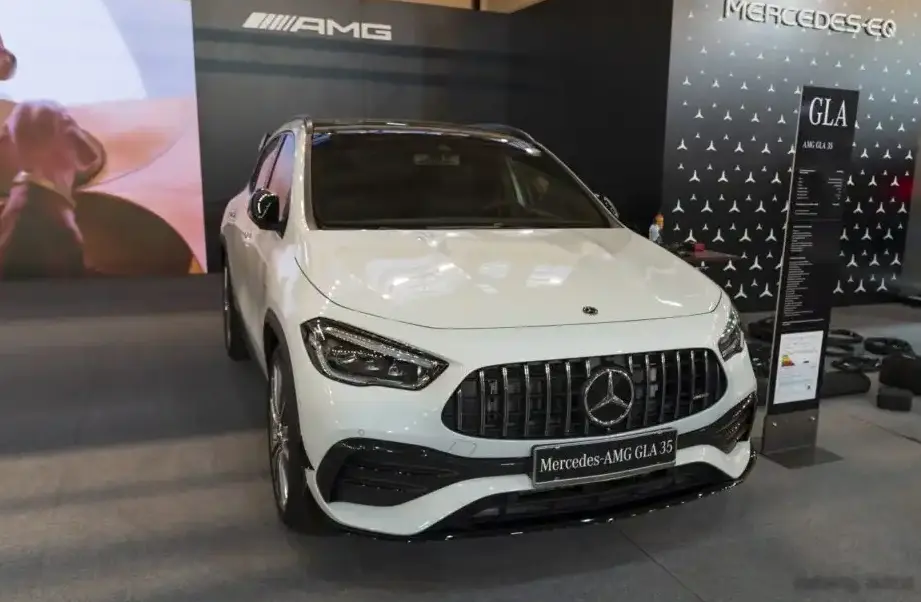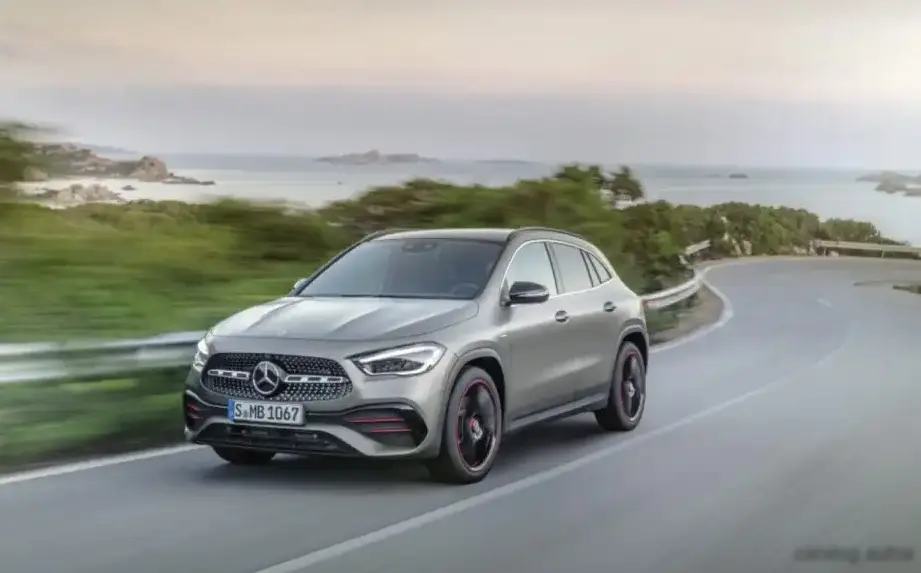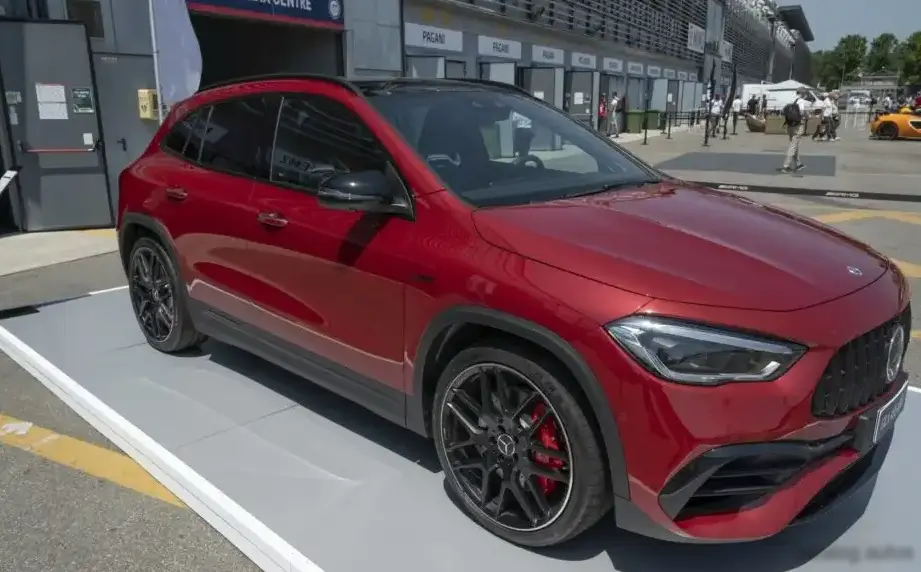
The Mercedes-Benz GLA 250 (X156 facelift, produced from January 2017 to October 2019) represents a compelling entry point into the compact luxury SUV segment. Positioned as a mid-range offering within the GLA lineup, it bridged the gap between the base GLA 200 models and the performance-oriented AMG variants. This variant, characterized by its 2.0-liter turbocharged four-cylinder engine producing 211 horsepower, aimed to deliver a balance of performance, fuel efficiency, and premium features appealing to a broad customer base. The X156 facelift brought styling updates and technological enhancements to the original GLA, solidifying its position in the competitive subcompact luxury crossover market.
Technical Specifications
| Brand | Mercedes-Benz |
| Model | GLA |
| Generation | GLA (X156, facelift 2017) |
| Type (Engine) | GLA 250 (211 Hp) |
| Start of production | January, 2017 |
| End of production | October, 2019 |
| Powertrain Architecture | Internal Combustion engine |
| Body type | SUV |
| Seats | 5 |
| Doors | 5 |
| Fuel consumption (economy) – urban (NEDC) | 8.2 l/100 km (28.7 US mpg, 34.4 UK mpg, 12.2 km/l) |
| Fuel consumption (economy) – extra urban (NEDC) | 4.9-5.1 l/100 km (48 – 46.1 US mpg, 57.6 – 55.4 UK mpg, 20.4 – 19.6 km/l) |
| Fuel consumption (economy) – combined (NEDC) | 6.1-6.2 l/100 km (38.6 – 37.9 US mpg, 46.3 – 45.6 UK mpg, 16.4 – 16.1 km/l) |
| CO2 emissions (NEDC) | 142-145 g/km |
| Fuel Type | Petrol (Gasoline) |
| Acceleration 0 – 100 km/h | 6.7 sec |
| Acceleration 0 – 62 mph | 6.7 sec |
| Acceleration 0 – 60 mph | 6.4 sec |
| Maximum speed | 235 km/h (146.02 mph) |
| Emission standard | Euro 6 |
| Weight-to-power ratio | 6.4 kg/Hp, 155.1 Hp/tonne |
| Weight-to-torque ratio | 3.9 kg/Nm, 257.4 Nm/tonne |
| Power | 211 Hp @ 5500 rpm |
| Power per litre | 106 Hp/l |
| Torque | 350 Nm @ 1200-4000 rpm (258.15 lb.-ft. @ 1200-4000 rpm) |
| Engine layout | Front, Transverse |
| Engine Model/Code | M 270.920 |
| Engine displacement | 1991 cm3 (121.5 cu. in.) |
| Number of cylinders | 4 |
| Engine configuration | Inline |
| Cylinder Bore | 83 mm (3.27 in.) |
| Piston Stroke | 92 mm (3.62 in.) |
| Compression ratio | 9.8:1 |
| Number of valves per cylinder | 4 |
| Fuel injection system | Direct injection |
| Engine aspiration | Turbocharger, Intercooler |
| Valvetrain | DOHC |
| Engine oil capacity | 5.6 l (5.92 US qt | 4.93 UK qt) |
| Kerb Weight | 1360 kg (2998.29 lbs.) |
| Max. weight | 1970 kg (4343.11 lbs.) |
| Max load | 610 kg (1344.82 lbs.) |
| Trunk (boot) space – minimum | 421 l (14.87 cu. ft.) |
| Trunk (boot) space – maximum | 1235 l (43.61 cu. ft.) |
| Fuel tank capacity | 50 l (13.21 US gal | 11 UK gal) |
| Max. roof load | 75 kg (165.35 lbs.) |
| Permitted trailer load with brakes (12%) | 1500 kg (3306.93 lbs.) |
| Permitted trailer load without brakes | 715 kg (1576.31 lbs.) |
| Permitted towbar download | 75 kg (165.35 lbs.) |
| Length | 4424 mm (174.17 in.) |
| Width | 1804 mm (71.02 in.) |
| Width including mirrors | 2022 mm (79.61 in.) |
| Height | 1494 mm (58.82 in.) |
| Wheelbase | 2699 mm (106.26 in.) |
| Front track | 1569 mm (61.77 in.) |
| Rear (Back) track | 1560 mm (61.42 in.) |
| Front overhang | 913 mm (35.94 in.) |
| Rear overhang | 812 mm (31.97 in.) |
| Drag coefficient (Cd) | 0.31 |
| Minimum turning circle (turning diameter) | 11.84 m (38.85 ft.) |
| Approach angle | 15.8° |
| Departure angle | 21.5° |
| Ramp-over (brakeover) angle | 13.3° |
| Drivetrain Architecture | The Internal combustion engine (ICE) drives the front wheels of the vehicle. |
| Drive wheel | Front wheel drive |
| Number of gears and type of gearbox | 7 gears, automatic transmission |
| Front suspension | Independent, type McPherson with coil spring and anti-roll bar |
| Rear suspension | Wishbone, Transverse stabilizer, Trailing arm |
| Front brakes | Ventilated discs |
| Rear brakes | Disc |
| Assisting systems | ABS (Anti-lock braking system) |
| Steering type | Steering rack and pinion |
| Power steering | Electric Steering |
| Tires size | 215/60 R17; 215/55 R18; 235/50 R18; 235/45 R19 |
| Wheel rims size | 6.5J x 17; 6.5J x 18; 7J x 18; 8J x 19 |
Powertrain & Engine Architecture
The GLA 250 is powered by Mercedes-Benz’s M270.920 2.0-liter inline-four cylinder engine. This engine utilizes direct fuel injection and is coupled with a single turbocharger and intercooler to deliver increased power and efficiency. The M270 engine family is known for its compact design and use of lightweight materials, contributing to the GLA’s overall fuel economy. The engine produces 211 horsepower at 5500 rpm and 350 Nm (258 lb-ft) of torque between 1200 and 4000 rpm. The engine features a double overhead camshaft (DOHC) valvetrain with four valves per cylinder. Crucially, the GLA 250 typically came equipped with a 7-speed automatic transmission (7G-TRONIC), offering smooth and relatively quick shifts. This transmission was a key component in balancing performance and fuel efficiency.
Driving Characteristics
The GLA 250 with the 7-speed automatic provides a comfortable and refined driving experience. Acceleration from 0-60 mph takes approximately 6.4 seconds. While not a sports car, the engine delivers adequate power for everyday driving and highway merging. The automatic transmission is well-tuned, providing seamless gear changes and contributing to a smooth ride. Compared to the manual transmission versions, the automatic prioritizes convenience and ease of use, but may feel slightly less engaging to driving enthusiasts. The 7-speed transmission’s gear ratios are optimized for both fuel economy and responsiveness, with a relatively tall final drive to aid in highway cruising.
Equipment & Trim Levels
The GLA 250 typically included standard features such as automatic climate control, a multi-function steering wheel, power-adjustable front seats, and a suite of safety features including ABS, stability control, and multiple airbags. Interior upholstery was generally a combination of MB-Tex (artificial leather) and fabric, with optional upgrades to genuine leather available. Common optional extras included a panoramic sunroof, navigation system, premium sound system, and driver assistance packages (blind spot monitoring, lane keeping assist). The trim level could influence the exterior styling details, such as chrome accents and wheel designs.
Chassis & Braking
The GLA 250 utilizes a McPherson strut front suspension and a multi-link rear suspension, providing a comfortable ride and predictable handling. The suspension is tuned to prioritize comfort over outright sportiness. Braking duties are handled by ventilated discs at the front and solid discs at the rear, providing adequate stopping power for the vehicle’s weight and performance. ABS (Anti-lock Braking System) is standard, enhancing safety during emergency braking situations. The GLA 250’s chassis is designed to provide a stable and secure driving experience, with a relatively low center of gravity for a crossover SUV.
Market Reception & Comparison
The GLA 250 was generally well-received by automotive critics, who praised its stylish design, comfortable interior, and balanced performance. It was often compared to rivals such as the Audi Q3, BMW X1, and Acura GLX. The GLA 250 offered a competitive level of fuel economy, achieving around 38 mpg combined, and its reliability was generally considered good, although some owners reported minor issues with the infotainment system. Compared to the GLA 200, the 250 offered a significant performance upgrade, while being more affordable than the high-performance AMG variants.
Legacy
The GLA 250 (X156 facelift) remains a popular choice in the used car market due to its combination of luxury, practicality, and affordability. The M270 engine, while not without its potential maintenance needs (such as carbon buildup), is generally considered reliable when properly maintained. The 7-speed automatic transmission is also known for its durability. As a compact luxury crossover, the GLA 250 helped establish Mercedes-Benz as a major player in this growing segment, and its success paved the way for future generations of the GLA.