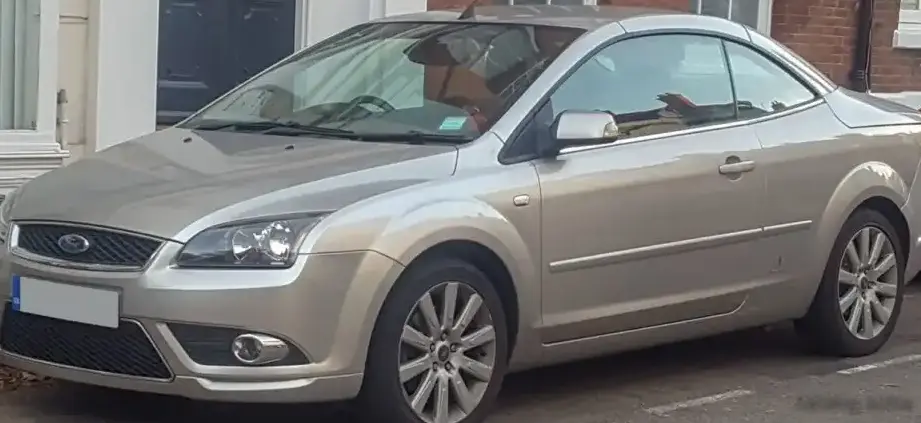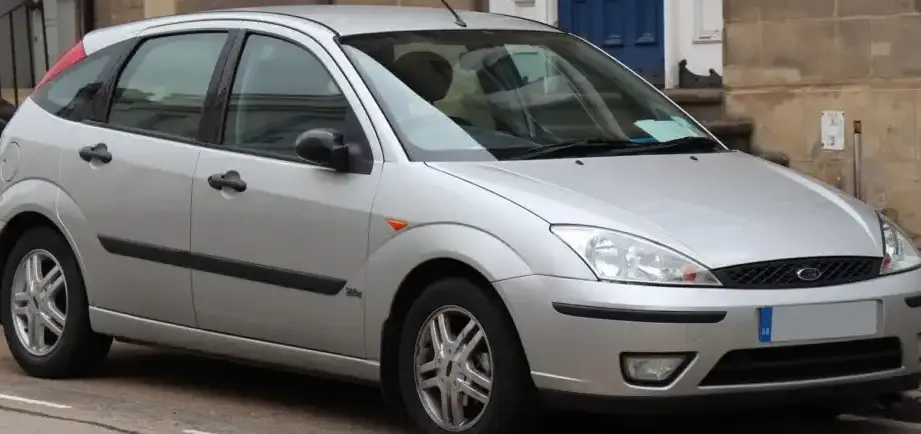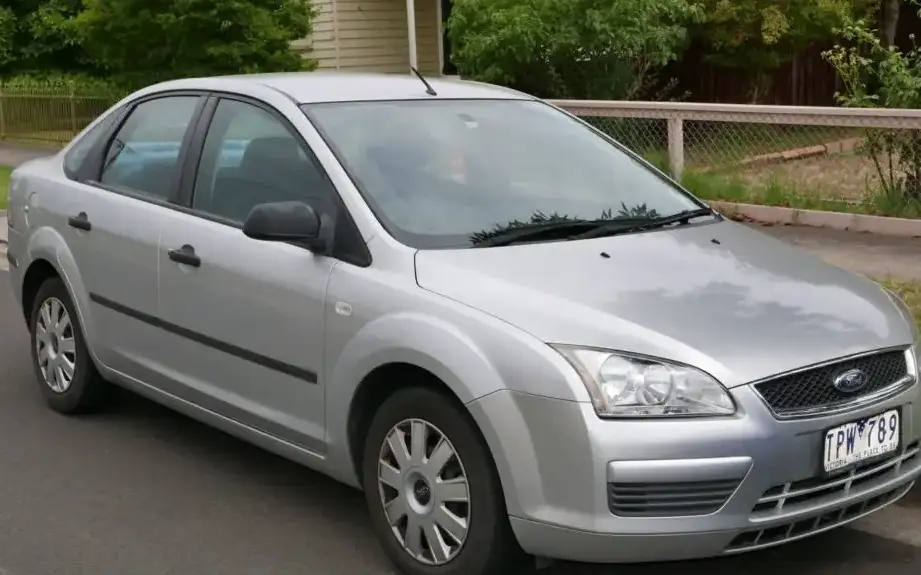
The Ford Focus II Sedan 1.6 Duratec 16V Automatic, produced from 2005 to 2010, represented an entry-level offering within the second generation of the globally successful Ford Focus. Positioned as a practical and affordable family sedan, this variant was primarily aimed at buyers prioritizing fuel efficiency and ease of use over outright performance. It was a key model in the European market, where the Focus competed directly with vehicles like the Volkswagen Golf, Opel Astra, and Peugeot 308. In North America, the Focus II was offered, but the 1.6L engine and automatic transmission combination was less common, with the focus being on larger engine options. This particular model utilized the Ford’s Duratec engine family and a four-speed automatic transmission, offering a balance between cost and convenience.
Technical Specifications
| Brand | Ford |
| Model | Focus |
| Generation | Focus II Sedan |
| Type (Engine) | 1.6 Duratec 16V (100 Hp) Automatic |
| Start of production | 2005 |
| End of production | 2010 |
| Powertrain Architecture | Internal Combustion engine |
| Body type | Sedan |
| Seats | 5 |
| Doors | 4 |
| Fuel consumption (urban) | 10.3 l/100 km (22.8 US mpg) |
| Fuel consumption (extra urban) | 5.8 l/100 km (40.6 US mpg) |
| Fuel consumption (combined) | 7.5 l/100 km (31.4 US mpg) |
| Fuel Type | Petrol (Gasoline) |
| Acceleration 0 – 100 km/h | 13.6 sec |
| Acceleration 0 – 62 mph | 13.6 sec |
| Acceleration 0 – 60 mph | 12.9 sec |
| Maximum speed | 172 km/h (106.88 mph) |
| Emission standard | Euro 4 |
| Weight-to-power ratio | 12 kg/Hp |
| Weight-to-torque ratio | 8.4 kg/Nm |
| Power | 100 Hp @ 6000 rpm |
| Torque | 143 Nm @ 4000 rpm (105.47 lb.-ft. @ 4000 rpm) |
| Engine layout | Front, Transverse |
| Engine Model/Code | HWDA, HWDB, SHDA, SHDB, SHDC |
| Engine displacement | 1596 cm3 (97.39 cu. in.) |
| Number of cylinders | 4 |
| Engine configuration | Inline |
| Cylinder Bore | 79 mm (3.11 in.) |
| Piston Stroke | 81.4 mm (3.2 in.) |
| Compression ratio | 11:1 |
| Number of valves per cylinder | 4 |
| Fuel injection system | Multi-port manifold injection |
| Engine aspiration | Naturally aspirated engine |
| Valvetrain | DOHC |
| Engine oil capacity | 4.1 l (4.33 US qt | 3.61 UK qt) |
| Coolant capacity | 5.5 l (5.81 US qt | 4.84 UK qt) |
| Kerb Weight | 1195 kg (2634.52 lbs.) |
| Max. weight | 1750 kg (3858.09 lbs.) |
| Max load | 555 kg (1223.57 lbs.) |
| Trunk (boot) space – minimum | 467 l (16.49 cu. ft.) |
| Trunk (boot) space – maximum | 931 l (32.88 cu. ft.) |
| Fuel tank capacity | 55 l (14.53 US gal | 12.1 UK gal) |
| Length | 4488 mm (176.69 in.) |
| Width | 1840 mm (72.44 in.) |
| Height | 1497 mm (58.94 in.) |
| Wheelbase | 2640 mm (103.94 in.) |
| Front track | 1535 mm (60.43 in.) |
| Rear track | 1531 mm (60.28 in.) |
| Drivetrain Architecture | Front wheel drive |
| Number of gears | 4 |
| Gearbox type | Automatic transmission |
| Front suspension | Spring Strut |
| Rear suspension | Transverse stabilizer |
| Front brakes | Disc |
| Rear brakes | Disc |
| Steering type | Steering rack and pinion |
| Tires size | 195/65 R15 |
Powertrain & Engine Architecture
The heart of this Focus variant is the 1.6-liter Duratec 16V engine, specifically identified by engine codes such as HWDA, HWDB, SHDA, SHDB, and SHDC. This engine is a naturally aspirated, inline-four cylinder unit featuring a double overhead camshaft (DOHC) valvetrain and multi-port fuel injection. The Duratec engine family was designed for modularity and efficiency, and the 1.6L version prioritized fuel economy over peak power. The engine’s 11:1 compression ratio contributed to its efficiency, while the four valves per cylinder aided in breathing and overall performance. Paired with this engine was a four-speed automatic transmission. While providing convenience, this transmission was a relatively older design compared to the five or six-speed automatics becoming more prevalent at the time. It was chosen for its cost-effectiveness and reliability, but it did impact acceleration and fuel economy compared to the available manual transmission.
Driving Characteristics
The 1.6L Duratec with the four-speed automatic delivered a comfortable, but not particularly sporty, driving experience. Acceleration from 0-60 mph took around 12.9 seconds, and the top speed was approximately 106.88 mph. The automatic transmission’s gear ratios were tuned for fuel efficiency, resulting in a somewhat leisurely pace. Compared to the higher-output 1.8L or diesel variants, this version felt noticeably slower, especially when overtaking or climbing hills. The automatic transmission, while smooth, lacked the responsiveness of a manual gearbox, and didn’t allow the engine to rev as freely. However, for everyday commuting and urban driving, the 1.6L automatic provided adequate power and a relaxed driving experience.
Equipment & Trim Levels
The 1.6L Automatic Focus II Sedan typically came with a base level of equipment, focusing on practicality and affordability. Standard features generally included power steering, central locking, electric front windows, and an AM/FM radio. Air conditioning was often an optional extra. Interior upholstery was typically cloth, and the dashboard featured a functional, if somewhat basic, design. Higher trim levels, available with the more powerful engines, offered features like alloy wheels, upgraded audio systems, and climate control. The 1.6L automatic was often positioned as the entry point to the Focus range, making it an attractive option for budget-conscious buyers.
Chassis & Braking
The Focus II Sedan utilized a MacPherson strut front suspension and a multi-link rear suspension, providing a good balance between ride comfort and handling. The 1.6L variant typically featured disc brakes on all four wheels, offering adequate stopping power for its weight class. However, the rear brakes on some base models were drums. Stabilizer bars were fitted to both the front and rear axles to reduce body roll during cornering. The suspension tuning was geared towards comfort, resulting in a relatively soft ride, but it still provided decent handling characteristics for everyday driving.
Market Reception & Comparison
The 1.6L Duratec Automatic Focus II Sedan received mixed reviews. Critics generally praised its fuel efficiency and affordability, but noted its lack of performance compared to other engine options. The four-speed automatic transmission was often criticized for being outdated and less responsive than newer transmissions. Compared to the 1.8L versions, the 1.6L offered significantly lower running costs but sacrificed performance. The diesel variants, such as the 1.6 TDCi, provided even better fuel economy but came with a higher purchase price. Despite its shortcomings, the 1.6L automatic remained a popular choice for buyers prioritizing practicality and value.
Legacy
The 1.6L Duratec engine, while not known for its high performance, proved to be a relatively reliable unit. With proper maintenance, these engines can last for many years. The four-speed automatic transmission is also generally considered durable, although it may require servicing as it ages. In the used car market, the 1.6L Automatic Focus II Sedan represents an affordable and practical option for those seeking a reliable family car. However, potential buyers should be aware of its limited performance and the age of the transmission. The Focus II, in general, established the Focus as a strong competitor in the compact car segment, and the 1.6L variant played a role in making it accessible to a wider range of buyers.