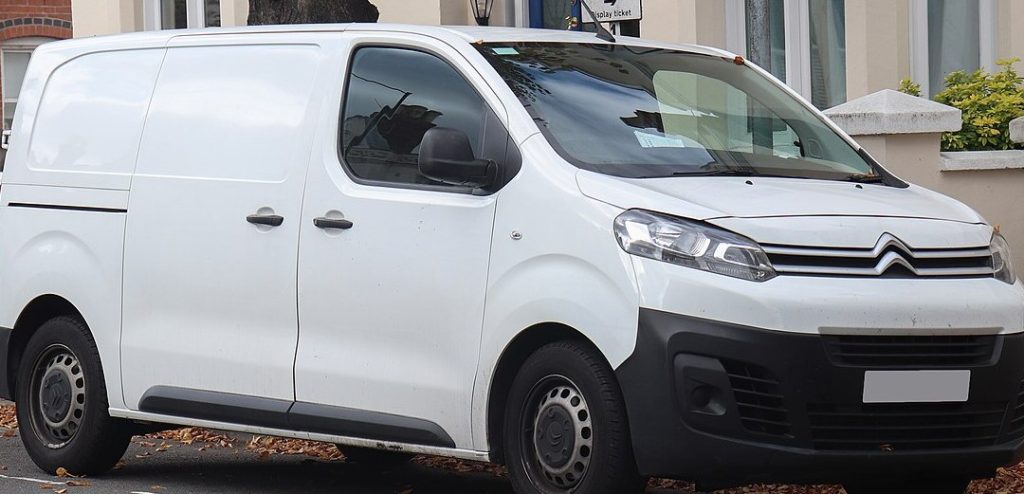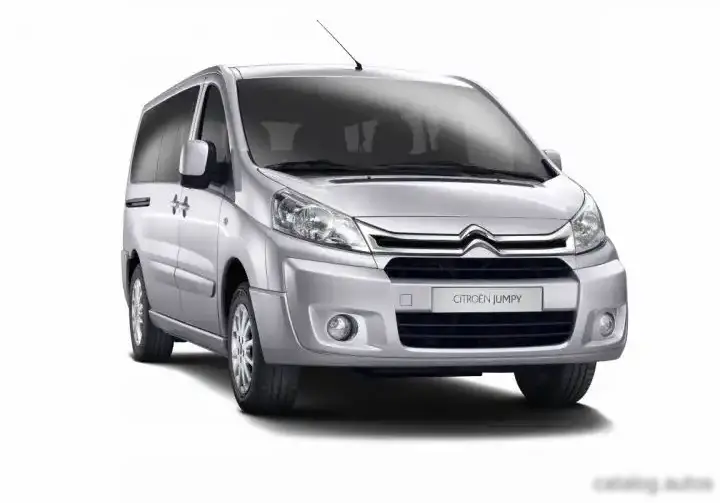
The Citroen Jumpy II Multispace, specifically the facelifted version produced from 2012 to 2015, represented Citroen’s entry into the mid-size passenger van segment. This variant, equipped with the 2.0 HDi engine producing 128 horsepower, and a manual transmission, was positioned as a practical and versatile option for families and those requiring flexible cargo space. The Jumpy II, built on the SevelNord platform jointly developed by PSA (Peugeot-Citroen) and Fiat, aimed to provide a comfortable and efficient alternative to larger, more expensive MPVs. The facelift in 2012 brought styling updates and minor mechanical refinements to the existing Jumpy II range.
Technical Specifications
| Brand | Citroen |
| Model | Jumpy |
| Generation | Jumpy II Multispace (facelift 2012) |
| Type (Engine) | 2.0 HDi (128 Hp) L1 |
| Start of production | 2012 |
| End of production | 2015 |
| Powertrain Architecture | Internal Combustion engine |
| Body type | Minivan |
| Seats | 5-6 |
| Doors | 5 |
| Fuel consumption (urban) | 7.6 l/100 km (30.9 US mpg) |
| Fuel consumption (extra urban) | 6.0 l/100 km (39.2 US mpg) |
| Fuel consumption (combined) | 6.6 l/100 km (35.6 US mpg) |
| CO2 emissions | 172 g/km |
| Fuel Type | Diesel |
| Acceleration 0 – 100 km/h | 13.4 sec |
| Acceleration 0 – 62 mph | 13.4 sec |
| Acceleration 0 – 60 mph | 12.7 sec |
| Maximum speed | 170 km/h (105.63 mph) |
| Emission standard | Euro 5 |
| Weight-to-power ratio | 15.1 kg/Hp |
| Weight-to-torque ratio | 6.1 kg/Nm |
| Power | 128 Hp @ 4000 rpm |
| Torque | 320 Nm @ 2000 rpm (236.02 lb.-ft. @ 2000 rpm) |
| Engine layout | Front, Transverse |
| Engine Model/Code | AHZ DW10CD |
| Engine displacement | 1997 cm3 (121.86 cu. in.) |
| Number of cylinders | 4 |
| Engine configuration | Inline |
| Cylinder Bore | 85 mm (3.35 in.) |
| Piston Stroke | 88 mm (3.46 in.) |
| Number of valves per cylinder | 4 |
| Fuel injection system | Diesel Commonrail |
| Engine aspiration | Turbocharger, Intercooler |
| Engine oil capacity | 5 l (5.28 US qt | 4.4 UK qt) |
| Kerb Weight | 1938 kg (4272.56 lbs.) |
| Max. weight | 2780 kg (6128.85 lbs.) |
| Max load | 842 kg (1856.29 lbs.) |
| Trunk (boot) space – maximum | 3473 l (122.65 cu. ft.) |
| Fuel tank capacity | 80 l (21.13 US gal | 17.6 UK gal) |
| Max. roof load | 170 kg (374.79 lbs.) |
| Permitted trailer load with brakes (12%) | 2000 kg (4409.25 lbs.) |
| Permitted trailer load without brakes | 750 kg (1653.47 lbs.) |
| Permitted towbar download | 80 kg (176.37 lbs.) |
| Length | 4805 mm (189.17 in.) |
| Width | 1895 mm (74.61 in.) |
| Width with mirrors folded | 1986 mm (78.19 in.) |
| Width including mirrors | 2194 mm (86.38 in.) |
| Height | 1880 mm (74.02 in.) |
| Wheelbase | 3000 mm (118.11 in.) |
| Front track | 1562 mm (61.5 in.) |
| Rear (Back) track | 1596 mm (62.83 in.) |
| Front overhang | 975 mm (38.39 in.) |
| Rear overhang | 830 mm (32.68 in.) |
| Minimum turning circle | 12.2 m (40.03 ft.) |
| Drivetrain Architecture | Front wheel drive |
| Number of gears and type of gearbox | 6 gears, manual transmission |
| Front suspension | Independent, type McPherson with coil spring and anti-roll bar |
| Rear suspension | Semi-dependent beam with stabilizer lateral stability |
| Front brakes | Ventilated discs |
| Rear brakes | Disc |
| Steering type | Steering rack and pinion |
| Tires size | 215/60 R16 |
| Wheel rims size | 16 |
Powertrain & Engine Architecture
The 2.0 HDi engine, identified by the AHZ or DW10CD engine code, was a mainstay of Citroen’s diesel lineup. This engine is a four-cylinder, inline configuration, utilizing a common rail direct injection system. The common rail system, operating at very high pressures, allowed for precise fuel delivery, contributing to both fuel efficiency and reduced emissions. The engine featured a turbocharger with an intercooler, boosting power output to 128 horsepower and 236 lb-ft of torque. The six-speed manual transmission was the standard offering for this variant, providing a good balance between fuel economy and driver control. The engine’s valvetrain employed four valves per cylinder, enhancing breathing and contributing to its overall performance.
Driving Characteristics
The 128 hp 2.0 HDi engine in the Jumpy II Multispace, paired with the manual transmission, offered adequate performance for everyday driving. Acceleration was not particularly brisk, with a 0-60 mph time around 12.7 seconds, but the engine provided ample torque at low to mid-range RPMs, making it suitable for carrying passengers and cargo. The manual gearbox allowed for greater driver engagement and control compared to an automatic, and the gear ratios were well-suited for both urban and highway driving. While not a sporty vehicle, the Jumpy II Multispace offered a comfortable and predictable driving experience.
Equipment & Trim Levels
The Jumpy II Multispace, in this configuration, typically came with a reasonable level of standard equipment. This included power windows, central locking, air conditioning, and an audio system with basic connectivity options. Interior upholstery was typically cloth, with durable and practical materials used throughout the cabin. Optional extras included features like parking sensors, upgraded audio systems, and alloy wheels. Higher trim levels offered additional comfort and convenience features, such as automatic headlights and rain-sensing wipers.
Chassis & Braking
The Jumpy II Multispace utilized a McPherson strut front suspension and a semi-independent beam rear suspension. This setup provided a comfortable ride quality, although it wasn’t particularly sporty. The front brakes were ventilated discs, offering good stopping power, while the rear brakes were solid discs. The steering was a rack and pinion system, providing reasonably precise control. The vehicle’s weight distribution and suspension tuning were optimized for carrying passengers and cargo, ensuring stability and predictable handling.
Market Reception & Comparison
The Citroen Jumpy II Multispace 2.0 HDi (128 Hp) was generally well-received by critics as a practical and versatile family vehicle. It offered a good balance between space, fuel economy, and affordability. Compared to other MPVs in its class, the Jumpy II Multispace was often praised for its spacious interior and flexible seating arrangements. However, some critics noted that its styling was somewhat utilitarian and that its driving dynamics were not as refined as some of its competitors. The 1.8L petrol and 1.6L HDi versions offered different trade-offs; the petrol being less fuel efficient but offering quicker acceleration, and the 1.6L HDi being even more economical but with less power.
Legacy
The 2.0 HDi engine in the Jumpy II Multispace is generally considered to be a reliable unit, provided it is properly maintained. Common issues include wear and tear on the turbocharger and potential problems with the diesel particulate filter (DPF), particularly on vehicles that are primarily used for short journeys. In the used car market, the Jumpy II Multispace remains a popular choice for those seeking a practical and affordable family vehicle. Its spacious interior, fuel efficiency, and relatively low running costs make it an attractive option for budget-conscious buyers. The Jumpy II laid the groundwork for Citroen’s continued success in the passenger van segment.