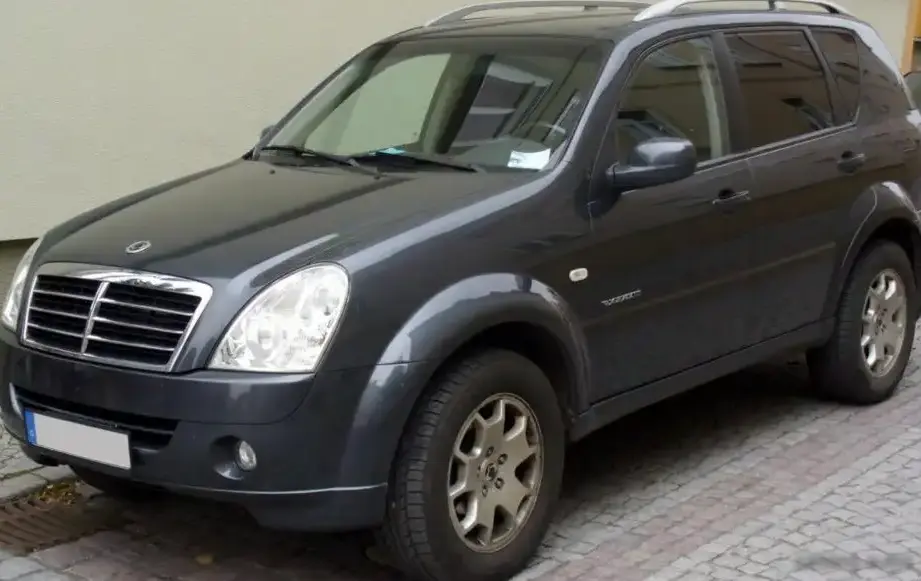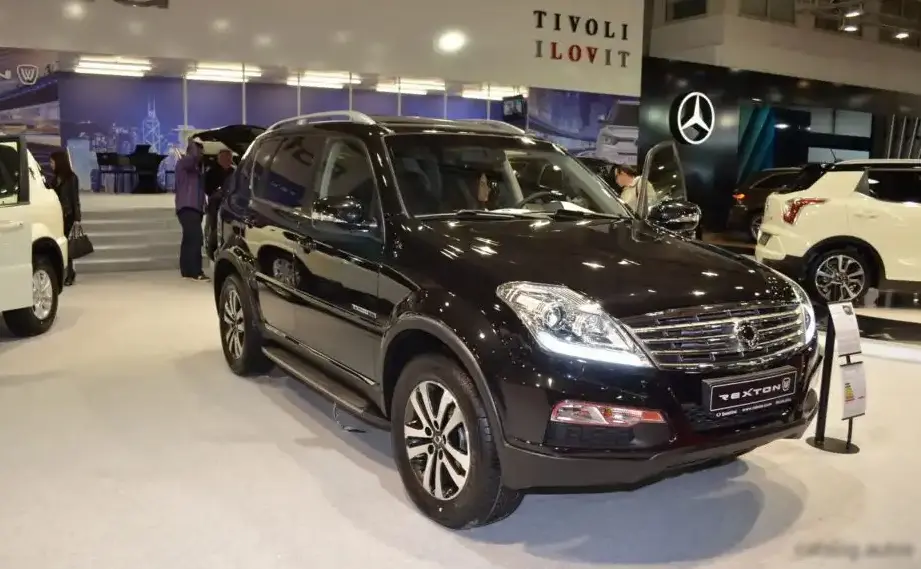
The SsangYong Rexton I (facelift 2012) RX 320 4WD Automatic represents a significant iteration of SsangYong’s flagship SUV, produced from 2012 to 2017. Positioned as a premium offering within the Rexton lineup, the RX 320 aimed to provide a blend of off-road capability, spaciousness, and a more powerful engine option compared to lower-trim models. This facelifted version of the first-generation Rexton (codenamed J80) sought to modernize the vehicle’s aesthetics and enhance its appeal in a competitive SUV market, primarily targeting buyers in Europe and emerging markets where SsangYong had a stronger presence. The RX 320, with its 3.2-liter gasoline engine and automatic transmission, was intended for customers seeking a comfortable and capable SUV for both on-road and moderate off-road use.
Technical Specifications
| Brand | SsangYong |
| Model | Rexton |
| Generation | Rexton I (facelift 2012) |
| Type | RX 320 (220 Hp) 4WD Automatic |
| Start of production | 2012 |
| End of production | 2017 |
| Powertrain Architecture | Internal Combustion engine |
| Body type | SUV |
| Seats | 5-7 |
| Doors | 5 |
| Fuel consumption (urban) | 19.3 l/100 km (12.2 US mpg, 14.6 UK mpg, 5.2 km/l) |
| Fuel consumption (extra urban) | 11.2 l/100 km (21 US mpg, 25.2 UK mpg, 8.9 km/l) |
| Fuel consumption (combined) | 14.2 l/100 km (16.6 US mpg, 19.9 UK mpg, 7 km/l) |
| CO2 emissions | 337 g/km |
| Fuel Type | Petrol (Gasoline) |
| Maximum speed | 184 km/h (114.33 mph) |
| Emission standard | Euro 3 |
| Weight-to-power ratio | 8.8 kg/Hp, 113.7 Hp/tonne |
| Weight-to-torque ratio | 6.2 kg/Nm, 161.2 Nm/tonne |
| Power | 220 Hp @ 6100 rpm |
| Power per litre | 68.8 Hp/l |
| Torque | 312 Nm @ 4600 rpm (230.12 lb.-ft. @ 4600 rpm) |
| Engine layout | Front, Longitudinal |
| Engine Model/Code | G32D |
| Engine displacement | 3199 cm3 (195.21 cu. in.) |
| Number of cylinders | 6 |
| Engine configuration | Inline |
| Cylinder Bore | 89.9 mm (3.54 in.) |
| Piston Stroke | 84 mm (3.31 in.) |
| Compression ratio | 10:1 |
| Number of valves per cylinder | 4 |
| Fuel injection system | Multi-port manifold injection |
| Engine aspiration | Naturally aspirated engine |
| Valvetrain | DOHC |
| Engine oil capacity | 9 l (9.51 US qt | 7.92 UK qt) |
| Coolant | 11.5 l (12.15 US qt | 10.12 UK qt) |
| Kerb Weight | 1935-2032 kg (4265.94 – 4479.79 lbs.) |
| Max. weight | 2760 kg (6084.76 lbs.) |
| Max load | 728-825 kg (1604.97 – 1818.81 lbs.) |
| Fuel tank capacity | 78 l (20.61 US gal | 17.16 UK gal) |
| Permitted trailer load with brakes (12%) | 3200 kg (7054.79 lbs.) |
| Permitted trailer load without brakes | 750 kg (1653.47 lbs.) |
| Length | 4755 mm (187.2 in.) |
| Width | 1900 mm (74.8 in.) |
| Height | 1840 mm (72.44 in.) |
| Wheelbase | 2835 mm (111.61 in.) |
| Front track | 1570 mm (61.81 in.) |
| Rear track | 1570 mm (61.81 in.) |
| Front overhang | 885 mm (34.84 in.) |
| Rear overhang | 1035 mm (40.75 in.) |
| Ride height (ground clearance) | 206 mm (8.11 in.) |
| Minimum turning circle | 11.4 m (37.4 ft.) |
| Approach angle | 28° |
| Departure angle | 25.5° |
| Ramp-over angle | 22.5° |
| Drivetrain Architecture | The Internal combustion engine (ICE) drives the rear wheels permanently, and the front wheels are driven through an electrically or mechanically operated clutch if necessary. |
| Drive wheel | All wheel drive (4×4) |
| Number of gears and type of gearbox | 5 gears, automatic transmission |
| Front suspension | Coil spring, Double wishbone |
| Rear suspension | Rigid axle suspension, Coil spring |
| Front brakes | Ventilated discs |
| Rear brakes | Disc |
| Assisting systems | ABS (Anti-lock braking system) |
| Steering type | Steering rack and pinion |
| Power steering | Hydraulic Steering |
| Tires size | 235/75 R16; 255/70 R16; 255/60 R18 |
| Wheel rims size | 16; 18 |
Powertrain & Engine Architecture
The RX 320 is powered by SsangYong’s G32D, a 3.2-liter inline-six cylinder gasoline engine. This engine, while not a cutting-edge design, was known for its relatively smooth operation and decent power output. It utilizes a multi-port fuel injection system and a double overhead camshaft (DOHC) valvetrain. The engine produces 220 horsepower at 6,100 rpm and 312 Nm (230 lb-ft) of torque at 4,600 rpm. The engine is longitudinally mounted, driving power to all four wheels through a five-speed automatic transmission. This transmission, while providing convenience, wasn’t known for its particularly quick shifts or fuel efficiency. The 4WD system is part-time, engaging the front wheels when traction is needed, offering a rear-wheel-drive bias for normal driving conditions.
Driving Characteristics
The RX 320 Automatic offered a comfortable, if not particularly sporty, driving experience. The 3.2-liter engine provided adequate power for highway cruising and overtaking, but acceleration was not brisk. The automatic transmission, with its five gears, contributed to a relaxed driving style, but could feel somewhat sluggish when downshifting. The rear-wheel-drive bias provided a stable feel on paved roads, while the 4WD system offered improved traction in slippery conditions. Compared to the manual transmission versions of the Rexton, the automatic suffered a slight performance penalty. The higher-output diesel variants, such as the 2.7-liter diesel, offered significantly more torque and better fuel economy, making them a more popular choice for those prioritizing performance and efficiency.
Equipment & Trim Levels
The RX 320 typically came equipped with a reasonable level of standard features, including air conditioning, power windows and locks, and a basic audio system. Higher trim levels offered leather upholstery, sunroof, and upgraded audio systems. Safety features included ABS brakes and, depending on the year and market, airbags. The interior design was functional but lacked the refinement of some of its competitors. Optional extras included a navigation system and parking sensors.
Chassis & Braking
The Rexton I utilized a body-on-frame construction, providing robust durability and off-road capability. The front suspension featured a double wishbone setup with coil springs, while the rear suspension employed a rigid axle with coil springs. This configuration prioritized ride comfort and load-carrying capacity over precise handling. Braking duties were handled by ventilated discs at the front and solid discs at the rear. The ABS system provided enhanced braking control in emergency situations.
Market Reception & Comparison
The SsangYong Rexton RX 320 faced stiff competition from established SUV brands like Toyota, Mitsubishi, and Hyundai. Critics generally praised the Rexton’s spacious interior and off-road capability, but noted its relatively unrefined engine and transmission, and its less-than-stellar fuel economy. Compared to the diesel-powered Rextons, the RX 320 was less popular due to its higher fuel consumption and lower torque output. However, it appealed to buyers who preferred the smoothness and quieter operation of a gasoline engine.
Legacy
The SsangYong Rexton I (facelift 2012) RX 320, while not a sales leader, remains a relatively affordable and capable SUV in the used car market. The 3.2-liter engine, while not known for exceptional reliability, is generally durable if properly maintained. Common issues include oil leaks and occasional sensor failures. The automatic transmission requires regular fluid changes to prevent premature wear. Today, the RX 320 represents a viable option for buyers seeking a spacious, four-wheel-drive SUV at a budget price point, particularly for those who prioritize off-road capability and don’t mind sacrificing some refinement and fuel efficiency.