
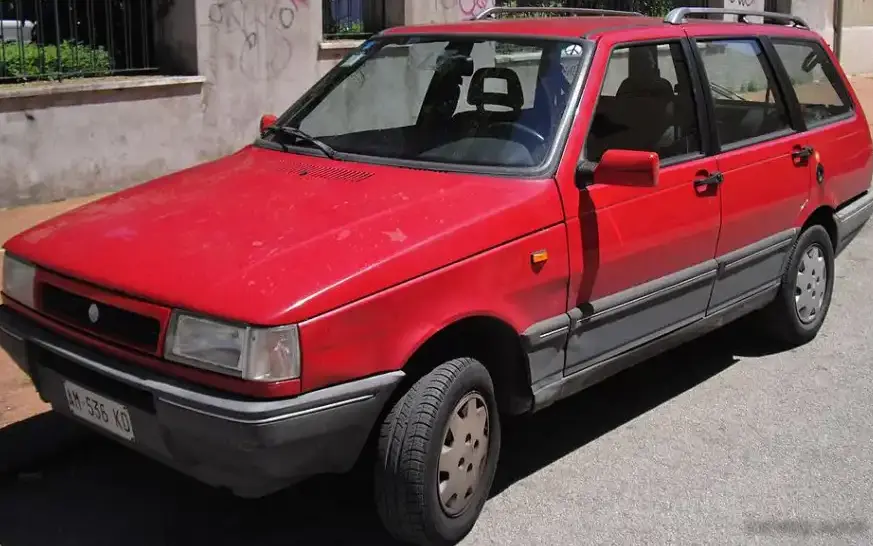
The Innocenti Elba 1.6 i, producing 76 horsepower, was a mainstay of the Italian automaker’s lineup from 1986 to 1996. Positioned as an affordable and practical family vehicle, the Elba represented Innocenti’s attempt to capture a segment of the European station wagon market. It was based on the Fiat Ritmo/Strada platform, inheriting much of its mechanical underpinnings, but with distinctive styling and a focus on maximizing interior space. The 1.6 i variant, with its relatively modest power output, served as the entry point to the Elba range, appealing to buyers prioritizing economy and usability over outright performance. This model played a significant role in keeping Innocenti afloat during a period of financial instability, offering a competitively priced alternative to more established European brands.
Technical Specifications
| Brand | Innocenti |
| Model | Elba |
| Generation | Elba |
| Type (Engine) | 1.6 i (76 Hp) |
| Start of production | 1986 |
| End of production | 1996 |
| Powertrain Architecture | Internal Combustion engine |
| Body type | Station wagon (estate) |
| Seats | 5 |
| Doors | 5 |
| Fuel consumption (combined) | 7.6 l/100 km (30.9 US mpg, 37.2 UK mpg, 13.2 km/l) |
| Fuel Type | Petrol (Gasoline) |
| Acceleration 0 – 100 km/h | 12 sec |
| Acceleration 0 – 62 mph | 12 sec |
| Acceleration 0 – 60 mph | 11.4 sec |
| Maximum speed | 168 km/h (104.39 mph) |
| Weight-to-power ratio | 12.5 kg/Hp, 80 Hp/tonne |
| Weight-to-torque ratio | 7.7 kg/Nm, 129.5 Nm/tonne |
| Power | 76 Hp @ 5750 rpm |
| Power per litre | 48.1 Hp/l |
| Torque | 123 Nm @ 3250 rpm (90.72 lb.-ft. @ 3250 rpm) |
| Engine layout | Front, Transverse |
| Engine displacement | 1581 cm3 (96.48 cu. in.) |
| Number of cylinders | 4 |
| Engine configuration | Inline |
| Cylinder Bore | 86.4 mm (3.4 in.) |
| Piston Stroke | 67.4 mm (2.65 in.) |
| Compression ratio | 9.2:1 |
| Number of valves per cylinder | 2 |
| Fuel injection system | Single-point injection |
| Engine aspiration | Naturally aspirated engine |
| Valvetrain | OHC |
| Kerb Weight | 950 kg (2094.39 lbs.) |
| Max. weight | 1410 kg (3108.52 lbs.) |
| Max load | 460 kg (1014.13 lbs.) |
| Trunk (boot) space – minimum | 490 l (17.3 cu. ft.) |
| Trunk (boot) space – maximum | 1430 l (50.5 cu. ft.) |
| Fuel tank capacity | 54 l (14.27 US gal | 11.88 UK gal) |
| Length | 4037 mm (158.94 in.) |
| Width | 1555 mm (61.22 in.) |
| Height | 1450 mm (57.09 in.) |
| Wheelbase | 2362 mm (92.99 in.) |
| Front track | 1321 mm (52.01 in.) |
| Rear (Back) track | 1344 mm (52.91 in.) |
| Drivetrain Architecture | The Internal combustion engine (ICE) drives the front wheels of the vehicle. |
| Drive wheel | Front wheel drive |
| Number of gears and type of gearbox | 5 gears, manual transmission |
| Front suspension | Spring-loaded rack |
| Rear suspension | Leaf spring |
| Front brakes | Disc |
| Rear brakes | Drum |
| Assisting systems | ABS (Anti-lock braking system) |
| Tires size | 165/70 R13 |
Powertrain & Engine Architecture
The heart of the Elba 1.6 i was the Fiat-derived 1581cc inline-four cylinder engine. This engine, often identified by its engine codes (typically 171A.046), featured a single overhead camshaft (OHC) operating two valves per cylinder. Fuel delivery was handled by a single-point fuel injection system, a relatively simple and cost-effective technology for the time. While not particularly sophisticated, this system provided adequate fuel atomization for the engine’s modest power output. The engine’s 9.2:1 compression ratio was a compromise between performance and the ability to run on the lower-octane fuels commonly available in European markets. The five-speed manual transmission was the standard offering, chosen for its efficiency and affordability. The transmission’s gear ratios were geared towards maximizing fuel economy and providing acceptable acceleration in everyday driving conditions.
Driving Characteristics
The 76 horsepower and 90.72 lb-ft of torque produced by the 1.6-liter engine translated to a practical, if not exhilarating, driving experience. Acceleration from 0-60 mph took around 11.4 seconds, and top speed was approximately 104 mph. The Elba 1.6 i wasn’t designed for speed; instead, it prioritized usability. The five-speed manual transmission allowed drivers to keep the engine in its optimal power band, but the engine lacked the low-end grunt of larger displacement units. Compared to the more powerful versions of the Elba, such as those equipped with the 1.8-liter engine, the 1.6 i felt noticeably slower, particularly when fully loaded or climbing hills. However, the lighter engine weight contributed to better handling and a more nimble feel in city driving.
Equipment & Trim Levels
The Elba 1.6 i typically came with a fairly basic level of equipment, reflecting its position as the entry-level model. Standard features generally included cloth upholstery, a basic instrument cluster, and manual windows and door locks. Air conditioning and power steering were often optional extras. Interior trim was functional and durable, prioritizing practicality over luxury. The rear seats could be folded down to increase cargo capacity, further enhancing the Elba’s versatility. Optional extras included a radio/cassette player, upgraded interior trim materials, and alloy wheels.
Chassis & Braking
The Elba’s chassis was based on the Fiat Ritmo/Strada platform, utilizing a front-engine, front-wheel-drive layout. The front suspension employed a spring-loaded rack system, while the rear suspension utilized a leaf spring setup. This combination provided a comfortable ride, but handling was not particularly sharp. Braking duties were handled by disc brakes at the front and drum brakes at the rear. ABS (Anti-lock Braking System) was available as an option, improving braking performance and safety, particularly on slippery surfaces. The relatively lightweight construction of the 1.6 i model helped to compensate for the less sophisticated suspension and braking systems.
Market Reception & Comparison
The Innocenti Elba 1.6 i was generally well-received as an affordable and practical family car. Critics praised its spacious interior, generous cargo capacity, and reasonable fuel economy (around 30.9 US mpg). However, the engine’s modest power output and the car’s somewhat basic interior were often cited as drawbacks. Compared to other station wagons in its class, such as the Ford Escort Estate or the Opel Kadett Estate, the Elba offered a competitive price point but lacked the refinement and performance of some of its rivals. The 1.6 i variant was often seen as a sensible choice for buyers prioritizing economy and practicality over driving excitement.
Legacy
The Innocenti Elba, including the 1.6 i variant, has developed a modest following among classic car enthusiasts. The 1.6-liter engine is known for its relative reliability, although regular maintenance is essential to prevent issues such as oil leaks and corrosion. Parts availability can be a challenge, as Innocenti ceased production in 1996. However, many components are interchangeable with those from the Fiat Ritmo/Strada, making it easier to keep these cars on the road. Today, the Elba 1.6 i represents a relatively affordable entry point into the world of classic European station wagons, offering a unique blend of Italian styling and practical functionality.
