
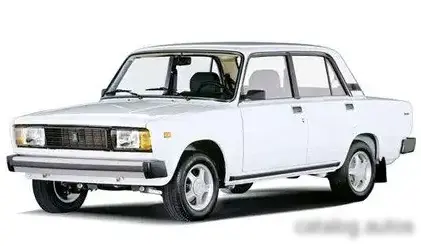
The Lada 21051 1.2, producing 64 horsepower, was a mainstay of the Lada lineup from 1981 to 1999. It represented a significant iteration of the classic 2105 model, itself a derivative of the Fiat 124, and played a crucial role in providing affordable transportation across Eastern Europe and, to a lesser extent, in Western markets. This particular variant, equipped with a 1.2-liter engine and a four-speed manual transmission, served as the entry point into the 2105 range, prioritizing economy and simplicity over outright performance. It was designed for buyers seeking reliable, no-frills motoring.
Technical Specifications
| Brand | Lada |
| Model | 2105 |
| Generation | 21051 |
| Type (Engine) | 1.2 (64 Hp) |
| Start of production | 1981 |
| End of production | 1999 |
| Powertrain Architecture | Internal Combustion engine |
| Body type | Sedan |
| Seats | 5 |
| Doors | 4 |
| Fuel consumption (urban) | 10 l/100 km (23.5 US mpg, 28.2 UK mpg, 10 km/l) |
| Fuel Type | Petrol (Gasoline) |
| Acceleration 0 – 100 km/h | 22 sec |
| Acceleration 0 – 62 mph | 22 sec |
| Acceleration 0 – 60 mph | 20.9 sec |
| Maximum speed | 140 km/h (86.99 mph) |
| Weight-to-power ratio | 15.5 kg/Hp, 64.3 Hp/tonne |
| Weight-to-torque ratio | 11.2 kg/Nm, 89.4 Nm/tonne |
| Power | 64 Hp @ 5600 rpm |
| Power per litre | 53.4 Hp/l |
| Torque | 89 Nm @ 3400 rpm (65.64 lb.-ft. @ 3400 rpm) |
| Engine layout | Front, Longitudinal |
| Engine displacement | 1198 cm3 (73.11 cu. in.) |
| Number of cylinders | 4 |
| Engine configuration | Inline |
| Cylinder Bore | 76 mm (2.99 in.) |
| Piston Stroke | 66 mm (2.6 in.) |
| Compression ratio | 8.5:1 |
| Number of valves per cylinder | 2 |
| Fuel injection system | Carburettor |
| Engine aspiration | Naturally aspirated engine |
| Valvetrain | OHC |
| Kerb Weight | 995 kg (2193.6 lbs.) |
| Max. weight | 1395 kg (3075.45 lbs.) |
| Max load | 400 kg (881.85 lbs.) |
| Trunk (boot) space – maximum | 385 l (13.6 cu. ft.) |
| Fuel tank capacity | 39 l (10.3 US gal | 8.58 UK gal) |
| Length | 4130 mm (162.6 in.) |
| Width | 1620 mm (63.78 in.) |
| Height | 1446 mm (56.93 in.) |
| Wheelbase | 2424 mm (95.43 in.) |
| Front track | 1365 mm (53.74 in.) |
| Rear (Back) track | 1321 mm (52.01 in.) |
| Drivetrain Architecture | The Internal combustion engine (ICE) drives the rear wheels of the vehicle. |
| Drive wheel | Rear wheel drive |
| Number of gears and type of gearbox | 4 gears, manual transmission |
| Front suspension | Double wishbone |
| Rear suspension | Coil spring |
| Front brakes | Disc |
| Rear brakes | Drum |
| Steering type | Worm-reduction unit |
| Tires size | 175/70 SR13 |
Powertrain & Engine Architecture
The heart of the 21051 1.2 was the VA-2105 engine, a 1.2-liter inline-four cylinder unit. This engine was a simplified version of the larger 1.5 and 1.6-liter engines found in other 2105 variants. It featured a single overhead camshaft (OHC) operating two valves per cylinder. Crucially, this version utilized a carburetor for fuel delivery, a cost-saving measure compared to the fuel injection systems becoming increasingly common in Western vehicles. The carburetor, typically a K-126G or similar model, was known for its relative simplicity but also for its less precise fuel metering compared to modern systems. The engine’s longitudinal front-engine, rear-wheel-drive layout was a carryover from the original Fiat 124 design. The four-speed manual transmission was a robust, if unsophisticated, unit, designed for durability rather than sporty performance. The gear ratios were relatively tall, prioritizing fuel economy and reducing engine strain at highway speeds.
Driving Characteristics
The 21051 1.2 offered modest performance. Acceleration was leisurely, taking approximately 22 seconds to reach 62 mph (100 km/h). The top speed was around 87 mph (140 km/h). The carburetor and relatively low compression ratio (8.5:1) contributed to a somewhat flat power delivery, with peak horsepower arriving at 5600 rpm. The tall gear ratios in the four-speed manual transmission meant that the engine often felt strained when accelerating quickly or climbing hills. Compared to the 1.5 or 1.6-liter versions of the 2105, the 1.2 felt noticeably slower and less refined. However, the lighter engine weight did contribute to slightly improved handling and a more nimble feel in city driving. The rear-wheel-drive configuration provided a traditional driving experience, but also required careful throttle control in slippery conditions.
Equipment & Trim Levels
The 21051 1.2 was typically the most basic trim level available. Standard equipment was minimal, reflecting its position as an affordable entry-level vehicle. It generally included cloth upholstery, basic instrumentation (speedometer, fuel gauge, temperature gauge), and a simple two-spoke steering wheel. Optional extras were limited but could include a radio, upgraded seat covers, and sometimes, a heated rear window. The interior was functional and durable, but lacked the creature comforts found in contemporary Western cars. The exterior trim was also basic, with minimal chrome accents and steel wheels typically fitted as standard.
Chassis & Braking
The 21051 1.2 utilized a relatively simple chassis design. The front suspension employed a double wishbone setup, while the rear suspension featured a coil spring arrangement. The braking system consisted of disc brakes on the front wheels and drum brakes on the rear. The braking performance was adequate for normal driving conditions, but lacked the stopping power of more modern vehicles. The steering was a worm-reduction unit, providing a somewhat vague and indirect feel. Stabilizer bars were often omitted on the base 1.2 model, contributing to a noticeable degree of body roll in corners.
Market Reception & Comparison
The Lada 21051 1.2 was primarily aimed at budget-conscious buyers in Eastern Europe and developing markets. Critics generally acknowledged its affordability and durability, but also noted its lack of refinement and relatively poor performance. Compared to the 1.5 and 1.6-liter versions of the 2105, the 1.2 offered significantly lower running costs due to its smaller engine and lower fuel consumption. However, it also lacked the power and responsiveness of its larger-engined siblings. Reliability was generally good, although the carburetor required periodic adjustment and maintenance. The 1.2 was often seen as a practical and dependable workhorse, rather than an exciting or luxurious vehicle.
Legacy
The Lada 21051 1.2, while not a performance icon, holds a significant place in automotive history as a symbol of affordable transportation during the late 20th century. The VA-2105 engine, in its various iterations, proved to be remarkably durable and relatively easy to maintain. Today, the 21051 1.2 is a popular choice among classic car enthusiasts and those seeking a simple, reliable, and inexpensive vehicle. Parts availability can be a challenge in some regions, but a dedicated community of owners and enthusiasts continues to support the preservation of these iconic cars. The 1.2-liter engine, while not particularly powerful, remains a relatively straightforward unit to work on, making it a favorite among amateur mechanics.
