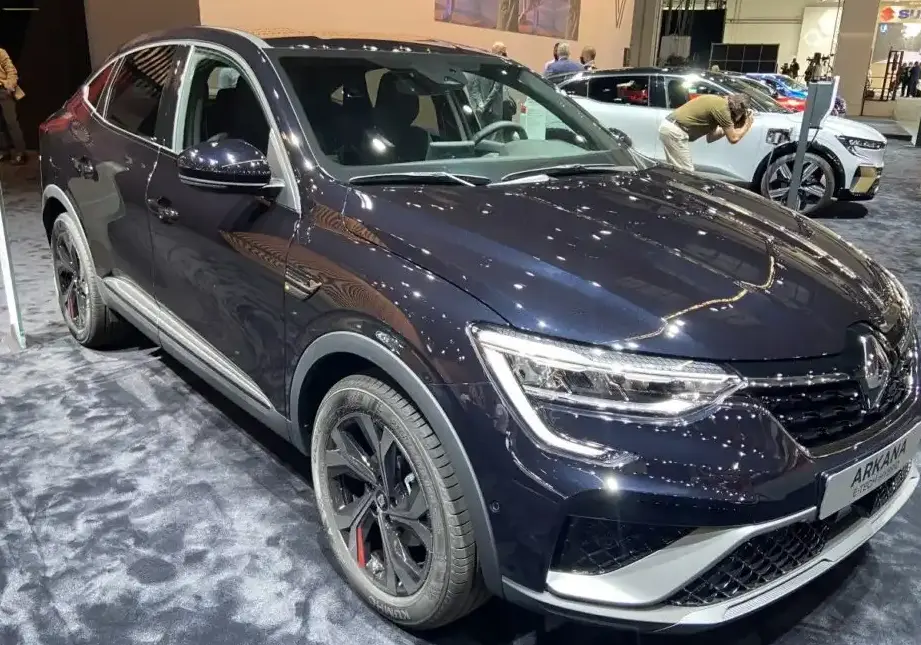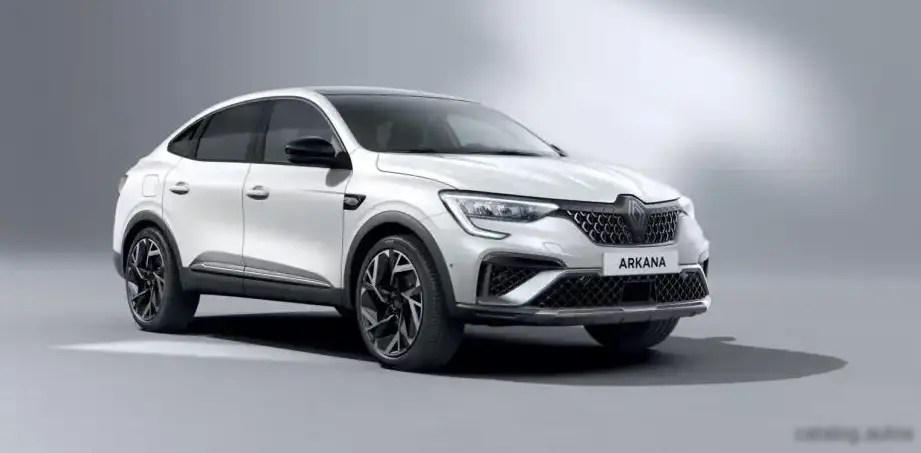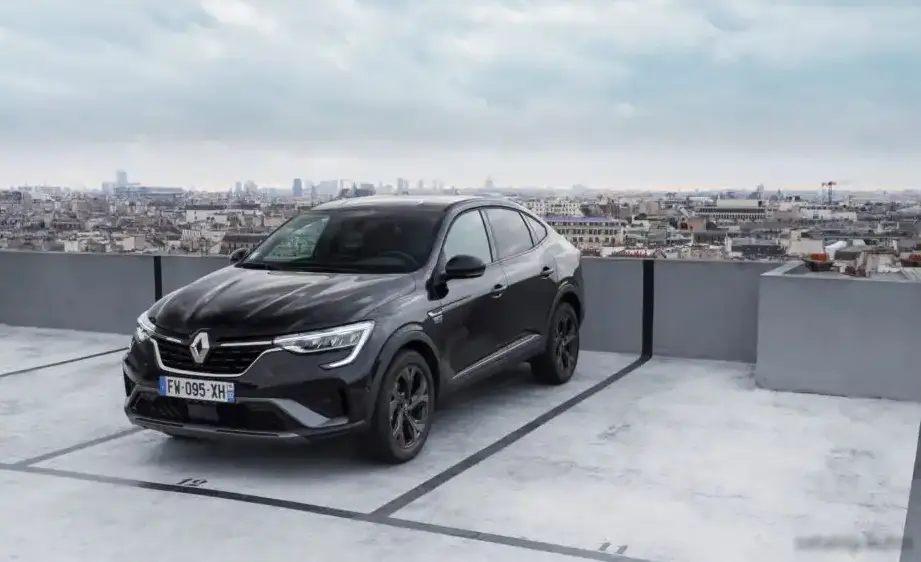
The Renault Arkana 1.6, producing 114 horsepower, was a key variant in the initial rollout of the Arkana model, beginning in July 2019 and continuing through March 2022. Positioned as an entry-level offering within the Arkana range, it aimed to provide a stylish and practical coupe-SUV option at a competitive price point, primarily targeting the European market. The Arkana itself represented Renault’s foray into the growing coupe-SUV segment, blending the aesthetics of a coupe with the practicality of a small SUV. This particular 1.6-liter engine and five-speed manual transmission combination was designed to balance affordability with reasonable performance and fuel efficiency.
Technical Specifications
| Brand | Renault |
| Model | Arkana |
| Generation | Arkana |
| Type (Engine) | 1.6 (114 Hp) |
| Start of production | July, 2019 |
| End of production | March, 2022 |
| Powertrain Architecture | Internal Combustion engine |
| Body type | Coupe, SUV |
| Seats | 5 |
| Doors | 5 |
| Fuel consumption (urban) | 9.2 l/100 km (25.6 US mpg) |
| Fuel consumption (extra urban) | 5.6 l/100 km (42 US mpg) |
| Fuel consumption (combined) | 7.7 l/100 km (30.5 US mpg) |
| CO2 emissions | 161 g/km |
| Fuel Type | Petrol (Gasoline) |
| Acceleration 0 – 100 km/h | 12.4 sec |
| Acceleration 0 – 62 mph | 12.4 sec |
| Acceleration 0 – 60 mph | 11.8 sec |
| Maximum speed | 183 km/h (113.71 mph) |
| Emission standard | Euro 5 |
| Weight-to-power ratio | 12 kg/Hp |
| Weight-to-torque ratio | 8.8 kg/Nm |
| Power | 114 Hp @ 5500 rpm |
| Torque | 156 Nm @ 4000 rpm (115.06 lb.-ft. @ 4000 rpm) |
| Engine Model/Code | H4M |
| Engine displacement | 1598 cm3 (97.52 cu. in.) |
| Number of cylinders | 4 |
| Engine configuration | Inline |
| Cylinder Bore | 78 mm (3.07 in.) |
| Piston Stroke | 83.6 mm (3.29 in.) |
| Compression ratio | 10.5:1 |
| Number of valves per cylinder | 4 |
| Fuel injection system | Multi-port manifold injection |
| Engine aspiration | Naturally aspirated engine |
| Kerb Weight | 1370-1395 kg (3020.33 – 3075.45 lbs.) |
| Max. weight | 1926 kg (4246.1 lbs.) |
| Max load | 531-556 kg (1170.65 – 1225.77 lbs.) |
| Trunk (boot) space – minimum | 508 l (17.94 cu. ft.) |
| Trunk (boot) space – maximum | 1333 l (47.07 cu. ft.) |
| Fuel tank capacity | 50 l (13.21 US gal | 11 UK gal) |
| Permitted trailer load with brakes (12%) | 1200 kg (2645.55 lbs.) |
| Permitted trailer load without brakes | 685 kg (1510.17 lbs.) |
| Length | 4545 mm (178.94 in.) |
| Width | 1843 mm (72.56 in.) |
| Width with mirrors folded | 1864 mm (73.39 in.) |
| Width including mirrors | 2063 mm (81.22 in.) |
| Height | 1565 mm (61.61 in.) |
| Wheelbase | 2721 mm (107.13 in.) |
| Front track | 1591 mm (62.64 in.) |
| Rear (Back) track | 1586 mm (62.44 in.) |
| Ride height (ground clearance) | 208 mm (8.19 in.) |
| Drag coefficient (Cd) | 0.36 |
| Minimum turning circle (turning diameter) | 11 m (36.09 ft.) |
| Drivetrain Architecture | Front wheel drive |
| Number of gears and type of gearbox | 5 gears, manual transmission |
| Front suspension | Independent, type McPherson with coil spring and anti-roll bar |
| Rear suspension | Semi-independent, coil spring |
| Front brakes | Ventilated discs, 280 mm |
| Rear brakes | Drum |
| Assisting systems | ABS (Anti-lock braking system) |
| Steering type | Steering rack and pinion |
| Power steering | Electric Steering |
| Tires size | 215/60 R17 |
| Wheel rims size | 17 |
Powertrain & Engine Architecture
The Renault Arkana 1.6 utilized the H4M engine, a naturally aspirated 1.6-liter inline-four cylinder petrol engine. This engine was a common sight in various Renault and Nissan models, known for its relative simplicity and reliability. It featured multi-point fuel injection and a dual overhead camshaft (DOHC) valvetrain with four valves per cylinder. The engine’s 114 horsepower peak was achieved at 5500 rpm, while its 156 Nm (115 lb-ft) of torque was delivered at 4000 rpm. Paired with a five-speed manual transmission, the powertrain was designed for efficiency rather than outright performance. The transmission itself was a standard manual unit, offering predictable engagement and a relatively straightforward driving experience. The H4M engine is known for being a robust design, though lacking the sophistication of more modern turbocharged engines.
Driving Characteristics
The Arkana 1.6 with the manual transmission offered a comfortable, if not particularly exhilarating, driving experience. Acceleration from 0-60 mph took around 11.8 seconds, and top speed was limited to 113.71 mph. The five-speed gearbox was well-matched to the engine’s characteristics, providing adequate spacing between gears for everyday driving. However, the engine could feel strained when attempting brisk acceleration or overtaking maneuvers, especially when fully loaded. Compared to higher-spec Arkana models equipped with more powerful engines, the 1.6 felt noticeably less responsive. The gear ratios were optimized for fuel economy, resulting in a slightly ‘long’ feel in higher gears. The front-wheel-drive configuration provided predictable handling, but lacked the all-weather capability of all-wheel-drive systems found on some competitors.
Equipment & Trim Levels
The Arkana 1.6 typically came with a reasonable level of standard equipment, though it was less lavishly equipped than higher trim levels. Standard features generally included air conditioning, a basic infotainment system with Bluetooth connectivity, power windows and mirrors, and a suite of safety features including ABS, ESP (Electronic Stability Program), and multiple airbags. Interior upholstery was typically cloth, and the dashboard featured a functional, if somewhat understated, design. Optional extras included alloy wheels, a more advanced infotainment system with navigation, parking sensors, and a rearview camera. The trim level often dictated the availability of these options, with higher trims offering more comprehensive packages.
Chassis & Braking
The Arkana 1.6 featured a McPherson strut front suspension and a semi-independent coil spring rear suspension. This setup provided a comfortable ride quality, absorbing bumps and imperfections in the road surface effectively. The front brakes were ventilated discs, providing adequate stopping power for the vehicle’s weight and performance. However, the rear brakes were drums, which were less effective than disc brakes and could fade under heavy use. The electric power steering offered light and easy steering, making it well-suited for urban driving. The vehicle’s ride height of 208mm (8.19 inches) provided good ground clearance for navigating rough roads and obstacles.
Market Reception & Comparison
The Renault Arkana 1.6 was generally well-received by critics as an affordable and stylish entry point into the coupe-SUV segment. However, the engine’s performance was often cited as a weakness, with some reviewers noting its lack of power and refinement compared to turbocharged alternatives. Fuel economy was considered respectable, but not class-leading. Compared to other Arkana trims, the 1.6 offered a more budget-friendly option, appealing to buyers who prioritized affordability over performance. Its main competitors included other compact SUVs and crossovers, such as the Nissan Qashqai and Peugeot 3008, though the Arkana’s unique coupe-like styling set it apart.
Legacy
The Renault Arkana 1.6, while not the most powerful or technologically advanced version of the model, proved to be a popular choice for buyers seeking a stylish and practical SUV at an accessible price point. The H4M engine, while simple, is known for its durability and relatively low maintenance costs. On the used car market, these models represent a good value proposition, offering a comfortable and reliable driving experience. However, potential buyers should be aware of the engine’s limitations in terms of performance and consider whether it meets their needs. The Arkana 1.6 helped establish Renault’s presence in the growing coupe-SUV segment and paved the way for more powerful and sophisticated versions of the model.