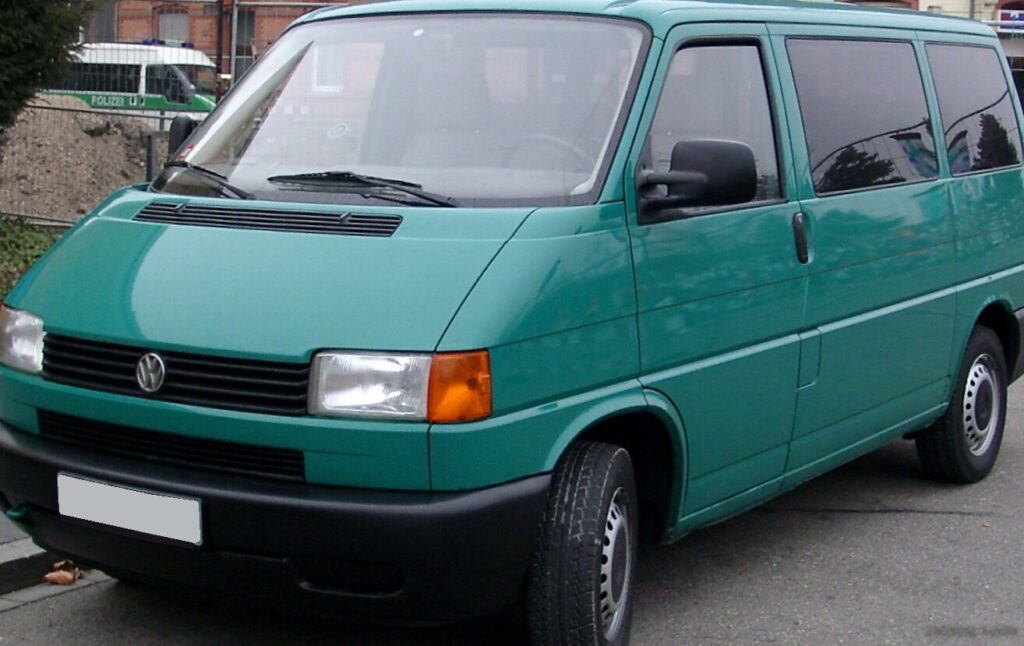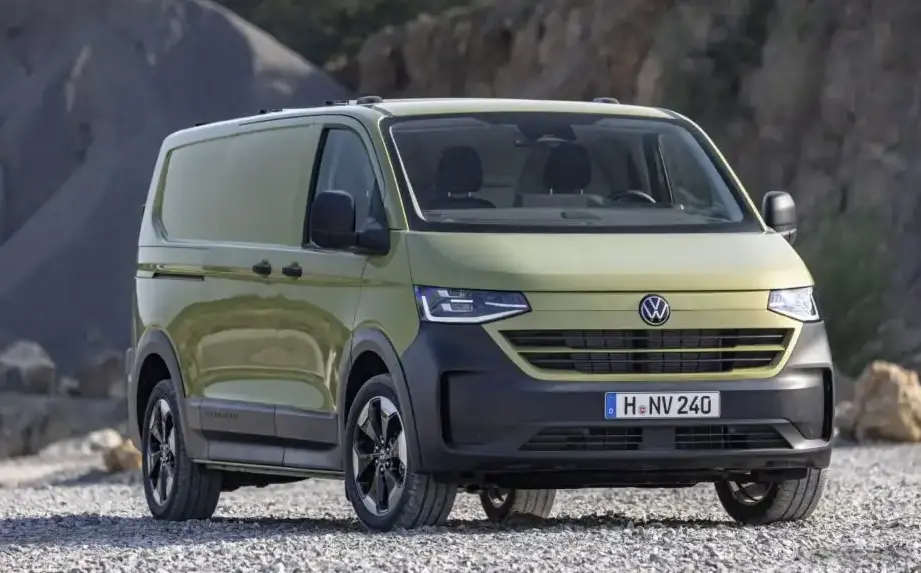
The Volkswagen Transporter (T7) Panel Van 2.0 TDI (110 hp) L1H1 represents the latest iteration of Volkswagen’s iconic commercial vehicle, launched in August 2024. This variant is positioned as an entry-level offering within the T7 range, designed for businesses and tradespeople prioritizing fuel efficiency and practicality over outright performance. The T7 builds upon the foundation of the previous T6.1 generation, incorporating significant technological upgrades and a modernized interior while retaining the core functionality expected of a commercial van. The “L1H1” designation refers to the vehicle’s body length (L1 – short wheelbase) and roof height (H1 – standard roof). This specific configuration caters to urban delivery services and businesses requiring a compact yet versatile cargo solution.
Technical Specifications
| Brand | Volkswagen |
| Model | Transporter |
| Generation | Transporter (T7) Panel Van |
| Type (Engine) | 2.0 TDI (110 Hp) L1H1 |
| Start of production | August, 2024 |
| Powertrain Architecture | Internal Combustion engine |
| Body type | Van |
| Seats | 2-3 |
| Doors | 4-5 |
| Combined fuel consumption (WLTP) | 7.1 l/100 km |
| Combined fuel consumption (US mpg) | 33.1 US mpg |
| Combined fuel consumption (UK mpg) | 39.8 UK mpg |
| Combined fuel consumption (km/l) | 14.1 km/l |
| CO2 emissions (WLTP) | 185 g/km |
| Fuel Type | Diesel |
| Acceleration 0 – 100 km/h | 16.9 sec |
| Acceleration 0 – 62 mph | 16.9 sec |
| Acceleration 0 – 60 mph | 16.1 sec |
| Maximum speed | 155 km/h (96.31 mph) |
| Emission standard | Euro 6e |
| Weight-to-power ratio | 16.3 kg/Hp, 61.2 Hp/tonne |
| Weight-to-torque ratio | 5.8 kg/Nm, 172.5 Nm/tonne |
| Power | 110 Hp |
| Power per litre | 55.1 Hp/l |
| Torque | 310 Nm (228.64 lb.-ft.) |
| Engine layout | Front, Transverse |
| Engine Model/Code | Panther |
| Engine displacement | 1996 cm3 (121.8 cu. in.) |
| Number of cylinders | 4 |
| Engine configuration | Inline |
| Cylinder Bore | 84.01 mm (3.31 in.) |
| Piston Stroke | 90.03 mm (3.54 in.) |
| Compression ratio | 16.5:1 |
| Number of valves per cylinder | 4 |
| Fuel injection system | Diesel Commonrail |
| Engine aspiration | Turbocharger, Intercooler |
| Valvetrain | DOHC |
| Engine systems | Start & Stop System, Particulate filter |
| Kerb Weight | 1797 kg (3961.71 lbs.) |
| Max. weight | 2800 kg (6172.94 lbs.) |
| Max load | 1003 kg (2211.24 lbs.) |
| Trunk (boot) space – maximum | 5800 l (204.83 cu. ft.) |
| Fuel tank capacity | 70 l (18.49 US gal | 15.4 UK gal) |
| AdBlue tank | 20 l (5.28 US gal | 4.4 UK gal) |
| Max. roof load | 170 kg (374.79 lbs.) |
| Permitted trailer load with brakes (12%) | 2000 kg (4409.25 lbs.) |
| Permitted trailer load without brakes | 750 kg (1653.47 lbs.) |
| Permitted towbar download | 100 kg (220.46 lbs.) |
| Length | 5050 mm (198.82 in.) |
| Width | 2032 mm (80 in.) |
| Width including mirrors | 2275 mm (89.57 in.) |
| Height | 1984 mm (78.11 in.) |
| Wheelbase | 3100 mm (122.05 in.) |
| Front overhang | 958 mm (37.72 in.) |
| Rear overhang | 992 mm (39.06 in.) |
| Minimum turning circle (turning diameter) | 12.5 m (41.01 ft.) |
| Approach angle | 16.5° |
| Departure angle | 16.4° |
| Ramp-over (brakeover) angle | 13.1° |
| Drivetrain Architecture | The Internal combustion engine (ICE) drives the front wheels of the vehicle. |
| Drive wheel | Front wheel drive |
| Number of gears and type of gearbox | 6 gears, manual transmission |
| Assisting systems | ABS (Anti-lock braking system) |
| Steering type | Steering rack and pinion |
| Power steering | Electric Steering |
| Tires size | 215/65 R16; 215/60 R17 |
| Wheel rims size | 6.5J x 16; 6.5J x 17 |
Powertrain & Engine Architecture
The T7 2.0 TDI (110 hp) utilizes the Panther engine, a four-cylinder, inline diesel engine. This engine is part of Volkswagen’s modular engine matrix (MEB) family, though it remains a conventional internal combustion engine rather than an electric powertrain. The 2.0-liter displacement is achieved with a bore of 84.01 mm and a stroke of 90.03 mm, resulting in a compression ratio of 16.5:1. The engine employs a turbocharger with an intercooler to enhance power and efficiency. Fuel is delivered via a common rail direct injection system, allowing for precise fuel metering and optimized combustion. The engine features a Double Overhead Camshaft (DOHC) valvetrain with four valves per cylinder, contributing to improved breathing and power output. To meet stringent emissions standards, the engine incorporates a diesel particulate filter (DPF) and a Start & Stop system. The engine is paired with a 6-speed manual transmission, delivering power to the front wheels.
Driving Characteristics
The 110 hp output and 310 Nm (228.64 lb-ft) of torque provide adequate, though not exhilarating, performance for typical commercial van duties. Acceleration from 0-60 mph takes approximately 16.1 seconds, and the top speed is limited to 155 km/h (96.31 mph). The manual transmission offers precise gear changes, but the relatively long gearing emphasizes fuel economy over rapid acceleration. Compared to higher-output TDI variants (e.g., 150 hp or 200 hp), this version feels noticeably slower, particularly when fully loaded. However, the lower power output also contributes to improved fuel efficiency, making it a cost-effective choice for businesses with high mileage requirements. The front-wheel-drive configuration provides predictable handling, but traction can be limited in slippery conditions when carrying heavy loads.
Equipment & Trim Levels
The 2.0 TDI (110 hp) L1H1 typically serves as the base trim level for the T7 Panel Van. Standard equipment generally includes features such as a driver’s airbag, ABS, electronic stability control, a basic infotainment system with Bluetooth connectivity, and manual air conditioning. The interior is functional and durable, with hard-wearing plastics and cloth upholstery. Optional extras commonly available for this trim include parking sensors, a rearview camera, upgraded infotainment systems with navigation, cruise control, and heated seats. Higher trim levels offer more luxurious appointments, such as leather upholstery, automatic climate control, and advanced driver-assistance systems.
Chassis & Braking
The T7 utilizes a front-wheel-drive chassis with a MacPherson strut front suspension and a semi-independent trailing arm rear suspension. The suspension is tuned for a balance between ride comfort and load-carrying capacity. Braking is handled by disc brakes on the front wheels and drum brakes on the rear wheels. ABS (Anti-lock Braking System) is standard. The steering is electrically assisted, providing light and precise control. The vehicle’s weight-to-power ratio of 16.3 kg/Hp necessitates a robust braking system to ensure safe stopping distances, especially when fully loaded.
Market Reception & Comparison
The Volkswagen Transporter T7 2.0 TDI (110 hp) L1H1 has been generally well-received as a practical and efficient commercial vehicle. Critics have praised its improved technology, comfortable cabin, and fuel economy. However, some have noted that the 110 hp engine feels underpowered, particularly when carrying heavy loads or driving on hilly terrain. Compared to the more powerful TDI variants, this version offers a lower purchase price and improved fuel efficiency, making it an attractive option for businesses prioritizing cost-effectiveness. Competitors in this segment include the Ford Transit Custom, Mercedes-Benz Vito, and Citroën Dispatch.
Legacy
The Panther engine family has proven to be relatively reliable, with proper maintenance. The T7’s modern diesel engine technology, including the DPF and Start & Stop system, requires adherence to recommended service intervals to ensure longevity. In the used car market, the T7 2.0 TDI (110 hp) L1H1 is expected to hold its value reasonably well, due to the enduring reputation of the Volkswagen Transporter and the demand for practical, fuel-efficient commercial vehicles. The longevity of this powertrain will depend on factors such as driving style, maintenance history, and the type of use it receives.