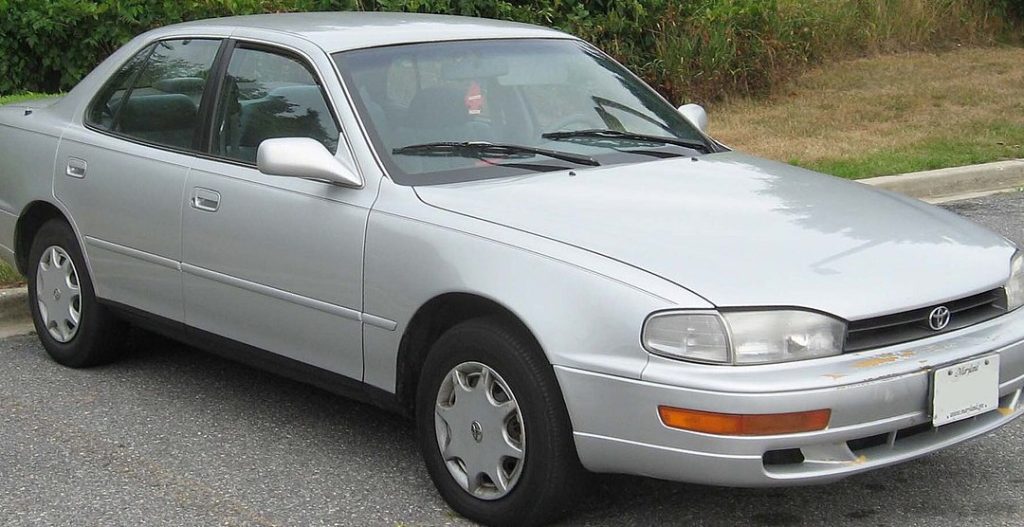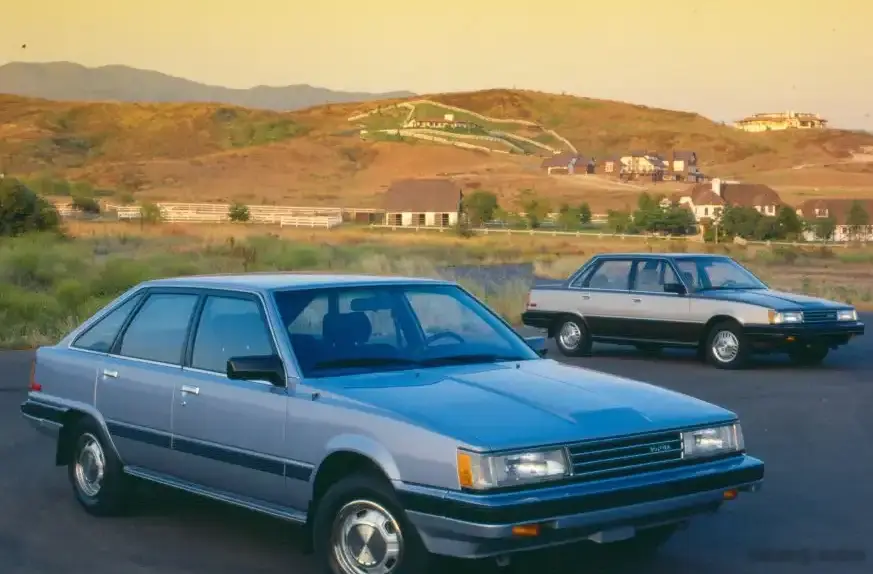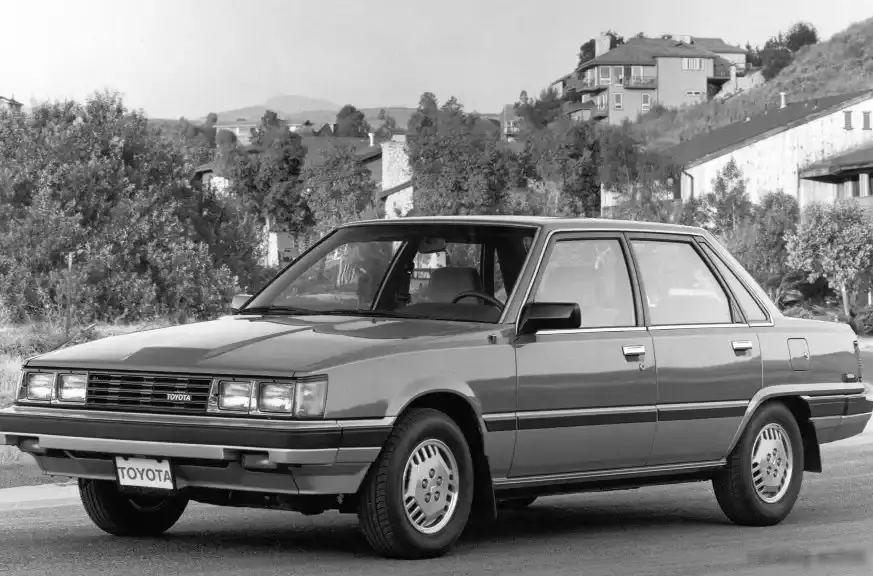
The Toyota Camry I (V10) 2.0 LE Automatic, produced between 1986 and 1988, represented a key entry point into the burgeoning mid-size sedan market for Toyota in North America and other global markets. Part of the first generation Camry (V10 chassis), this variant offered a balance of affordability, comfort, and Toyota’s reputation for reliability. It was positioned as a step up from more basic trims, offering an automatic transmission and a slightly larger engine than the base models. The V10 Camry was a significant departure from the Corolla, aiming to provide a more spacious and refined experience, and it played a crucial role in establishing the Camry as a major player in the family sedan segment.
Technical Specifications
| Brand | Toyota |
| Model | Camry |
| Generation | Camry I (V10) |
| Type | 2.0 LE (92 Hp) Automatic |
| Start of production | 1986 |
| End of production | 1988 |
| Powertrain Architecture | Internal Combustion engine |
| Body type | Sedan |
| Seats | 5 |
| Doors | 4 |
| Fuel consumption (urban) | 7.1 l/100 km (33.1 US mpg, 39.8 UK mpg, 14.1 km/l) |
| Fuel consumption (extra urban) | 5.4 l/100 km (43.6 US mpg, 52.3 UK mpg, 18.5 km/l) |
| Fuel consumption (combined) | 6.5 l/100 km (36.2 US mpg, 43.5 UK mpg, 15.4 km/l) |
| Fuel Type | Petrol (Gasoline) |
| Weight-to-power ratio | 12.9 kg/Hp, 77.4 Hp/tonne |
| Weight-to-torque ratio | 7.8 kg/Nm, 128.8 Nm/tonne |
| Power | 92 Hp @ 4200 rpm |
| Power per litre | 46.1 Hp/l |
| Torque | 153 Nm @ 2400 rpm (112.85 lb.-ft. @ 2400 rpm) |
| Maximum engine speed | 6000 rpm |
| Engine layout | Front, Transverse |
| Engine Model/Code | 2S-ELC |
| Engine displacement | 1995 cm3 (121.74 cu. in.) |
| Number of cylinders | 4 |
| Engine configuration | Inline |
| Cylinder Bore | 84 mm (3.31 in.) |
| Piston Stroke | 90 mm (3.54 in.) |
| Compression ratio | 8.7:1 |
| Engine aspiration | Naturally aspirated |
| Engine oil capacity | 3.9 l (4.12 US qt | 3.43 UK qt) |
| Coolant capacity | 7 l (7.4 US qt | 6.16 UK qt) |
| Kerb Weight | 1188 kg (2619.09 lbs.) |
| Fuel tank capacity | 52 l (13.74 US gal | 11.44 UK gal) |
| Length | 4460 mm (175.59 in.) |
| Width | 1689 mm (66.5 in.) |
| Height | 1369 mm (53.9 in.) |
| Wheelbase | 2600 mm (102.36 in.) |
| Front track | 1466 mm (57.72 in.) |
| Rear track | 1420 mm (55.91 in.) |
| Ride height (ground clearance) | 140 mm (5.51 in.) |
| Minimum turning circle | 10.6 m (34.78 ft.) |
| Drivetrain Architecture | Front wheel drive, Internal Combustion Engine |
| Number of gears | 4 |
| Gearbox type | Automatic transmission |
| Front suspension | Independent, McPherson with coil spring and anti-roll bar |
| Rear suspension | Independent coil spring |
| Front brakes | Ventilated discs |
| Rear brakes | Drum |
| Steering type | Steering rack and pinion |
| Tires size | 185/70 R13 |
| Wheel rims size | 5.0J x 13 |
Powertrain & Engine Architecture
The 1986-1988 Toyota Camry 2.0 LE Automatic was powered by the 2S-ELC engine, a 1.995-liter (121.74 cubic inches) inline-four cylinder gasoline engine. This engine featured a single overhead camshaft (SOHC) valvetrain and utilized multi-point fuel injection. The 2S-ELC was known for its relatively smooth operation and decent fuel economy for its time. The engine produced 92 horsepower at 4,200 rpm and 153 Nm (113 lb-ft) of torque at 2,400 rpm. The automatic transmission was a four-speed unit, designed to provide comfortable and convenient shifting. While not a performance-oriented transmission, it was well-suited to the engine’s characteristics and the intended use of the vehicle.
Driving Characteristics
The Camry 2.0 LE Automatic offered a comfortable, if not particularly sporty, driving experience. The automatic transmission, while smooth, did detract from the engine’s available power. Acceleration was adequate for everyday driving, but passing maneuvers required planning. Compared to the five-speed manual transmission available on other Camry trims, the automatic version felt noticeably slower. The gear ratios were optimized for fuel efficiency and smooth cruising rather than quick acceleration. The suspension provided a comfortable ride, absorbing bumps and imperfections in the road well, but it wasn’t particularly engaging for enthusiastic drivers.
Equipment & Trim Levels
The 2.0 LE trim level represented a mid-range offering in the Camry lineup. Standard features typically included cloth upholstery, a basic AM/FM radio, and power steering. Air conditioning was often included, and optional extras could include upgraded sound systems, power windows, and power locks. The interior was designed with practicality and comfort in mind, offering a spacious cabin for passengers. The LE trim generally featured a more refined interior finish compared to the base models, with slightly better materials and detailing.
Chassis & Braking
The Camry I (V10) utilized a front-engine, front-wheel-drive layout. The front suspension consisted of independent McPherson struts with coil springs and an anti-roll bar, while the rear suspension employed an independent coil spring setup. Braking duties were handled by ventilated discs at the front and drum brakes at the rear. This configuration was typical for vehicles in this class during the 1980s. The braking system provided adequate stopping power for normal driving conditions, but it lacked the sophistication of more modern braking systems.
Market Reception & Comparison
The Camry 2.0 LE Automatic was generally well-received by critics and consumers alike. It was praised for its reliability, comfortable ride, and spacious interior. However, some reviewers noted that the automatic transmission diminished the engine’s performance. Compared to the more powerful Camry models equipped with the 2.0-liter 3S-FE engine, the 2S-ELC offered less exhilarating performance. The 1.6-liter base models were more affordable but offered even less power. Fuel economy was a strong point for the 2.0 LE Automatic, making it an attractive option for drivers seeking a balance of efficiency and practicality.
Legacy
The Toyota Camry I (V10) 2.0 LE Automatic, while not a standout performer, played a significant role in establishing the Camry’s reputation for reliability and value. The 2S-ELC engine, while not known for being particularly exciting, proved to be durable and long-lasting. Today, these Camrys are relatively rare sights on the road, but those that remain are often well-maintained and appreciated by enthusiasts for their simplicity and dependability. The automatic transmission, while not the most efficient, has proven to be reasonably reliable over the long term. The V10 Camry laid the foundation for the Camry’s continued success as one of the best-selling mid-size sedans in the United States and around the world.