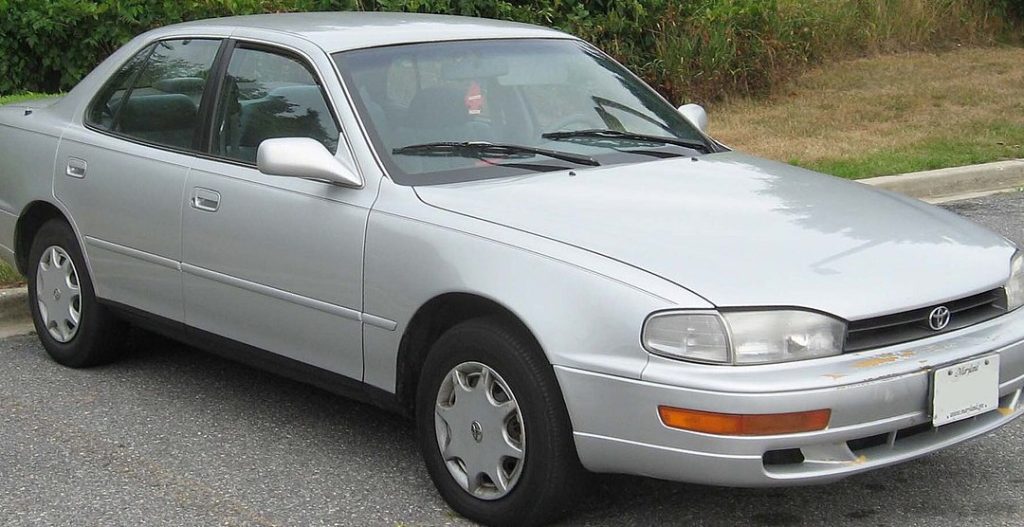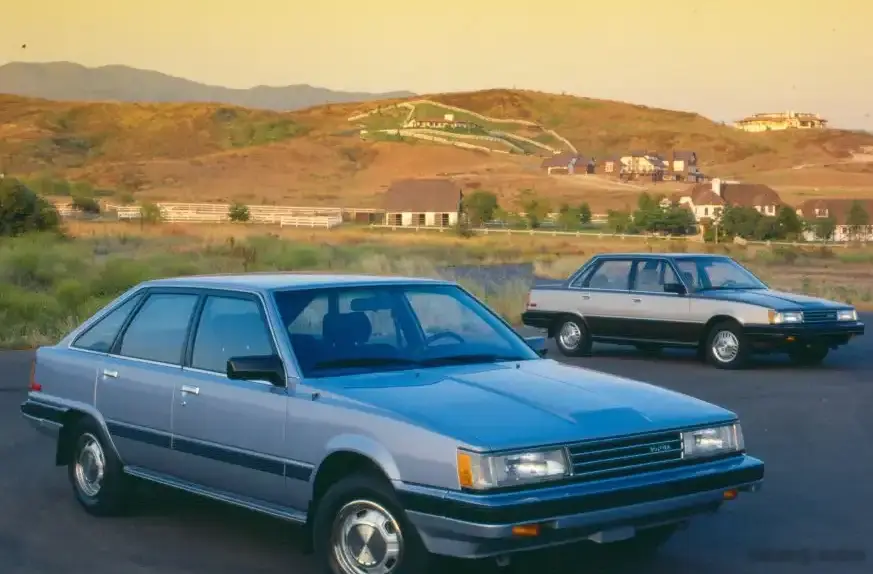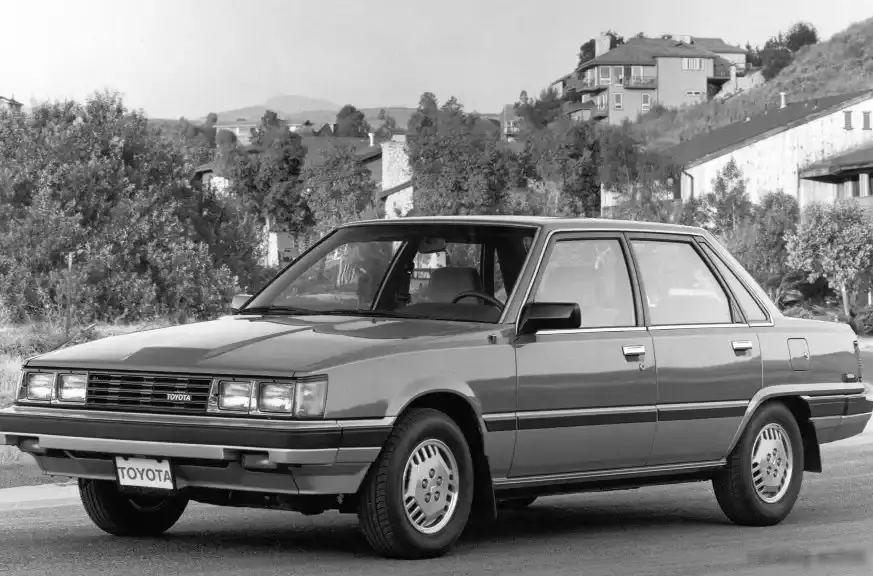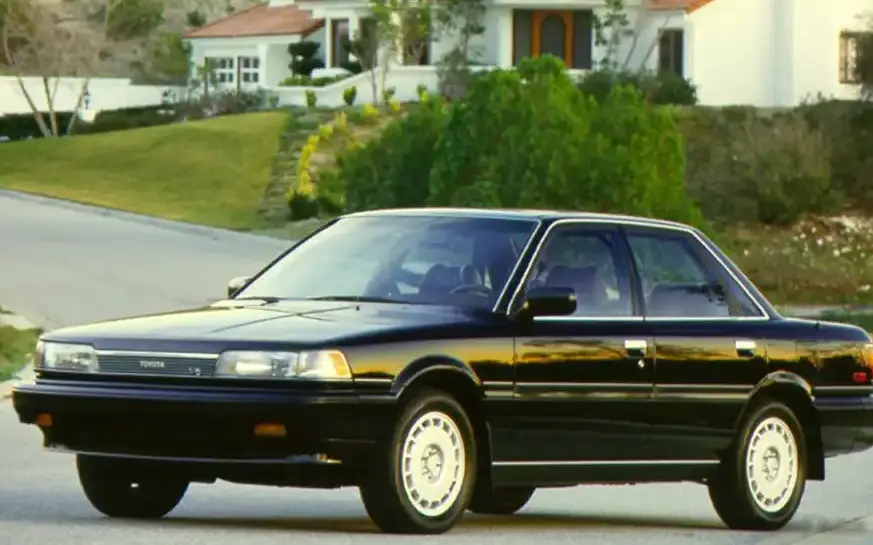
The Toyota Camry II, designated as the V20 series, was produced from 1988 to 1991. This generation represented a significant evolution of Toyota’s popular mid-size sedan, building upon the success of the first-generation Camry. The 1.8-liter (90 hp) variant, equipped with an automatic transmission, occupied the entry-level position within the V20 lineup, offering a balance of affordability and Toyota’s renowned reliability. It was primarily marketed towards buyers seeking a comfortable and economical daily driver, particularly in markets where larger engines were less common or subject to higher taxation.
Technical Specifications
| Brand | Toyota |
| Model | Camry |
| Generation | Camry II (V20) |
| Type (Engine) | 1.8 (90 Hp) |
| Start of production | 1988 |
| End of production | 1991 |
| Powertrain Architecture | Internal Combustion engine |
| Body type | Sedan |
| Seats | 5 |
| Doors | 4 |
| Fuel consumption (combined) | 8 l/100 km (29.4 US mpg, 35.3 UK mpg, 12.5 km/l) |
| Fuel Type | Petrol (Gasoline) |
| Acceleration 0 – 100 km/h | 12 sec |
| Acceleration 0 – 62 mph | 12 sec |
| Acceleration 0 – 60 mph | 11.4 sec |
| Maximum speed | 170 km/h (105.63 mph) |
| Weight-to-power ratio | 12.5 kg/Hp, 80.1 Hp/tonne |
| Weight-to-torque ratio | 8 kg/Nm, 125.4 Nm/tonne |
| Power | 90 Hp @ 5200 rpm |
| Power per litre | 49.1 Hp/l |
| Torque | 141 Nm @ 3400 rpm (104 lb.-ft. @ 3400 rpm) |
| Engine layout | Front, Transverse |
| Engine Model/Code | 1S-i |
| Engine displacement | 1832 cm3 (111.8 cu. in.) |
| Number of cylinders | 4 |
| Engine configuration | Inline |
| Cylinder Bore | 80.5 mm (3.17 in.) |
| Piston Stroke | 89.9 mm (3.54 in.) |
| Compression ratio | 9.1:1 |
| Number of valves per cylinder | 2 |
| Fuel injection system | Carburettor |
| Engine aspiration | Naturally aspirated engine |
| Valvetrain | SOHC |
| Engine oil capacity | 4 l (4.23 US qt | 3.52 UK qt) |
| Coolant | 7 l (7.4 US qt | 6.16 UK qt) |
| Kerb Weight | 1124 kg (2478 lbs.) |
| Trunk (boot) space – maximum | 505 l (17.83 cu. ft.) |
| Fuel tank capacity | 60 l (15.85 US gal | 13.2 UK gal) |
| Length | 4520 mm (177.95 in.) |
| Width | 1710 mm (67.32 in.) |
| Height | 1400 mm (55.12 in.) |
| Wheelbase | 2600 mm (102.36 in.) |
| Front track | 1475 mm (58.07 in.) |
| Rear (Back) track | 1445 mm (56.89 in.) |
| Drag coefficient (Cd) | 0.35 |
| Minimum turning circle | 10.6 m (34.78 ft.) |
| Drivetrain Architecture | The Internal combustion engine (ICE) drives the front wheels of the vehicle. |
| Drive wheel | Front wheel drive |
| Number of gears and type of gearbox | 5 gears, manual transmission |
| Front suspension | Independent, type McPherson with coil spring and anti-roll bar |
| Rear suspension | Torsion |
| Front brakes | Ventilated discs |
| Rear brakes | Drum |
| Tires size | 175/70 R14 |
| Wheel rims size | 14 |
Introduction
The V20 Camry represented a move upmarket for Toyota, offering increased refinement and a more spacious interior compared to its predecessor. The 1.8-liter engine and automatic transmission combination was specifically targeted at buyers prioritizing ease of use and fuel efficiency over outright performance. This variant was a common sight in urban environments and served as a practical and dependable family vehicle. It was sold alongside more powerful 2.0-liter and 2.2-liter engine options, as well as manual transmission variants.
Powertrain & Engine Architecture
The 1.8-liter 1S-i engine was a naturally aspirated, inline-four cylinder unit. It featured a single overhead camshaft (SOHC) valvetrain with two valves per cylinder. Unlike later Toyota engines, the 1S-i utilized a carburetor for fuel delivery, a cost-saving measure for the entry-level model. This carburetor system, while simpler, resulted in slightly lower fuel economy and emissions compared to fuel injection systems. The engine produced 90 horsepower at 5200 rpm and 141 Nm (104 lb-ft) of torque at 3400 rpm. The automatic transmission was typically a four-speed unit, designed for smooth and comfortable shifting. The transmission’s gear ratios were optimized for fuel economy and relaxed cruising, rather than aggressive acceleration.
Driving Characteristics
The 1.8-liter automatic Camry offered a comfortable, but not particularly sporty, driving experience. Acceleration was adequate for everyday driving, with a 0-60 mph time of around 11.4 seconds. The automatic transmission provided smooth gear changes, but could feel somewhat sluggish when attempting quick overtaking maneuvers. Compared to the manual transmission versions or the higher-output 2.0-liter engine, the 1.8L automatic lacked a sense of urgency. However, its relaxed power delivery and comfortable ride made it well-suited for city driving and long highway journeys. The focus was on providing a stress-free driving experience.
Equipment & Trim Levels
The 1.8-liter Camry typically came with a fairly basic level of equipment, reflecting its position as the entry-level model. Standard features generally included cloth upholstery, a basic AM/FM radio, and manual windows and door locks. Air conditioning was often an optional extra. Higher trim levels, available with the larger engines, offered features such as power windows, power locks, upgraded audio systems, and alloy wheels. The interior design was functional and straightforward, prioritizing practicality over luxury.
Chassis & Braking
The V20 Camry utilized a front-engine, front-wheel-drive layout. The front suspension employed an independent McPherson strut design with coil springs and an anti-roll bar, providing a comfortable ride and reasonable handling. The rear suspension featured a torsion beam setup, which was a cost-effective solution for maintaining ride quality. Braking duties were handled by ventilated discs at the front and drum brakes at the rear. The braking system was adequate for normal driving conditions, but lacked the stopping power of more advanced systems found on higher-end vehicles.
Market Reception & Comparison
The 1.8-liter Camry automatic was generally well-received by consumers seeking a reliable and affordable mid-size sedan. Critics praised its comfortable ride, spacious interior, and Toyota’s reputation for durability. However, some reviewers noted its lack of performance compared to competitors and the more powerful Camry variants. Compared to the 2.0-liter Camry, the 1.8L offered better fuel economy but significantly less power. The 2.2-liter engine provided a noticeable performance boost, but at the expense of fuel efficiency. The 1.8L automatic appealed to a different segment of the market – those prioritizing economy and ease of use over driving excitement.
Legacy
The 1.8-liter 1S-i engine, while not known for its high performance, proved to be remarkably durable and reliable. Many examples of the V20 Camry with this powertrain are still on the road today, a testament to Toyota’s engineering quality. The carburetor system, while outdated by modern standards, is relatively simple to maintain. In the used car market, these Camrys are often sought after by buyers looking for an affordable and dependable vehicle. While not a collector’s item, the 1.8-liter Camry holds a significant place in Toyota’s history as a practical and popular family car.