
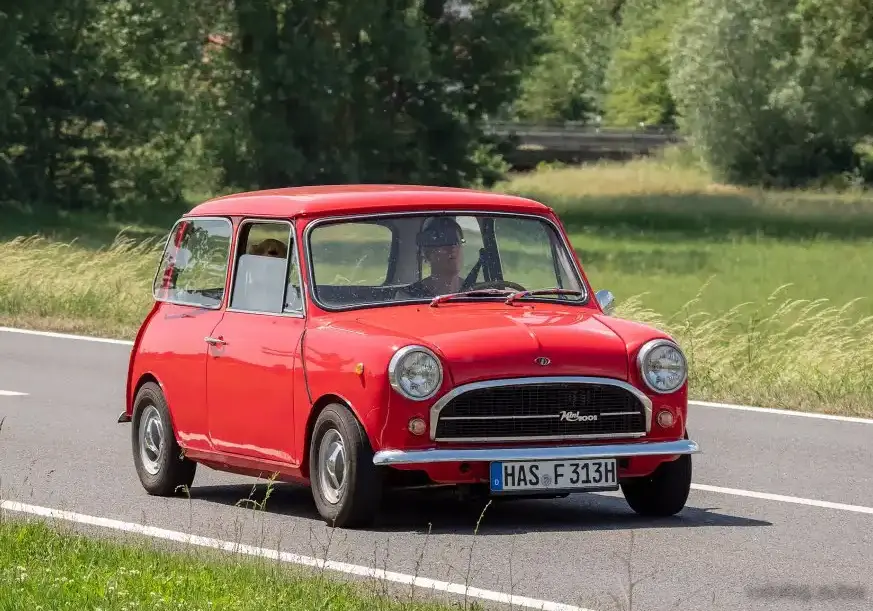
The Innocenti Mini 1.0, produced between 1974 and 1982, represents a significant chapter in the story of the original British Mini, adapted and manufactured under license by the Italian firm Innocenti. This variant, powered by a 998cc engine producing 48 horsepower, occupied a crucial position in the Innocenti Mini lineup, offering a more accessible and economical option compared to the higher-performance Cooper models. It was aimed at buyers prioritizing fuel efficiency and affordability within the compact car segment of the European market. The Innocenti Mini, in general, sought to improve upon the original British design with enhanced build quality and Italian styling cues, and the 1.0-liter model was a key component of that strategy.
Technical Specifications
| Brand | Innocenti |
| Model | Mini |
| Generation | Mini |
| Type (Engine) | 1.0 (48 Hp) |
| Start of Production | 1974 |
| End of Production | 1982 |
| Powertrain Architecture | Internal Combustion Engine |
| Body Type | Hatchback |
| Fuel Type | Petrol (Gasoline) |
| Power | 48 Hp |
| Engine Aspiration | Naturally Aspirated |
Powertrain & Engine Architecture
The Innocenti Mini 1.0 utilized a 998cc inline-four cylinder engine, a derivative of the original BMC A-Series engine. While retaining the fundamental design, Innocenti made subtle improvements to enhance reliability and refinement. The engine featured a cast iron block and cylinder head, with a single overhead valve (OHV) valvetrain. Fuel delivery was managed by a single SU carburetor, a common setup for the time, providing adequate but not particularly sophisticated fuel atomization. The 48 horsepower output was achieved at approximately 6,000 rpm, with peak torque of around 68 lb-ft at 4,000 rpm. The engine’s relatively low compression ratio (typically around 8.8:1) allowed it to run on lower octane fuel, a consideration for the European market. The transmission was a four-speed manual gearbox, known for its light and precise shift action, although an automatic transmission was offered as an option, albeit less common. The automatic, a three-speed unit, further emphasized the 1.0’s focus on ease of driving rather than outright performance.
Driving Characteristics
The Innocenti Mini 1.0 offered a distinctly different driving experience compared to the more potent Cooper variants. With only 48 horsepower propelling its relatively lightweight body, acceleration was modest. Zero to sixty mph times were in the region of 18-20 seconds, making it unsuitable for drivers seeking spirited performance. However, the Mini’s nimble handling and responsive steering remained intact. The 1.0-liter engine provided sufficient power for urban driving and navigating winding country roads, but overtaking required careful planning. The four-speed manual gearbox allowed drivers to keep the engine in its optimal power band, while the optional automatic transmission prioritized convenience over performance, resulting in a smoother, albeit slower, driving experience. The gear ratios were geared towards maximizing fuel economy, contributing to the model’s appeal as an economical runabout. Compared to the Cooper, the 1.0 felt noticeably less eager to rev, and its top speed was limited to around 85-90 mph.
Equipment & Trim Levels
The Innocenti Mini 1.0 was typically equipped with a relatively basic level of trim, reflecting its position as the entry-level model. Standard features included cloth upholstery, vinyl floor coverings, and a simple dashboard layout. The instrumentation consisted of a speedometer, fuel gauge, and temperature gauge. Exterior features included chrome bumpers, steel wheels with hubcaps, and relatively small tires. Optional extras included a sunroof, upgraded upholstery, and a more comprehensive instrument panel. Innocenti offered a range of exterior colors, allowing buyers to personalize their vehicles. The interior, while functional, was not particularly luxurious, prioritizing practicality and durability. Later models saw some minor improvements in interior trim and equipment levels, but the overall focus remained on affordability.
Chassis & Braking
The Innocenti Mini 1.0 retained the original Mini’s innovative transverse engine layout and front-wheel-drive configuration. The suspension utilized a rubber suspension system, consisting of subframes connected to the body via rubber cones. This system provided a remarkably comfortable ride, absorbing bumps and imperfections in the road surface effectively. However, it also resulted in a somewhat vague and imprecise handling feel, particularly at higher speeds. The braking system consisted of drum brakes on all four wheels, which were adequate for the car’s weight and performance. Later models sometimes featured front disc brakes as an upgrade. The steering was unassisted, providing a direct and responsive feel, a hallmark of the original Mini design. Stabilizer bars were not typically fitted to the 1.0-liter model, further contributing to its softer suspension setup.
Market Reception & Comparison
The Innocenti Mini 1.0 was generally well-received by critics and buyers alike, particularly those seeking an affordable and economical city car. It was praised for its nimble handling, comfortable ride, and fuel efficiency. However, its modest performance was often cited as a drawback, especially when compared to the Cooper models. Fuel economy was a key selling point, with the 1.0-liter engine achieving around 45-50 mpg in typical driving conditions. Compared to other small cars of the era, such as the Fiat 127 and Renault 5, the Mini 1.0 offered a unique driving experience and a distinctive design. Reliability was generally good, although the rubber suspension system required periodic maintenance. The automatic transmission, while convenient, was often criticized for its sluggish performance and reduced fuel economy.
Legacy
The Innocenti Mini 1.0 remains a popular classic car today, appreciated for its charming design, nimble handling, and historical significance. The 998cc engine is relatively simple to maintain and repair, making it a good choice for enthusiasts. While not as sought-after as the Cooper models, the 1.0-liter variant offers a more affordable entry point into Mini ownership. Parts availability is generally good, although some specific Innocenti-specific components can be difficult to find. The car’s enduring appeal lies in its ability to evoke a sense of fun and nostalgia, reminding drivers of a simpler era of motoring. Well-maintained examples command reasonable prices in the used car market, and the Innocenti Mini 1.0 continues to be a beloved icon of British and Italian automotive history.
