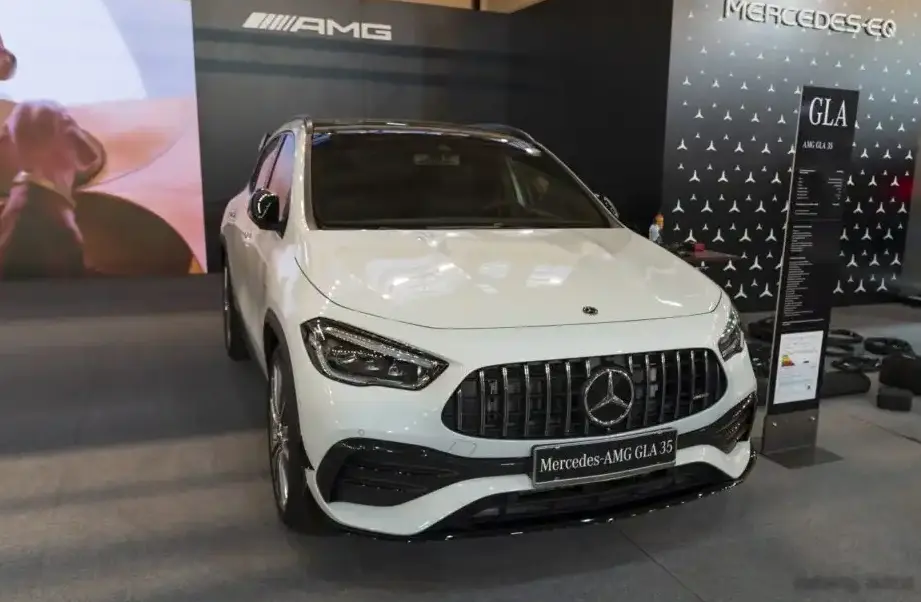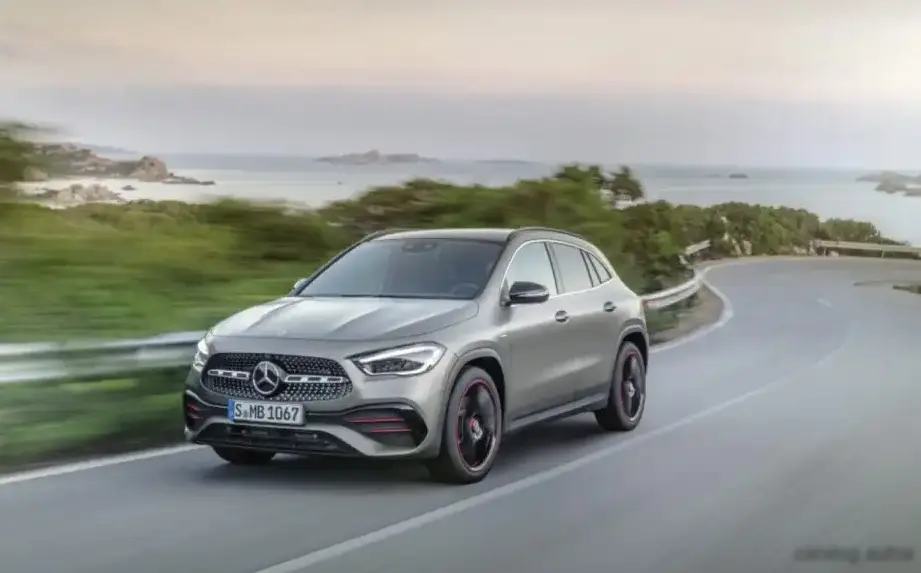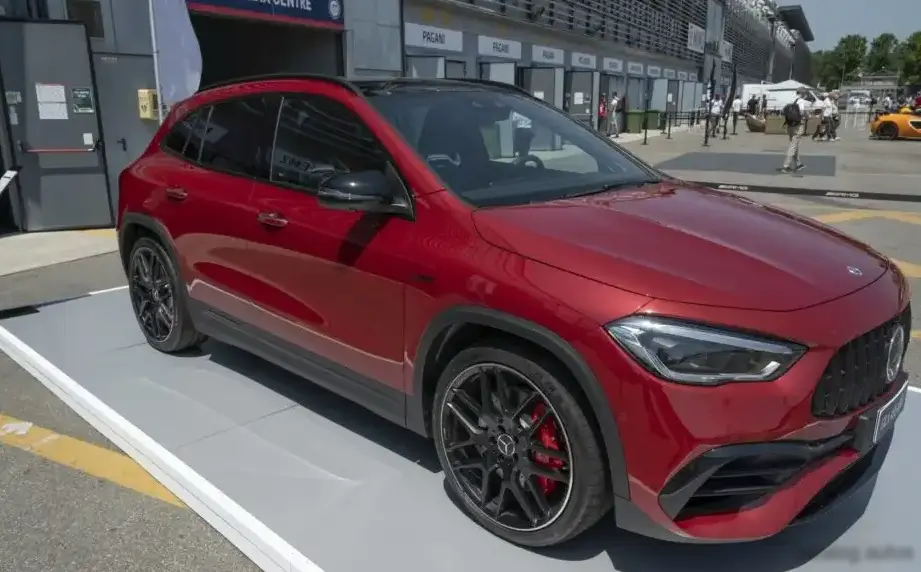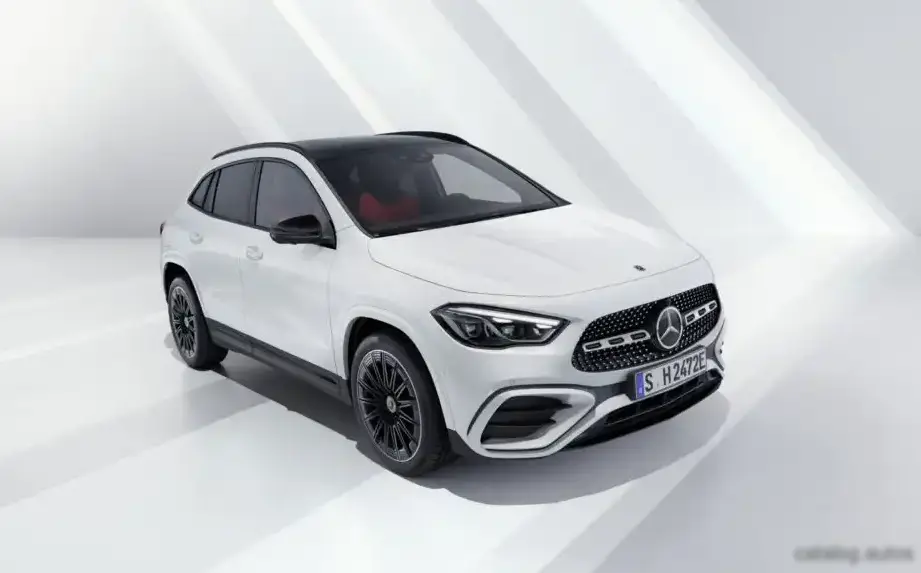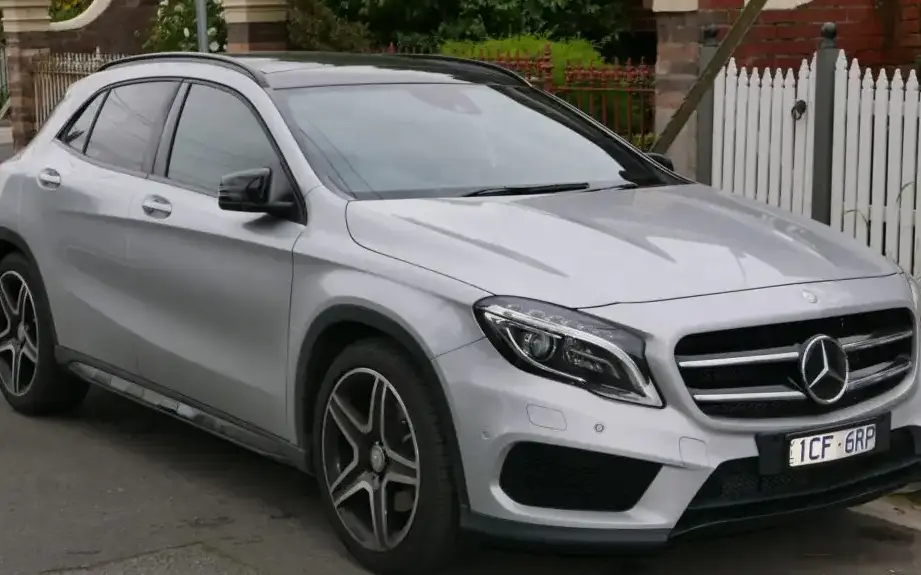
The Mercedes-Benz GLA 200 (156 Hp) 7G-DCT is a compact luxury crossover SUV produced by Mercedes-Benz from December 2013 to 2017 as part of the X156 series. Positioned as an entry-level variant within the GLA range, it aimed to attract buyers seeking a premium SUV experience with reasonable running costs. This model played a significant role in expanding Mercedes-Benz’s presence in the burgeoning compact SUV segment, particularly in European and Asian markets, offering a more accessible price point than its higher-performance siblings like the GLA 250 or GLA 45 AMG. The GLA 200 combined a turbocharged engine with a dual-clutch transmission, offering a balance between efficiency and usability.
Technical Specifications
| Brand | Mercedes-Benz |
| Model | GLA |
| Generation | GLA (X156) |
| Type (Engine) | GLA 200 (156 Hp) 7G-DCT |
| Start of production | December, 2013 |
| End of production | 2017 |
| Powertrain Architecture | Internal Combustion engine |
| Body type | SUV |
| Seats | 5 |
| Doors | 5 |
| Fuel consumption (economy) – urban (NEDC) | 7.3-7.4 l/100 km (32.2 – 31.8 US mpg, 38.7 – 38.2 UK mpg, 13.7 – 13.5 km/l) |
| Fuel consumption (economy) – extra urban (NEDC) | 4.9-5.1 l/100 km (48 – 46.1 US mpg, 57.6 – 55.4 UK mpg, 20.4 – 19.6 km/l) |
| Fuel consumption (economy) – combined (NEDC) | 5.8-5.9 l/100 km (40.6 – 39.9 US mpg, 48.7 – 47.9 UK mpg, 17.2 – 16.9 km/l) |
| CO2 emissions (NEDC) | 135-138 g/km |
| Fuel Type | Petrol (Gasoline) |
| Acceleration 0 – 100 km/h | 8.8 sec |
| Acceleration 0 – 62 mph | 8.8 sec |
| Acceleration 0 – 60 mph | 8.4 sec |
| Maximum speed | 215 km/h (133.59 mph) |
| Emission standard | Euro 6 |
| Weight-to-power ratio | 8.7 kg/Hp, 114.7 Hp/tonne |
| Weight-to-torque ratio | 5.4 kg/Nm, 183.8 Nm/tonne |
| Power | 156 Hp @ 5300 rpm |
| Power per litre | 97.8 Hp/l |
| Torque | 250 Nm @ 1250-4000 rpm (184.39 lb.-ft. @ 1250-4000 rpm) |
| Engine layout | Front, Transverse |
| Engine Model/Code | M 270.910 |
| Engine displacement | 1595 cm3 (97.33 cu. in.) |
| Number of cylinders | 4 |
| Engine configuration | Inline |
| Cylinder Bore | 83 mm (3.27 in.) |
| Piston Stroke | 73.7 mm (2.9 in.) |
| Compression ratio | 10.3:1 |
| Number of valves per cylinder | 4 |
| Fuel injection system | Direct injection |
| Engine aspiration | Turbocharger, Intercooler |
| Valvetrain | DOHC |
| Engine oil capacity | 5.8 l (6.13 US qt | 5.1 UK qt) |
| Kerb Weight | 1360 kg (2998.29 lbs.) |
| Max. weight | 1920 kg (4232.88 lbs.) |
| Max load | 560 kg (1234.59 lbs.) |
| Trunk (boot) space – minimum | 421 l (14.87 cu. ft.) |
| Trunk (boot) space – maximum | 1235 l (43.61 cu. ft.) |
| Fuel tank capacity | 50 l (13.21 US gal | 11 UK gal) |
| Max. roof load | 75 kg (165.35 lbs.) |
| Permitted trailer load with brakes (12%) | 1400 kg (3086.47 lbs.) |
| Permitted trailer load without brakes | 715 kg (1576.31 lbs.) |
| Permitted towbar download | 75 kg (165.35 lbs.) |
| Length | 4417 mm (173.9 in.) |
| Width | 1804 mm (71.02 in.) |
| Width including mirrors | 2022 mm (79.61 in.) |
| Height | 1494 mm (58.82 in.) |
| Wheelbase | 2699 mm (106.26 in.) |
| Front track | 1569 mm (61.77 in.) |
| Rear (Back) track | 1560 mm (61.42 in.) |
| Front overhang | 906 mm (35.67 in.) |
| Rear overhang | 812 mm (31.97 in.) |
| Drag coefficient (Cd) | 0.31 |
| Minimum turning circle (turning diameter) | 11.84 m (38.85 ft.) |
| Approach angle | 15.8° |
| Departure angle | 21.5° |
| Drivetrain Architecture | The Internal combustion engine (ICE) drives the front wheels of the vehicle. |
| Drive wheel | Front wheel drive |
| Number of gears and type of gearbox | 7 gears, automatic transmission G-DCT |
| Front suspension | Independent, type McPherson with coil spring and anti-roll bar |
| Rear suspension | Wishbone, Transverse stabilizer, Trailing arm |
| Front brakes | Ventilated discs |
| Rear brakes | Disc |
| Assisting systems | ABS (Anti-lock braking system) |
| Steering type | Steering rack and pinion |
| Power steering | Electric Steering |
| Tires size | 215/60 R17; 215/55 R18; 235/50 R18; 235/45 R19 |
| Wheel rims size | 6.5J x 17; 6.5J x 18; 7J x 18; 8J x 19 |
Powertrain & Engine Architecture
The GLA 200 is powered by the M 270.910 1.6-liter inline-four cylinder gasoline engine. This engine is part of Mercedes-Benz’s modular engine family, known for its compact design and efficiency. It features direct fuel injection and a single turbocharger with an intercooler, producing 156 horsepower at 5300 rpm and 250 Nm (184 lb-ft) of torque between 1250 and 4000 rpm. The engine utilizes a double overhead camshaft (DOHC) valvetrain with four valves per cylinder. The engine is transversely mounted in the front of the vehicle. The 7G-DCT (7-speed dual-clutch transmission) is a key component of this powertrain. This transmission offers quick and smooth gear changes, contributing to both performance and fuel economy. The 7G-DCT operates with a wet clutch pack and features a compact design, further enhancing the vehicle’s efficiency.
Driving Characteristics
The GLA 200 7G-DCT delivers a comfortable and refined driving experience. While not particularly sporty, the engine provides adequate power for everyday driving situations. Acceleration from 0 to 100 km/h (0-62 mph) takes approximately 8.8 seconds. The 7G-DCT transmission contributes to seamless gear changes, minimizing disruptions in power delivery. Compared to the more powerful GLA 250, the 200 offers a more relaxed driving experience, prioritizing fuel efficiency and comfort over outright performance. The gear ratios are tuned for efficiency, with a relatively tall final drive. This results in good fuel economy but can feel slightly sluggish during quick overtaking maneuvers. The front-wheel-drive configuration provides predictable handling, although it lacks the all-wheel-drive stability of other GLA models.
Equipment & Trim Levels
The GLA 200 typically came standard with features such as automatic climate control, a multi-function steering wheel, and a basic infotainment system with a central display screen. Interior upholstery was generally cloth, with leather options available as an upgrade. Common optional extras included a panoramic sunroof, navigation system, upgraded sound system, and various driver assistance features like parking sensors and collision prevention assist. Trim levels varied slightly depending on the market, but generally offered packages that bundled together popular options. The standard dashboard configuration featured a relatively minimalist design, typical of Mercedes-Benz interiors of the period.
Chassis & Braking
The GLA 200 utilizes an independent McPherson strut suspension at the front and a multi-link suspension at the rear, providing a comfortable ride quality. A stabilizer bar is included on both axles to reduce body roll during cornering. The braking system consists of ventilated discs at the front and solid discs at the rear. Anti-lock braking system (ABS) is standard. The suspension tuning is geared towards comfort, prioritizing ride quality over sporty handling. The relatively lightweight nature of the GLA 200, at around 1360 kg (2998 lbs), helps to mitigate the effects of the modest engine output.
Market Reception & Comparison
The GLA 200 was generally well-received by automotive critics as an accessible entry point into the Mercedes-Benz SUV lineup. It was praised for its fuel efficiency, comfortable ride, and well-appointed interior. However, some reviewers noted that the engine could feel underpowered, particularly when fully loaded or driving uphill. Compared to the GLA 250, the 200 offered significantly lower running costs but sacrificed performance. The 1.8L engine was considered reliable, but regular maintenance was crucial to ensure longevity. Fuel economy figures of around 5.8-5.9 l/100 km (40.6-39.9 US mpg) were competitive within its class.
Legacy
The GLA 200 (156 Hp) 7G-DCT has proven to be a relatively reliable vehicle in the used car market. The M 270 engine, while not without its potential issues (such as occasional oil consumption), is generally considered durable when properly maintained. The 7G-DCT transmission is also known for its robustness. Today, these vehicles represent a relatively affordable way to enter the Mercedes-Benz ownership experience. Common maintenance items include regular oil changes, coolant flushes, and inspection of the turbocharger and fuel injection system. The GLA 200 remains a popular choice for buyers seeking a compact luxury SUV with a good balance of comfort, efficiency, and brand prestige.