
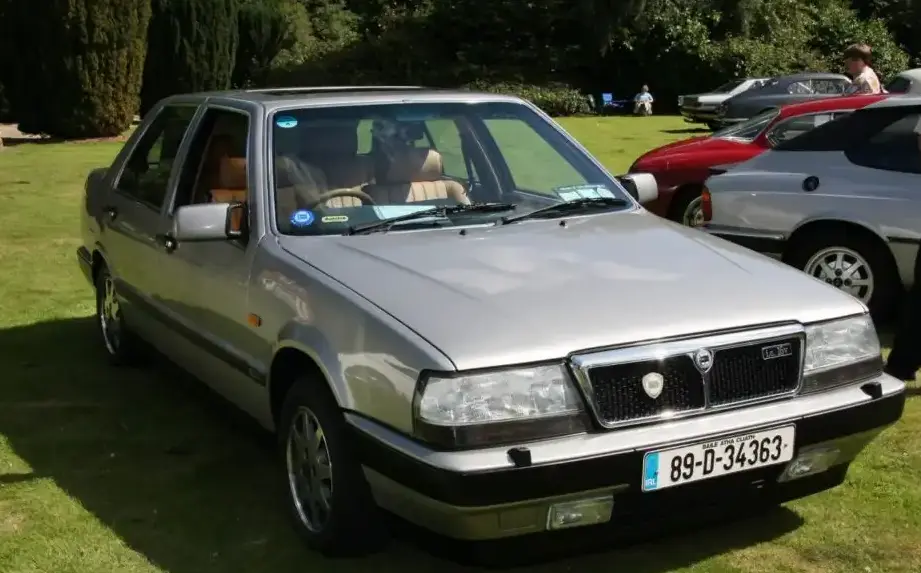
The Lancia Thema 8.34 2000 i.e. Turbo, produced between 1986 and 1990, represented a significant advancement for the Italian automaker, successfully merging luxury, performance, and cutting-edge technology within the executive sedan segment. This variant occupied a mid-range position within the Thema lineup, providing a compelling alternative to the base models and the flagship 2.0L 8V. It was a crucial component of the 834 series, designed to revitalize Lancia’s image and compete with established German rivals such as the BMW 5 Series and Mercedes-Benz E-Class. The Thema, penned by Giorgetto Giugiaro, marked a departure from previous Lancia designs, embracing a more contemporary and aerodynamic aesthetic.
Technical Specifications
| Brand | Lancia |
| Model | Thema |
| Generation | Thema (834) |
| Type (Engine) | 2000 i.e. Turbo (150 Hp) |
| Start of production | 1986 |
| End of production | 1990 |
| Powertrain Architecture | Internal Combustion engine |
| Body type | Sedan |
| Fuel Type | Petrol (Gasoline) |
| Power | 150 Hp |
| Engine Model/Code | 834 C.146 |
| Engine aspiration | Turbocharger |
| Engine oil capacity | 5.5 l (5.81 US qt | 4.84 UK qt) |
| Coolant capacity | 8 l (8.45 US qt | 7.04 UK qt) |
Powertrain & Engine Architecture
The core of the Thema 2000 i.e. Turbo was the 834 C.146 engine, a 1995cc inline-four cylinder powerplant. This engine was a substantial evolution of Lancia’s existing 2.0-liter engine, incorporating Bosch Motronic fuel injection and, importantly, a Garrett T25 turbocharger with an intercooler. The turbocharger increased power output to 150 horsepower, a considerable gain over the naturally aspirated versions. The engine employed a single overhead camshaft (SOHC) valvetrain with two valves per cylinder. The Motronic system meticulously managed fuel delivery and ignition timing, optimizing both performance and efficiency. The engine’s design prioritized smooth power delivery and responsiveness, rather than maximizing peak power figures. The Thema 2000 i.e. Turbo was typically paired with a four-speed automatic transmission, although a five-speed manual transmission was also offered, though less frequently chosen. The automatic transmission was engineered for comfortable cruising and ease of operation, aligning with the vehicle’s luxury focus.
Driving Characteristics
The 2000 i.e. Turbo delivered a noticeably more engaging driving experience compared to the base-model Thema. The turbocharger provided a surge of power in the mid-range, facilitating effortless overtaking. While not a dedicated sports sedan, the Thema Turbo offered respectable acceleration and a comfortable highway cruising speed. The automatic transmission, while smooth, wasn’t particularly swift in its shifts and could occasionally feel hesitant during more spirited driving. In comparison to the manual transmission variant, the automatic sacrificed some responsiveness but gained in everyday usability. The suspension, tuned for comfort, effectively absorbed road imperfections, providing a refined ride quality. The steering was light and precise, making the car easy to maneuver in urban settings. The turbocharger did introduce a degree of turbo lag, but it was generally well-managed by the Motronic engine management system.
Equipment & Trim Levels
The Thema 2000 i.e. Turbo generally came well-equipped, reflecting its position as a premium offering. Standard features included central locking, electric windows, power steering, and an adjustable steering column. The interior was typically finished with velour upholstery, although leather was available as an optional upgrade. The dashboard featured a comprehensive instrument cluster with gauges for engine temperature, fuel level, and oil pressure. Optional extras included a sunroof, air conditioning, and a high-fidelity stereo system. The Thema also boasted a sophisticated heating and ventilation system. The trim level generally positioned itself between the base Thema and the more luxurious Thema LX, offering a balanced combination of features and price. The exterior styling was relatively understated, with subtle badging indicating the turbocharger.
Chassis & Braking
The Thema 834 utilized a front-engine, front-wheel-drive layout. The suspension consisted of independent front suspension with MacPherson struts and a semi-independent torsion beam rear suspension. This configuration provided a good balance between ride comfort and handling. The braking system featured disc brakes on all four wheels, providing ample stopping power. An anti-lock braking system (ABS) was available as an option, enhancing safety and control, particularly in challenging weather conditions. The Thema’s chassis was relatively lightweight, contributing to its agile handling characteristics. Stabilizer bars were fitted to both the front and rear axles to minimize body roll during cornering. The tires were typically 195/60 R15, offering a good compromise between grip and comfort.
Market Reception & Comparison
The Lancia Thema 2000 i.e. Turbo was generally well-received by automotive critics. It was lauded for its comfortable ride, refined interior, and strong performance. However, some critics pointed out the automatic transmission’s lack of responsiveness and the occasional turbo lag. Compared to the naturally aspirated Thema models, the Turbo offered a significant performance boost, but at a higher price point. When compared to its German competitors, the Thema offered a unique blend of Italian style and engineering, but lacked the brand prestige associated with BMW or Mercedes-Benz. Fuel economy was reasonable for a turbocharged engine of that era, averaging around 22-26 miles per gallon in mixed driving. Reliability was generally good, although the turbocharger and fuel injection system required regular maintenance. The Thema Turbo appealed to buyers seeking a comfortable and stylish executive sedan with an added element of performance.
Legacy
The Lancia Thema 2000 i.e. Turbo remains a desirable classic car among enthusiasts. The 834 C.146 engine, while possessing certain quirks, is generally considered a robust and reliable unit when properly maintained. Parts availability can be challenging, but a dedicated network of Lancia specialists and online forums exists to support owners. The Thema Turbo’s unique combination of Italian styling, turbocharged performance, and comfortable ride continues to attract collectors and enthusiasts today. The car represents a high point in Lancia’s engineering and design history, and a testament to the brand’s commitment to innovation and luxury. Well-preserved examples command a premium in the used car market, reflecting their rarity and desirability. The Thema 2000 i.e. Turbo serves as a reminder of a time when Lancia was a prominent force in the global automotive industry.
