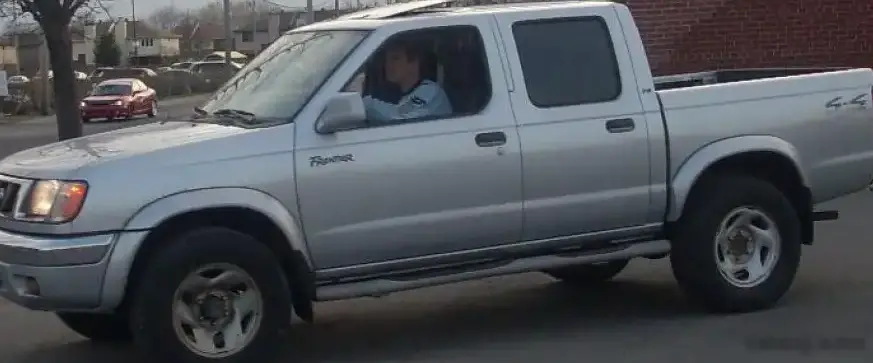
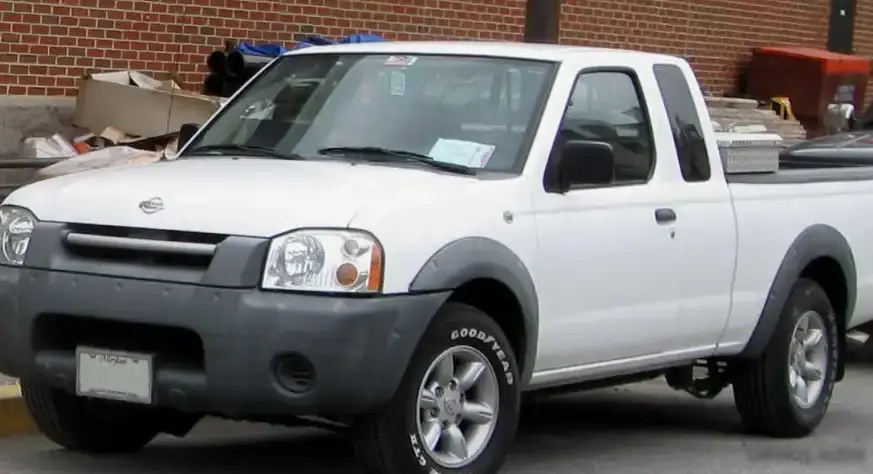
The Nissan Frontier II King Cab, specifically the facelifted version introduced in 2009 and continuing through the 2020 model year, represented a significant update to Nissan’s mid-size pickup truck offering. This iteration, designated the D40 chassis code, was primarily aimed at the North American market, though it also saw sales in other regions. The 4.0-liter V6 engine paired with a 5-speed automatic transmission was a popular configuration, positioned as a strong all-around performer balancing capability with everyday usability. This variant occupied a middle ground in the Frontier lineup, offering more power and towing capacity than the base 2.5-liter four-cylinder models, but at a lower price point than the PRO-4X off-road focused trims.
Technical Specifications
| Brand | Nissan |
| Model | Frontier |
| Generation | Frontier II King Cab (D40, facelift 2009) |
| Type (Engine) | 4.0 V6 (261 Hp) Automatic |
| Start of production | 2009 |
| End of production | 2020 |
| Powertrain Architecture | Internal Combustion engine |
| Body type | Pick-up |
| Seats | 4 |
| Doors | 2 |
| Fuel consumption (urban) | 14.7 l/100 km (16 US mpg, 19.2 UK mpg, 6.8 km/l) |
| Fuel consumption (extra urban) | 10.6 l/100 km (22.2 US mpg, 26.6 UK mpg, 9.4 km/l) |
| Fuel Type | Petrol (Gasoline) |
| Weight-to-power ratio | 7.2 kg/Hp, 139 Hp/tonne |
| Weight-to-torque ratio | 4.9 kg/Nm, 202.9 Nm/tonne |
| Power | 261 Hp @ 5600 rpm |
| Power per litre | 66 Hp/l |
| Torque | 381 Nm @ 4000 rpm (281.01 lb.-ft. @ 4000 rpm) |
| Maximum engine speed | 6000 rpm |
| Engine layout | Front, Longitudinal |
| Engine Model/Code | VQ40DE |
| Engine displacement | 3954 cm3 (241.29 cu. in.) |
| Number of cylinders | 6 |
| Engine configuration | V-engine |
| Cylinder Bore | 95.5 mm (3.76 in.) |
| Piston Stroke | 92 mm (3.62 in.) |
| Compression ratio | 9.7:1 |
| Number of valves per cylinder | 4 |
| Fuel injection system | Multi-port manifold injection |
| Engine aspiration | Naturally aspirated engine |
| Valvetrain | DOHC |
| Engine oil capacity | 5.1 l (5.39 US qt | 4.49 UK qt) |
| Coolant capacity | 10.2 l (10.78 US qt | 8.97 UK qt) |
| Kerb Weight | 1878 kg (4140.28 lbs.) |
| Max. weight | 2535 kg (5588.72 lbs.) |
| Max load | 657 kg (1448.44 lbs.) |
| Trunk (boot) space – minimum | 948 l (33.48 cu. ft.) |
| Fuel tank capacity | 80 l (21.13 US gal | 17.6 UK gal) |
| Permitted trailer load with brakes (12%) | 2948 kg (6499.23 lbs.) |
| Permitted towbar download | 295 kg (650.36 lbs.) |
| Length | 5220 mm (205.51 in.) |
| Width | 1850 mm (72.83 in.) |
| Height | 1770 mm (69.69 in.) |
| Wheelbase | 3200 mm (125.98 in.) |
| Front track | 1570 mm (61.81 in.) |
| Rear (Back) track | 1570 mm (61.81 in.) |
| Ride height (ground clearance) | 218 mm (8.58 in.) |
| Minimum turning circle (turning diameter) | 13.2 m (43.31 ft.) |
| Approach angle | 30.5° |
| Departure angle | 22.1° |
| Ramp-over (brakeover) angle | 19.8° |
| Drivetrain Architecture | Rear wheel drive |
| Number of gears and type of gearbox | 5 gears, automatic transmission |
| Front suspension | Double wishbone |
| Rear suspension | Leaf spring |
| Front brakes | Ventilated discs |
| Rear brakes | Ventilated discs |
| Assisting systems | ABS (Anti-lock braking system) |
| Steering type | Steering rack and pinion |
| Tires size | 265/70 R16; 265/75 R16 |
| Wheel rims size | 7.0J x 16 |
Powertrain & Engine Architecture
The heart of this Frontier variant is the VQ40DE 4.0-liter V6 engine. This engine is a naturally aspirated, 60-degree V6, known for its relatively smooth operation and durability. It utilizes a cast iron block with aluminum cylinder heads, and features dual overhead camshafts (DOHC) with four valves per cylinder. The VQ40DE employs multi-port fuel injection, delivering fuel directly into the intake ports. The 5-speed automatic transmission, designated as the RE5R05A, is a conventional hydraulic automatic. It’s known for its reliability, but isn’t particularly fuel-efficient by modern standards. Gear ratios are tuned for a balance of acceleration and highway cruising, with a relatively conservative first gear and a tall overdrive fifth gear.
Driving Characteristics
The 4.0L V6 and 5-speed automatic combination in the Frontier II King Cab delivers adequate, though not exhilarating, performance. Acceleration from 0-60 mph typically takes around 7.5-8.5 seconds, depending on load and conditions. The automatic transmission provides smooth shifts, but can feel somewhat sluggish when downshifting for passing maneuvers. Compared to the available 6-speed manual transmission, the automatic sacrifices some responsiveness. The torque curve is relatively flat, providing usable power across a wide RPM range, making it suitable for towing and hauling. However, the engine does need to be revved to access its peak horsepower. The rear-wheel-drive configuration provides a traditional truck feel, and while capable in moderate off-road situations, it lacks the advanced traction control systems found in the PRO-4X model.
Equipment & Trim Levels
The 4.0L Automatic Frontier King Cab typically came standard with features like air conditioning, power windows and locks, a basic audio system, and steel wheels. Higher trim levels, such as the SE and LE, added features like alloy wheels, a premium audio system, keyless entry, and upgraded interior materials. Optional extras included a sunroof, leather upholstery, and a navigation system. Interior upholstery was typically cloth, with the option of leather on higher trims. The dashboard layout was functional and straightforward, prioritizing usability over aesthetics.
Chassis & Braking
The Frontier II King Cab utilizes a body-on-frame construction, providing a robust and durable platform. The front suspension consists of double wishbones with coil springs and stabilizer bar, while the rear suspension employs leaf springs. This setup provides a comfortable ride for everyday driving, while still offering sufficient load-carrying capacity. Braking duties are handled by ventilated discs on all four wheels, coupled with an Anti-lock Braking System (ABS). The braking system is adequate for the vehicle’s weight and performance, but doesn’t offer the stopping power of more modern trucks.
Market Reception & Comparison
The 4.0L V6 Automatic Frontier was generally well-received by critics as a capable and reliable mid-size pickup. It offered a good balance of power, fuel economy (for its class), and affordability. Compared to the four-cylinder Frontier, the V6 provided a significant performance boost, making it more suitable for towing and hauling. However, its fuel economy was noticeably lower. Compared to competitors like the Toyota Tacoma and Ford Ranger, the Frontier offered a more comfortable ride but lacked some of the advanced features and off-road capability of those models. Reliability was a strong point, with the VQ40DE engine being known for its longevity.
Legacy
The VQ40DE engine paired with the RE5R05A automatic transmission has proven to be a durable and reliable powertrain combination. Used Frontier II King Cab models with this configuration are still relatively common on the market today. While maintenance costs are generally reasonable, potential buyers should be aware of potential issues such as timing chain wear and radiator corrosion. The Frontier II King Cab, particularly the 4.0L V6 Automatic variant, remains a popular choice for those seeking a dependable and affordable mid-size pickup truck.