
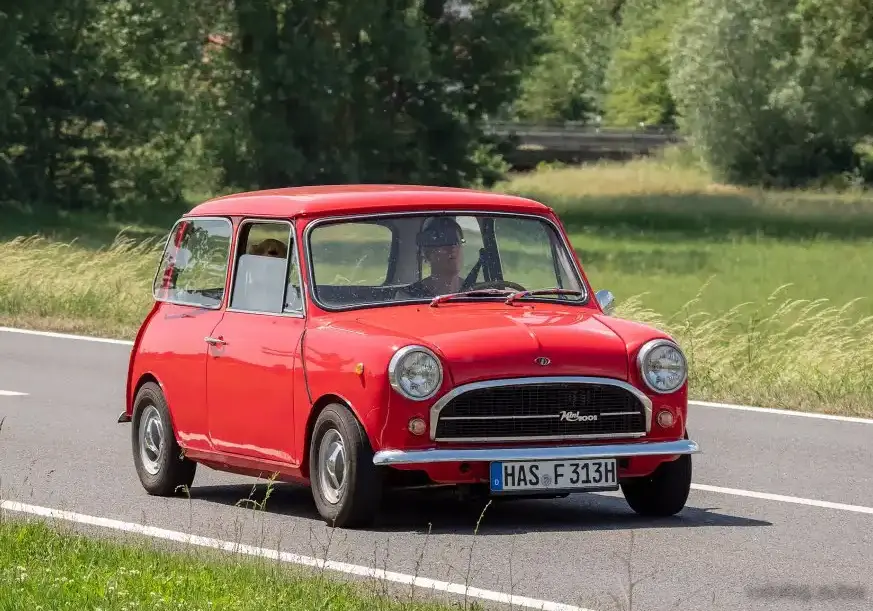
The Innocenti Mini 1.3, produced between 1976 and 1982, represents a significant chapter in the story of the original British Mini, adapted and manufactured under license by the Italian firm Innocenti. This variant, powered by a 1.3-liter engine producing 64 horsepower, occupied a crucial position in the Innocenti Mini lineup, offering a balance between affordability and improved performance compared to the earlier, smaller-displacement models. It was a key offering during a period when Innocenti sought to modernize and refine the classic Mini design for the European market, particularly in Italy where it found a dedicated following. The 1.3-liter engine was a response to growing demand for a more capable Mini, better suited to Italian roads and driving conditions.
Technical Specifications
| Brand | Innocenti |
| Model | Mini |
| Generation | Mini |
| Type (Engine) | 1.3 (64 Hp) |
| Start of Production | 1976 |
| End of Production | 1982 |
| Powertrain Architecture | Internal Combustion Engine |
| Body Type | Hatchback |
| Fuel Type | Petrol (Gasoline) |
| Power | 64 Hp |
| Engine Aspiration | Naturally Aspirated |
Powertrain & Engine Architecture
The heart of the Innocenti Mini 1.3 is its 1275cc inline-four cylinder engine, a significant upgrade from the original 848cc and 998cc units found in earlier Minis. While still retaining the classic Mini engine layout – transverse mounting and a chain-driven single overhead camshaft – the 1.3-liter engine benefited from increased displacement and revised internal components to deliver a noticeable power increase. The engine utilized a single SU carburetor for fuel delivery, a relatively simple system that proved reliable and easy to maintain. The cylinder head featured larger valves and ports, contributing to improved breathing and overall performance. The engine code for this variant is often referenced as 1275A1, though variations existed depending on specific production years and minor revisions.
The Innocenti Mini 1.3 was typically equipped with a four-speed manual gearbox, although a three-speed automatic transmission was offered as an option. The automatic transmission, while providing convenience, did impact acceleration and fuel economy compared to the manual version. The transmission was a conventional torque converter type, designed to provide smooth shifts but with inherent efficiency losses. The final drive ratio was selected to provide a balance between acceleration and cruising ability, suitable for both city driving and longer journeys.
Driving Characteristics
The Innocenti Mini 1.3 offered a noticeable improvement in driving experience compared to the earlier, smaller-engined Minis. The 64 horsepower output, while modest by modern standards, provided sufficient power for spirited driving in most situations. Acceleration from 0 to 60 mph was typically around 14-16 seconds, depending on the transmission and vehicle load. The car’s lightweight construction and nimble handling remained key characteristics, making it enjoyable to drive on winding roads. The 1.3-liter engine delivered a more relaxed cruising speed on highways, reducing the need for frequent gear changes. The automatic transmission, while convenient, resulted in slightly slower acceleration and a less engaging driving experience compared to the manual gearbox. The Mini’s characteristic front-wheel drive layout provided good traction in most conditions, but could exhibit torque steer under hard acceleration.
Equipment & Trim Levels
The Innocenti Mini 1.3 was generally offered in a relatively basic trim level, reflecting its position as an affordable and practical city car. Standard equipment typically included cloth upholstery, basic instrumentation (speedometer, fuel gauge, temperature gauge), and a heater. Optional extras included a sunroof, upgraded interior trim, and a more comprehensive instrument panel. The Innocenti Mini 1.3 often featured distinctive styling cues compared to the British-built Minis, including unique grille designs, wheel trims, and interior finishes. Interior space remained limited, as with all Minis, but the car was surprisingly practical for its size, offering reasonable passenger and cargo capacity. The Innocenti models often benefited from slightly improved build quality and materials compared to some of the later British-built Minis.
Chassis & Braking
The Innocenti Mini 1.3 retained the original Mini’s iconic subframe construction, with the engine and transmission mounted on a separate subframe attached to the body shell. This design provided a degree of isolation from road vibrations and simplified maintenance. The suspension consisted of independent rubber suspension cones at all four corners, providing a comfortable, if somewhat unconventional, ride. The front suspension incorporated anti-roll bar to reduce body roll during cornering. Braking was typically accomplished with drum brakes on all four wheels, although some later models were equipped with front disc brakes. The braking system was adequate for the car’s weight and performance, but lacked the stopping power of more modern vehicles. Steering was via a rack and pinion system, providing precise and responsive handling.
Market Reception & Comparison
The Innocenti Mini 1.3 was well-received in the Italian market, where it was seen as a stylish and practical city car. Critics praised the car’s improved performance compared to the earlier Minis, as well as its nimble handling and distinctive styling. However, some criticized the car’s limited interior space and basic equipment levels. Compared to other small cars available in Europe at the time, such as the Fiat 127 and Renault 5, the Mini 1.3 offered a unique driving experience and a strong brand image. The automatic transmission version, while popular with some buyers, was generally considered less desirable than the manual due to its reduced performance and fuel economy. Fuel economy for the 1.3-liter version was typically around 35-40 mpg, depending on driving conditions and transmission type.
Legacy
The Innocenti Mini 1.3 represents a significant milestone in the evolution of the original Mini. It demonstrated the potential for adapting and improving the classic Mini design for the modern era. While Innocenti ceased production in the early 1990s, the Mini’s legacy continues to this day, with the modern Mini range retaining many of the original’s iconic design cues and driving characteristics. The Innocenti Mini 1.3 remains a popular choice among classic car enthusiasts, prized for its unique styling, nimble handling, and relatively simple mechanicals. Parts availability is generally good, although some specific Innocenti-specific components can be difficult to find. Well-maintained examples of the Innocenti Mini 1.3 are increasingly sought after by collectors, and values have been steadily rising in recent years. The 1.3-liter engine is generally considered to be a reliable unit, provided it is properly maintained, and the car’s simple construction makes it relatively easy to repair and restore.
