
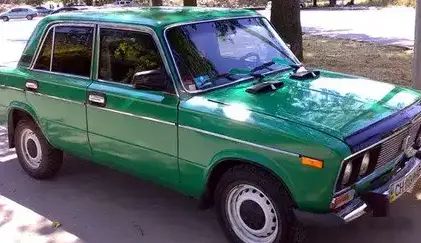
The Lada 21063 1.3, a variant of the popular Lada 2106, was produced from 1976 to 1993. Representing a significant portion of the 2106 model range, this version offered a more economical and accessible entry point into the Lada lineup, particularly within the Soviet Union and its export markets. The 2106 itself was a modernization of the earlier Lada 2103, which was based on the Fiat 124, and became a staple of Eastern European motoring for nearly two decades. The ‘21063’ designation specifically denotes the 1.3-liter engine configuration.
Technical Specifications
| Brand | Lada |
| Model | 2106 |
| Generation | 21063 |
| Type (Engine) | 1.3 (64 Hp) |
| Start of production | 1976 |
| End of production | 1993 |
| Powertrain Architecture | Internal Combustion engine |
| Body type | Sedan |
| Fuel Type | Petrol (Gasoline) |
| Power | 64 Hp @ 5600 rpm |
| Power per litre | 49.2 Hp/l |
| Torque | 92 Nm @ 3400 rpm |
| Torque (lb-ft) | 67.86 lb.-ft. @ 3400 rpm |
| Engine layout | Front, Longitudinal |
| Engine displacement | 1300 cm3 |
| Engine displacement (cu. in.) | 79.33 cu. in. |
| Number of cylinders | 4 |
| Engine configuration | Inline |
| Cylinder Bore | 79 mm |
| Cylinder Bore (in.) | 3.11 in. |
| Piston Stroke | 66 mm |
| Piston Stroke (in.) | 2.6 in. |
| Compression ratio | 8.5:1 |
| Number of valves per cylinder | 2 |
| Fuel injection system | Carburettor |
| Engine aspiration | Naturally aspirated engine |
| Valvetrain | OHC |
Powertrain & Engine Architecture
The heart of the Lada 21063 is its 1.3-liter inline-four cylinder engine, internally designated as a variation of the VAZ-2106 engine family. This engine, while sharing a basic architecture with larger 1.6-liter versions, was specifically tuned for economy and reliability. It utilized a single, down-draft carburetor – typically a K-126D – for fuel delivery, a relatively simple system common for the era. The engine featured an overhead camshaft (OHC) design operating two valves per cylinder. The engine’s longitudinal front-engine layout was a carryover from the Fiat 124 design, and it was typically paired with a four-speed manual transmission, though a three-speed automatic transmission was also available, albeit less common. The automatic transmission was a significant factor in the 21063’s appeal to drivers seeking ease of use, particularly in urban environments.
Driving Characteristics
The 1.3-liter engine in the 21063 produced 64 horsepower at 5600 rpm and 92 Nm (67.86 lb-ft) of torque at 3400 rpm. This resulted in modest, but adequate, performance for its time. Acceleration was leisurely, and the car was not designed for high-speed driving. The four-speed manual transmission offered a reasonable spread of gears, allowing the engine to operate efficiently at cruising speeds. The optional three-speed automatic, while providing convenience, noticeably reduced acceleration and increased fuel consumption. Compared to the 1.6-liter versions of the 2106, the 1.3-liter engine felt noticeably less powerful, especially when fully loaded or climbing hills. However, the smaller engine was more forgiving in terms of fuel quality, a crucial consideration in many of the markets where the Lada was sold. The suspension, while simple, provided a reasonably comfortable ride, absorbing bumps and imperfections in the road surface.
Equipment & Trim Levels
The Lada 21063 was generally offered in a relatively basic trim level, reflecting its position as an entry-level model. Standard features typically included vinyl upholstery, basic instrumentation (speedometer, fuel gauge, temperature gauge), and a heater. Optional extras, depending on the market and year, could include a radio, upgraded seat upholstery (often cloth), and a more comprehensive instrument cluster. The dashboard layout was functional and straightforward, prioritizing usability over aesthetics. The 21063 did not typically receive the more luxurious appointments found in higher-spec 2106 models, such as woodgrain trim or upgraded door panels.
Chassis & Braking
The Lada 21063 utilized a body-on-frame construction, a design choice that contributed to its robustness and ease of repair. The suspension consisted of independent front suspension with wishbones and coil springs, and a live rear axle with leaf springs. Braking was typically accomplished with drum brakes on all four wheels, although some later models and export versions were equipped with front disc brakes. Steering was of the recirculating ball type, providing a relatively heavy but direct feel. The chassis was designed for durability and simplicity, rather than sporty handling. Stabilizer bars were not typically fitted to the 21063, contributing to a noticeable degree of body roll in corners.
Market Reception & Comparison
The Lada 21063 was well-received in its primary markets – the Soviet Union and Eastern Europe – due to its affordability, reliability, and ease of maintenance. It was often the first car owned by many families. Compared to the 1.6-liter versions of the 2106, the 1.3-liter model offered lower running costs, making it attractive to budget-conscious buyers. However, it lacked the performance and refinement of its larger-engined siblings. Critics often noted the car’s dated design and basic interior, but acknowledged its practicality and durability. In Western Europe, the Lada 21063 was viewed as a very basic and inexpensive car, often sold as a utilitarian vehicle rather than a desirable mode of transport.
Legacy
The Lada 21063, and the 2106 series as a whole, holds a significant place in automotive history as a symbol of Soviet-era engineering and mass production. The 1.3-liter engine, while not particularly powerful, proved to be remarkably durable and relatively easy to repair, even with limited resources. Today, the Lada 21063 is a popular choice among classic car enthusiasts and collectors, particularly in Eastern Europe. Parts availability remains relatively good, and the car’s simple mechanical design makes it accessible to amateur mechanics. While not a high-performance vehicle, the 21063 represents a unique and enduring chapter in automotive history, and continues to be appreciated for its simplicity, reliability, and affordability.
