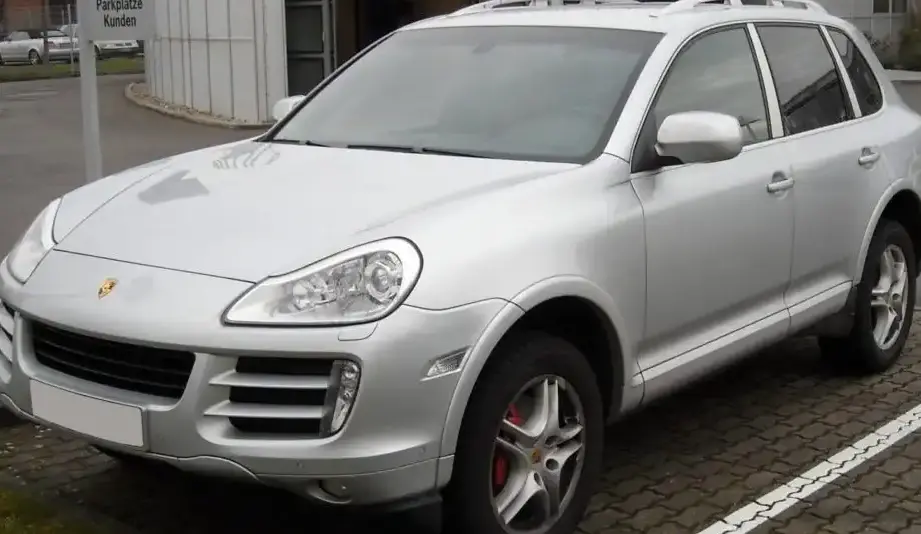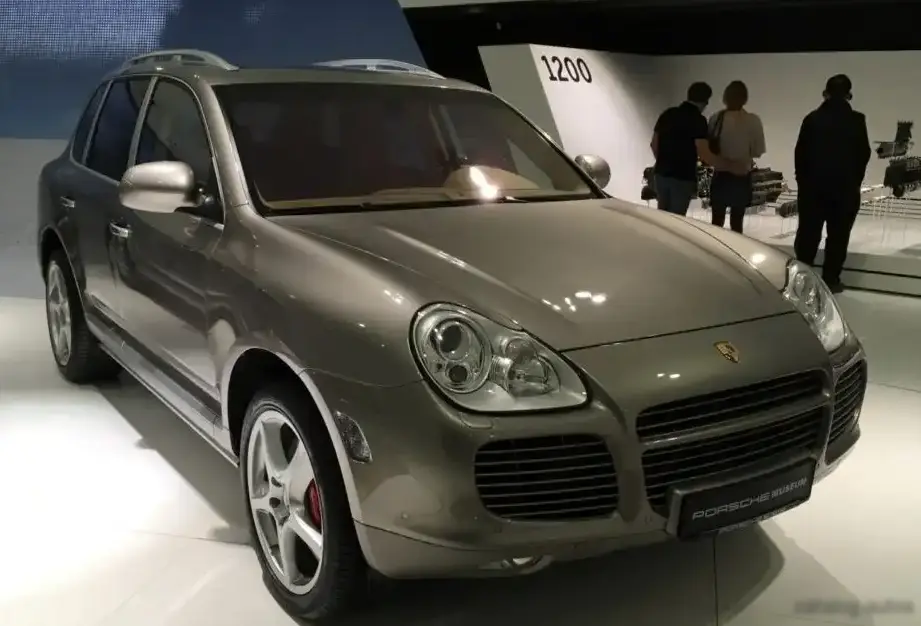
The Porsche Cayenne Turbo S (955) represented the pinnacle of performance for the first-generation Cayenne, produced between 2005 and 2006. Positioned as the flagship model, it offered a substantial increase in power and luxury compared to the base Cayenne and even the standard Turbo. The 955 generation Cayenne, launched in 2002, was Porsche’s first venture into the SUV market, aiming to broaden the brand’s appeal while maintaining a focus on driving dynamics. The Turbo S variant specifically targeted buyers seeking a high-performance luxury SUV with genuine sporting credentials.
Technical Specifications
| Brand | Porsche |
| Model | Cayenne |
| Generation | Cayenne (955) |
| Type | Turbo S 4.5 V8 (521 Hp) Tiptronic S |
| Start of production | 2005 |
| End of production | 2006 |
| Powertrain Architecture | Internal Combustion engine |
| Body type | SUV |
| Seats | 5 |
| Doors | 5 |
| Fuel consumption (urban) | 21.9 l/100 km (10.7 US mpg, 12.9 UK mpg, 4.6 km/l) |
| Fuel consumption (extra urban) | 11.9 l/100 km (19.8 US mpg, 23.7 UK mpg, 8.4 km/l) |
| Fuel consumption (combined) | 15.7 l/100 km (15 US mpg, 18 UK mpg, 6.4 km/l) |
| Fuel Type | Petrol (Gasoline) |
| Acceleration 0 – 100 km/h | 5.2 sec |
| Acceleration 0 – 62 mph | 5.2 sec |
| Acceleration 0 – 60 mph | 4.9 sec |
| Maximum speed | 270 km/h (167.77 mph) |
| Emission standard | Euro 4 |
| Weight-to-power ratio | 4.5 kg/Hp, 221.2 Hp/tonne |
| Weight-to-torque ratio | 3.3 kg/Nm, 305.7 Nm/tonne |
| Power | 521 Hp @ 5500 rpm |
| Power per litre | 115.5 Hp/l |
| Torque | 720 Nm @ 2750-3750 rpm (531.04 lb.-ft. @ 2750-3750 rpm) |
| Engine layout | Front, Longitudinal |
| Engine Model/Code | M48.50 |
| Engine displacement | 4511 cm3 (275.28 cu. in.) |
| Number of cylinders | 8 |
| Engine configuration | V-engine |
| Compression ratio | 9.5:1 |
| Number of valves per cylinder | 4 |
| Fuel injection system | Multi-port manifold injection |
| Engine aspiration | Turbocharger, Intercooler |
| Valvetrain | DOHC |
| Engine oil capacity | 8.5 l (8.98 US qt | 7.48 UK qt) |
| Coolant capacity | 18 l (19.02 US qt | 15.84 UK qt) |
| Kerb Weight | 2355 kg (5191.89 lbs.) |
| Max. weight | 3080 kg (6790.24 lbs.) |
| Max load | 725 kg (1598.35 lbs.) |
| Trunk (boot) space – minimum | 540 l (19.07 cu. ft.) |
| Trunk (boot) space – maximum | 1770 l (62.51 cu. ft.) |
| Fuel tank capacity | 100 l (26.42 US gal | 22 UK gal) |
| Length | 4786 mm (188.43 in.) |
| Width | 1928 mm (75.91 in.) |
| Height | 1699 mm (66.89 in.) |
| Wheelbase | 2855 mm (112.4 in.) |
| Front track | 1647 mm (64.84 in.) |
| Rear (Back) track | 1662 mm (65.43 in.) |
| Drag coefficient (Cd) | 0.39 |
| Drive wheel | All wheel drive (4×4) |
| Number of gears | 6 |
| Gearbox type | Automatic transmission |
| Front suspension | Double wishbone |
| Rear suspension | Independent multi-link suspension |
| Front brakes | Ventilated discs |
| Rear brakes | Ventilated discs |
| Assisting systems | ABS (Anti-lock braking system) |
| Steering type | Steering rack and pinion |
| Power steering | Hydraulic Steering |
| Tires size | 255/55 R18 |
| Wheel rims size | 8J x 18 |
INTRODUCTION
The 2005-2006 Porsche Cayenne Turbo S was the ultimate expression of the 955 generation. Building upon the already potent Cayenne Turbo, the ‘S’ model featured a revised engine management system and upgraded turbochargers, boosting power output to 521 horsepower. This increase in performance, combined with the standard all-wheel-drive system and a six-speed Tiptronic S automatic transmission, allowed the Cayenne Turbo S to deliver exhilarating acceleration and a surprisingly agile driving experience for a vehicle of its size and weight. It was positioned as a direct competitor to high-performance SUVs like the BMW X5 and Mercedes-Benz ML, offering a more sporting alternative.
Powertrain & Engine Architecture
At the heart of the Cayenne Turbo S lies the M48.50 engine, a 4.5-liter twin-turbocharged V8. This engine is based on the Volkswagen Group’s 4.2-liter V8, but extensively modified by Porsche. Key upgrades included larger turbochargers, a revised intercooler system, and a recalibrated engine control unit (ECU). The engine utilizes multi-port fuel injection and a double overhead camshaft (DOHC) valvetrain with four valves per cylinder. The Tiptronic S automatic transmission is a six-speed unit with a torque converter and the ability for manual gear selection. It was designed to handle the engine’s substantial torque output and provide both smooth automatic shifting and responsive manual control. The transmission featured adaptive shift programs, adjusting shift points based on driving style and road conditions.
Driving Characteristics
The Cayenne Turbo S delivered a markedly different driving experience compared to the standard Cayenne models. The increased horsepower and torque resulted in significantly quicker acceleration – 0 to 60 mph in around 4.9 seconds and a top speed of 168 mph. The Tiptronic S transmission, while not as engaging as a manual gearbox, offered quick and precise shifts, especially in the sport mode. The all-wheel-drive system provided excellent traction, allowing for confident handling in various weather conditions. However, the vehicle’s considerable weight (over 5,000 pounds) was noticeable, particularly during hard cornering. Compared to the standard Turbo, the ‘S’ model felt noticeably more urgent in its acceleration and offered a more refined overall driving experience.
Equipment & Trim Levels
The Cayenne Turbo S came standard with a comprehensive list of luxury and performance features. Interior appointments included leather upholstery, heated and ventilated front seats, a Bose sound system, and a navigation system. Standard exterior features included 18-inch alloy wheels, bi-xenon headlights, and a roof spoiler. Optional extras included adaptive air suspension, a panoramic sunroof, and various customization options through Porsche’s ‘Exclusive’ program, allowing buyers to personalize their vehicle with unique interior and exterior finishes.
Chassis & Braking
The Cayenne Turbo S featured a fully independent suspension system, with double wishbones at the front and a multi-link setup at the rear. Porsche’s Active Suspension Management (PASM) system was standard, allowing drivers to adjust the damping characteristics to suit their preferences. Braking duties were handled by ventilated disc brakes on all four wheels, providing ample stopping power. The Cayenne Turbo S also included ABS (Anti-lock Braking System) and Electronic Stability Control (ESC) as standard safety features.
Market Reception & Comparison
The Cayenne Turbo S was generally well-received by automotive critics, who praised its impressive performance and luxurious interior. However, its high price tag and substantial weight were often cited as drawbacks. Compared to the standard Cayenne Turbo, the ‘S’ model offered a significant performance upgrade, but at a considerable cost premium. Fuel economy was also a concern, with combined fuel consumption averaging around 15 mpg. Reliability was generally good, although the complex turbocharging system and electronic components could be prone to issues over time.
Legacy
The Cayenne Turbo S (955) remains a desirable vehicle in the used car market, particularly among Porsche enthusiasts. Its combination of performance, luxury, and exclusivity has ensured its continued appeal. While maintenance costs can be higher than those of more mainstream SUVs, the Cayenne Turbo S offers a unique driving experience and a strong brand image. The powertrain, while complex, has proven relatively durable with proper maintenance. The 955 generation Cayenne, and the Turbo S variant in particular, played a crucial role in establishing Porsche as a successful SUV manufacturer, paving the way for subsequent generations of the Cayenne and the Macan.