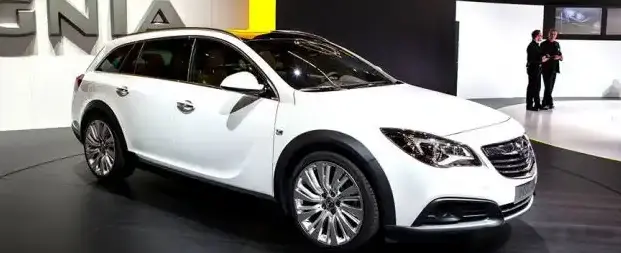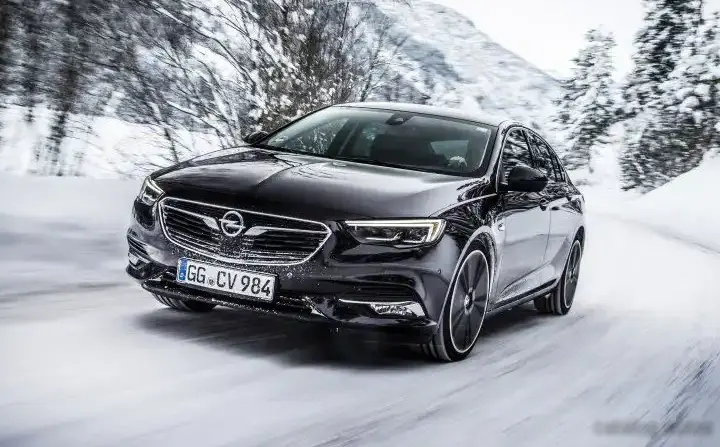
The Opel Insignia Grand Sport (B) 2.0 CDTI, producing 170 horsepower, was a key variant within the second generation of Opel’s flagship D-segment hatchback. Introduced in June 2017 and remaining in production until April 2018, this model occupied a middle-ground position in the Insignia lineup, offering a balance between performance, fuel efficiency, and equipment. It was designed to appeal to buyers seeking a comfortable and practical family vehicle with respectable power for highway cruising and everyday driving. The Insignia Grand Sport (B) represented a significant evolution from the original Insignia, built on an updated platform and featuring a more refined interior and exterior design.
Technical Specifications
| Brand | Opel |
| Model | Insignia |
| Generation | Insignia Grand Sport (B) |
| Type (Engine) | 2.0 CDTI (170 Hp) |
| Start of production | June, 2017 |
| End of production | April, 2018 |
| Powertrain Architecture | Internal Combustion engine |
| Body type | Hatchback |
| Seats | 5 |
| Doors | 5 |
| Fuel consumption (urban) | 6.7 l/100 km (35.1 US mpg, 42.2 UK mpg, 14.9 km/l) |
| Fuel consumption (extra urban) | 4.3 l/100 km (54.7 US mpg, 65.7 UK mpg, 23.3 km/l) |
| Fuel consumption (combined) | 5.2 l/100 km (45.2 US mpg, 54.3 UK mpg, 19.2 km/l) |
| CO2 emissions | 136 g/km |
| Fuel Type | Diesel |
| Acceleration 0 – 100 km/h | 8.7 sec |
| Acceleration 0 – 62 mph | 8.7 sec |
| Acceleration 0 – 60 mph | 8.3 sec |
| Maximum speed | 226 km/h (140.43 mph) |
| Emission standard | Euro 6 |
| Weight-to-power ratio | 8.9 kg/Hp, 112.8 Hp/tonne |
| Weight-to-torque ratio | 3.8 kg/Nm, 265.4 Nm/tonne |
| Power | 170 Hp @ 3500-4000 rpm |
| Power per litre | 86.9 Hp/l |
| Torque | 400 Nm @ 1750-2500 rpm (295.02 lb.-ft. @ 1750-2500 rpm) |
| Engine layout | Front, Transverse |
| Engine Model/Code | B20DTH |
| Engine displacement | 1956 cm3 (119.36 cu. in.) |
| Number of cylinders | 4 |
| Engine configuration | Inline |
| Cylinder Bore | 83 mm (3.27 in.) |
| Piston Stroke | 90.4 mm (3.56 in.) |
| Compression ratio | 16.5:1 |
| Number of valves per cylinder | 4 |
| Fuel injection system | Diesel Commonrail |
| Engine aspiration | Turbocharger, Intercooler |
| Valvetrain | DOHC |
| Engine oil capacity | 4.9 l (5.18 US qt | 4.31 UK qt) |
| Coolant | 5.9 l (6.23 US qt | 5.19 UK qt) |
| Kerb Weight | 1507 kg (3322.37 lbs.) |
| Max. weight | 2185 kg (4817.1 lbs.) |
| Max load | 678 kg (1494.73 lbs.) |
| Trunk (boot) space – minimum | 490 l (17.3 cu. ft.) |
| Trunk (boot) space – maximum | 1450 l (51.21 cu. ft.) |
| Fuel tank capacity | 62 l (16.38 US gal | 13.64 UK gal) |
| Max. roof load | 100 kg (220.46 lbs.) |
| Permitted trailer load with brakes (12%) | 1950 kg (4299.01 lbs.) |
| Permitted trailer load without brakes | 750 kg (1653.47 lbs.) |
| Length | 4897 mm (192.8 in.) |
| Width | 1863 mm (73.35 in.) |
| Width with mirrors folded | 1941 mm (76.42 in.) |
| Width including mirrors | 2093 mm (82.4 in.) |
| Height | 1455 mm (57.28 in.) |
| Wheelbase | 2829 mm (111.38 in.) |
| Front track | 1607 mm (63.27 in.) |
| Rear (Back) track | 1610 mm (63.39 in.) |
| Front overhang | 990 mm (38.98 in.) |
| Rear overhang | 1078 mm (42.44 in.) |
| Minimum turning circle (turning diameter) | 11.74 m (38.52 ft.) |
| Drivetrain Architecture | The Internal combustion engine (ICE) drives the front wheels of the vehicle. |
| Drive wheel | Front wheel drive |
| Number of gears and type of gearbox | 6 gears, manual transmission |
| Front suspension | Independent type McPherson |
| Front brakes | Ventilated discs |
| Rear brakes | Disc |
| Assisting systems | ABS (Anti-lock braking system) |
| Steering type | Steering rack and pinion |
| Power steering | Electric Steering |
| Tires size | 245/35 R20 |
| Wheel rims size | 8.5 J x 20 |
Powertrain & Engine Architecture
The heart of this Insignia variant was the B20DTH, a 2.0-liter inline-four cylinder diesel engine. This engine was a mainstay in the Opel/Vauxhall range, known for its robust construction and relatively good fuel economy. The B20DTH utilized a common rail direct injection system, delivering fuel directly into the combustion chamber at extremely high pressure for optimized combustion. A turbocharger with an intercooler was employed to boost power output and improve torque across a wider rev range. The engine featured a double overhead camshaft (DOHC) valvetrain with four valves per cylinder, enhancing breathing and contributing to its power delivery. The 6-speed manual transmission was standard, providing a balance between fuel efficiency and driver control. The engine produced 400 Nm (295 lb-ft) of torque between 1750 and 2500 rpm, making it reasonably responsive for overtaking and highway driving.
Driving Characteristics
The 170 hp 2.0 CDTI with the 6-speed manual transmission offered a comfortable and capable driving experience. While not a performance-oriented variant, it provided sufficient power for everyday driving situations. Acceleration from 0-60 mph took around 8.3 seconds, and top speed was rated at 140.43 mph. The gear ratios were tuned for fuel efficiency, with taller gearing in higher gears for relaxed cruising. The engine felt strongest in the mid-range, providing good pulling power for merging onto highways or climbing hills. Compared to the higher-output 2.0 BiTurbo models, this variant felt less urgent, but it offered a smoother and more refined driving experience. The manual transmission allowed for greater driver engagement, while the relatively light weight of the front-wheel-drive configuration contributed to decent handling.
Equipment & Trim Levels
The 2.0 CDTI 170 hp model typically came equipped with a respectable level of standard features. These included air conditioning, a touchscreen infotainment system with Bluetooth connectivity, alloy wheels, and a suite of safety features such as ABS, ESP (Electronic Stability Program), and multiple airbags. Higher trim levels, such as Tech Line or Sport Line, added features like leather upholstery, heated seats, a navigation system, and advanced driver-assistance systems like adaptive cruise control and lane departure warning. Optional extras included a panoramic sunroof, premium sound system, and parking sensors.
Chassis & Braking
The Insignia Grand Sport (B) featured an independent McPherson strut suspension at the front and a multi-link suspension at the rear, providing a comfortable ride and good handling characteristics. The front brakes were ventilated discs, while the rear brakes were solid discs. The steering was electric power-assisted, offering a light and precise feel. The chassis was designed to balance comfort and handling, providing a stable and predictable driving experience. Stabilizer bars were fitted to both the front and rear axles to reduce body roll during cornering.
Market Reception & Comparison
The 170 hp 2.0 CDTI variant of the Insignia Grand Sport (B) was generally well-received by automotive critics. It was praised for its fuel efficiency, comfortable ride, and spacious interior. However, some reviewers noted that the engine could feel a bit underpowered, especially when fully loaded. Compared to the more powerful 2.0 BiTurbo models, this variant offered a more affordable entry point into the Insignia range. It also provided better fuel economy than the petrol-powered variants. In terms of reliability, the B20DTH engine was generally considered to be a robust and dependable unit, although diesel particulate filter (DPF) issues could occur with frequent short journeys.
Legacy
The Opel Insignia Grand Sport (B) 2.0 CDTI 170 hp remains a popular choice in the used car market. Its combination of practicality, fuel efficiency, and affordability makes it an attractive option for families and commuters. The B20DTH engine has proven to be relatively reliable, although regular maintenance is essential to prevent issues with the DPF and other components. The Insignia Grand Sport (B) represented a significant step forward for Opel in terms of design, technology, and driving experience, and this particular variant continues to offer a compelling package for buyers seeking a comfortable and capable family hatchback.